Case file · TOYOTA-PRIUS-2023-2026 · 5th gen (XW60) (XW60)
Toyota Prius 2023–2026Common problems, reliability & repair costs
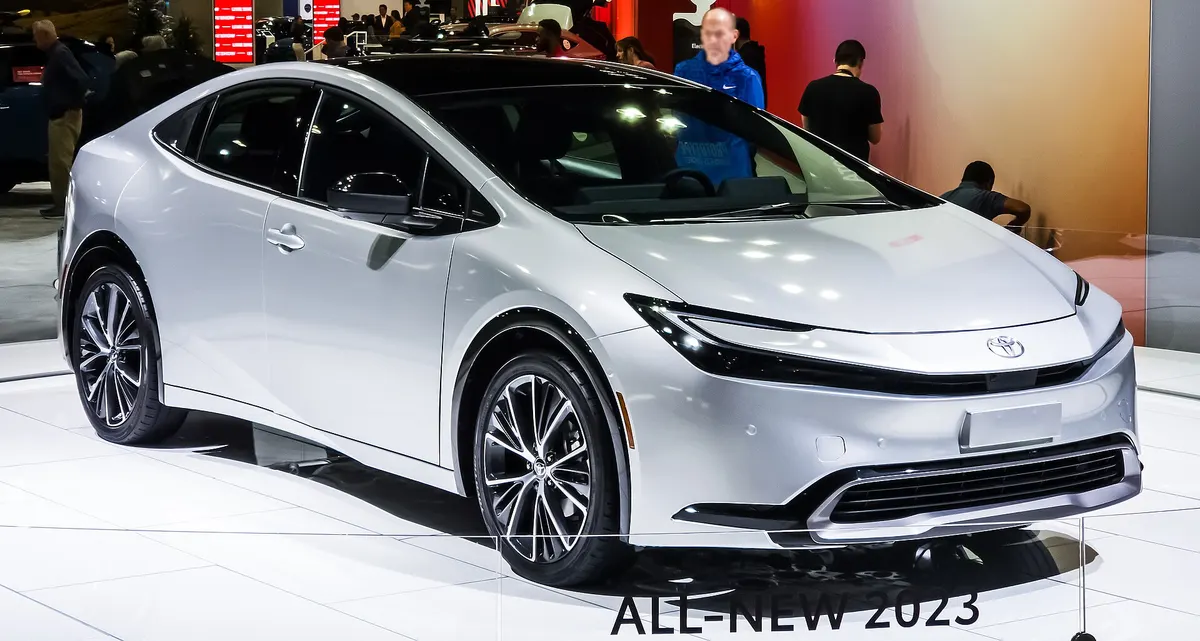
The 5th-gen Prius is off to a genuinely strong start: award-season hardware, top-tier predicted reliability, and complaint counts you can count on two hands. What IS documented so far: a rear-door switch that lets water in and can pop an unlocked back door open while driving (recalled in 2024, then recalled AGAIN in January 2026 because the first fix wasn't enough), a 12-volt battery that drains on Primes left plugged in, and a backup-camera software recall. All of it is a free fix. This generation is young, so this file records what's documented, not what's imagined.
Too new to separate by year. Every 2023–2026 car is caught by the same door-switch recall, so buy on price, warranty remaining, and completed recalls
None documented. Verify recall completion instead of avoidin
Engines
- M20A-FXS · 2.0L hybrid, 194 hp
- M20A-FXS (Prius Prime / Plug-in Hybrid) · 2.0L phev, 220 hp
Transmissions
- cvt
Drivetrain
FWD / AWD
Body
hatchback
Trims
LE, XLE, Limited, LE / XLE / Limited AWD, Prime SE / XSE / XSE Premium (2023–2024), Plug-in Hybrid SE / XSE / XSE Premium (2025+)
Toyota Prius part-number cross-reference
Start from the OEM number, then pick the brand you trust. Verified equivalents for the Toyota Prius (2023–2026).
Part links go to Amazon, and to eBay where Amazon does not stock the part. Affiliate links, so we may earn a commission if you buy. Your price is unchanged, and a commission never changes a verdict.
Oil filter
Toyota
Superseded by 90915-YZZN1, same filter family as late gen-4 spin-on cars
Find Toyota oil filter on AmazonVerified via: ToyotaPartsDeal: Prius OEM oil filters (90915-10009 for 2023–2024 Prius 2.0L M20A-FXS; replaced by 90915-YZZN1), oilfilter-crossreference.com: Toyota 90915-YZZN1 cross references
Engine air filter
K&N
Washable/reusable; K&N's own fitment pages list it for 2023 and 2024 Prius 2.0L
Compare K&N engine air filterBosch
Also listed under Bosch F026400696 (same filter) on the cross-reference index
Find Bosch engine air filterVerified via: ToyotaPartsDeal: Prius OEM air filters (17801-24040 for 2023–2024 Prius 2.0L M20A-FXS), K&N: 2024 Toyota Prius 2.0L air filter fitment (33-3154), airfilter-crossreference.com: Toyota 17801-24040 cross references
Cabin air filter
Toyota
Listed as an air-refiner element with deodorant function
Look up Toyota cabin air filter on AmazonVerified via: ToyotaPartsDeal: Prius OEM cabin air filters (87139-76020 for 2023–2024 Prius 2.0L)
Should I buy a 2023–2026 Toyota Prius?
Buy it, with one non-negotiable homework item. Nothing in the documented record touches the drivetrain: the engine, eCVT, and hybrid pack have no established failure pattern, complaint counts are tiny (13 logged for 2023, 14 for 2024 on CarComplaints), and Consumer Reports handed this generation some of its highest reliability marks. The homework is the rear-door recall: Toyota fixed the water-intruding door switches in April 2024 (24V-274), then determined that fix wasn't good enough and re-recalled every 2023–2026 car in January 2026 (26V-049), including cars already repaired once. So a seller saying 'the door recall was done' is not the same as the door recall being done. Verify the NEW campaign by VIN, confirm the backup-camera software update, and on a Prime ask about 12-volt battery history. That's the whole list, for now. This generation is young, and long-term data simply doesn't exist yet.
Best years
Too new to separate by year. Every 2023–2026 car is caught by the same door-switch recall, so buy on price, warranty remaining, and completed recalls
Years to avoid
None documented. Verify recall completion instead of avoiding a year
Pre-Purchase Checklist for Toyota Prius
- ☐Run the VIN at toyota.com/recall and nhtsa.gov. The critical one is the rear-door switch campaign 26V-049 (Toyota 26TA03/26TB03). A car repaired under the ORIGINAL April 2024 recall (24V-274) still needs the newer remedy. Don't accept 'the door recall was already done' without checking which one.
- ☐Until the door remedy is confirmed, check that automatic door locking (locks when shifting out of Park) is enabled in the settings. That's Toyota's own interim measure, since a locked door can't pop open.
- ☐Put the car in reverse and watch the screen: the backup camera freezing or going blank is recall 25V-744 (2023–2025 cars with the Panoramic View Monitor), fixed with a free software update. Confirm it by VIN too.
- ☐On a Prime / Plug-in Hybrid: ask directly about dead 12-volt batteries and whether the TSB T-SB-0054-24 reflash was performed. A Prime habitually left plugged in for days after charging completed is the documented drain scenario.
- ☐Inspect the windshield and the plastic trim around the glass for cracks. Reports on this generation are scattered, not a pattern. But glass replacement means recalibrating the Toyota Safety Sense camera, so you want to know about any prior windshield work.
- ☐Do the warranty math from the in-service date: 10 years/150,000 miles on the hybrid battery, 8/100k on other hybrid components. Most of this generation is still covered.
- ☐Glance under the rear for the catalytic converter: hybrids remain theft targets, and a bolted-on cat shield is a plus, not a red flag.
- ☐On a Prime, charge it and confirm real-world EV range is near the rating (44 miles SE, 39 miles XSE) before you pay plug-in money.
Common Toyota Prius problems & repair costs
Rear doors can open while driving: door switch water intrusion (recalled twice)
Symptoms: Water gets past the seal on the electronic rear-door opener switch and shorts it. A car wash is the classic trigger. If the door happens to be unlocked, it can unlatch and swing open while the car is moving. Toyota traced it to the switch's sealant separating from the switch body with normal temperature cycling.
Fix: Free, but read carefully: the April 2024 recall (NHTSA 24V-274, Toyota 24TA06/24TB06, ~55,700 2023–2024 Prius and Prius Prime) replaced both rear door opener switches. In January 2026 Toyota concluded that remedy wasn't sufficient and issued 26V-049 (Toyota 26TA03/26TB03), expanding coverage to 141,286 vehicles with a rear-door switch circuit modification: 2023–2026 Prius, 2023–2024 Prius Prime, 2025–2026 Prius Plug-in Hybrid. Cars repaired under the first recall need the second remedy too. Interim measures: enable automatic door locks and avoid blasting the rear door handles with high-pressure water.
Sources: Toyota TSB/recall portal: 24TA06 rear door may open while driving (24V-274 details), WardsAuto: Toyota recalls 141k Prius models for rear door switch water intrusion (26V-049), Toyota USA Newsroom: recall of certain MY2023–2026 Prius vehicles
12-volt battery drain: Prius Prime left plugged in
Symptoms: Dead 12-volt battery after the car sits, sometimes just two or three days, so the car won't power up at all. Repeat episodes even after battery replacement, with dealers often finding nothing wrong. Toyota's documented root cause on the Prime: the plug-in charge control ECU fails to enter sleep mode when the charging cable stays connected more than about two hours after charging finishes, and it quietly drains the 12V.
Fix: Toyota issued TSB T-SB-0054-24 (June 10, 2024) for 2023–2024 Prius Prime: a free ECU reprogram at the dealer (it's a TSB, not a recall, so you may have to ask for it by number). Practical defenses: unplug once charging completes, replace a 12V that has been deep-cycled to death, and use a battery maintainer on any car that sits. Most of these cars are still inside Toyota's basic or hybrid-component warranty.
Sources: Toyota T-SB-0054-24: 12V auxiliary battery may deplete with extended PHEV cable connection (PDF), PriusChat: 12 Volt battery drain, Gen 5, PriusChat: who HASN'T had a 12V battery issue with their 2023–24 Prime?
Backup camera freezes or goes blank in reverse (software recall)
Symptoms: Shifting into reverse brings up a frozen image or a blank screen instead of the live rearview feed. It's a software error in the parking-assist ECU, not a camera hardware failure.
Fix: Free under NHTSA recall 25V-744 (October 2025). It's part of a 1,024,407-vehicle Toyota/Lexus/Subaru campaign, of which 12,576 are 2023–2025 Priuses built October 2022 through July 2025. Dealers update the parking-assist software. Verify completion by VIN.
Sources: NHTSA Part 573 safety recall report: 25V-744, Cars.com: 2023 Toyota Prius recalls
Windshield and glass-trim cracking: early scattered reports
Symptoms: A handful of owners report windshield cracks appearing without an obvious impact, and cracks forming in the plastic trim below the rear window, on cars less than six months old. To be clear about scale: the 2023 Prius has 13 total complaints logged on CarComplaints. This is a watch item, not a repeat of the 2016–2017 windshield saga that produced 25+ complaints and a class action on the previous generation.
Fix: Glass or trim replacement, ideally under warranty or comprehensive insurance with glass coverage. Any windshield replacement on this car should include recalibration of the Toyota Safety Sense camera mounted behind it. Make sure the shop quotes that, not just the glass.
Sources: CarComplaints: 2023 Toyota Prius complaints (13 total; misc. category includes glass/trim cracking), CarComplaints: 2023 Toyota Prius miscellaneous problems
There is no documented drivetrain failure pattern on this generation yet: no engine saga, no transmission saga, no hybrid-battery cost cliff inside the 10-year/150k battery warranty that covers every one of these cars. Every headline issue is a free fix: two recalls and a TSB. So real ownership spend is routine: tires, a 12-volt battery if the drain issue got to it first, and insurance. The honest caveat runs the other way: the oldest of these cars just turned three, so 150k-mile durability is projected from the Prius track record, not measured on this generation. Budget like a Corolla and keep the recall paperwork.
Cost calculator
What will this Toyota Prius cost you by a given mileage?
Drag to a mileage. We total the documented problems whose typical onset falls at or before it. The same cost ranges listed above, nothing new invented.
$0 estimated repair range
Have a repair quote for this Toyota Prius?
Audit against OEM book times, uncover duplicate pad and rotor labor, and verify parts markups.
How to fix common Toyota Prius problems (DIY)
Cabin & engine air filter change
Tools: None (hands only; maybe a small screwdriver)
- Open the glovebox, squeeze the sides to drop it past its stops, and pull the cabin filter cover.
- Slide in the new cabin filter with the airflow arrow pointing the right way, and reseat the glovebox.
- Under the hood, unclip the airbox lid and swap the engine air filter.
- Re-clip the lid and make sure it's seated all the way around.
Parts
- Cabin air filter (2023–2026 Prius) · Toyota 87139-76020 (OEM) · Amazon $15–$40
- Engine air filter (2023–2026 Prius 2.0L) · Toyota 17801-24040 (OEM) · Amazon $15–$30
Put a battery maintainer on a Prime that sits
Tools: None, just a smart maintainer with clamps or eyelets
- Get the TSB reflash done first (T-SB-0054-24) if it hasn't been. The maintainer is insurance, not the fix.
- With the car off, connect the maintainer to the 12-volt battery terminals following its instructions. Polarity matters.
- Route the lead so the hood can close on the flat connector, and plug the maintainer into a wall outlet.
- Use a smart/float-mode unit rated for AGM batteries and leave it connected whenever the car sits more than a few days.
- Unplug the charge cable from the car once EV charging completes. The documented drain happens when the cable stays connected for hours after.
Parts
- Smart 12V battery maintainer (AGM-compatible) · Amazon $30–$70
Install a catalytic converter anti-theft shield
Tools: Jack and jack stands (or ramps), Socket set + the security bits included with the shield, Torque wrench
- Raise and support the car safely on stands or ramps. Never work under a car held only by a jack.
- Test-fit the shield over the converter against the existing underbody mounting points. The gen-5 kits are drill-less.
- Install brackets and clamps per the kit instructions, using the existing holes.
- Secure the shield with the supplied tamper-resistant hardware and torque evenly.
- Lower the car, start it, listen for rattles, and re-check the hardware after a week.
Parts
- Cat shield for 2023+ Prius (gen 5, aluminum, tamper-proof hardware) · Amazon $160–$330
Some parts links are affiliate links. We may earn a commission at no cost to you. We only list parts that fit this generation.
The short version
The 5th-gen Prius (2023–present, still in production) is the one that made the Prius fast, good-looking, and so far kept it dependable. The 2.0-liter hybrid system makes 194–196 hp, Consumer Reports handed the generation near-record reliability scores, and total complaint counts sit at 13 for 2023 and 14 for 2024. There is no documented engine, transmission, or hybrid-battery failure pattern yet.
What the record does show is a door problem Toyota needed two tries to fix. Water can get into the electronic rear-door opener switches and short them; if a rear door is unlocked, it can open while the car is moving. Toyota replaced the switches under an April 2024 recall (NHTSA 24V-274), then concluded in January 2026 that the fix wasn’t sufficient and recalled 141,286 cars (26V-049), including the ones already repaired. Every 2023–2026 Prius is in scope.
The doors, specifically: verify twice
This is the trap on a used 5th-gen Prius. A seller who says “the door recall was done” may be truthfully describing the 2024 recall, which Toyota itself now says wasn’t enough. Run the VIN at nhtsa.gov or toyota.com/recall and confirm campaign 26V-049 specifically. Until it’s done, Toyota’s own interim advice applies: keep automatic door locks enabled, because a locked door can’t pop open.
What that means when you’re shopping
After the doors, the checklist is short. Shift into reverse and make sure the backup camera actually shows a live image. A frozen or blank screen is recall 25V-744, a free software update on 2023–2025 cars. On a Prime, ask about dead 12-volt batteries: Toyota documented that leaving the charge cable connected for hours after charging finishes drains the 12V, and the fix is a free reflash under TSB T-SB-0054-24. Glance at the windshield and glass trim. Cracking reports exist but are scattered, nothing like the last generation’s 2016–2017 windshield saga.
What we don’t know yet
Honesty requires saying this plainly: the oldest of these cars is three years old. Nobody has taken a 5th-gen Prius to 200,000 miles yet, so long-term durability is projected from the Prius track record, not measured on this generation. The early data points the right way. But this file will be updated as the record grows, and today the record is short.
How this file is built: failure modes are compiled from NHTSA recall documents (24V-274, 26V-049, 25V-744), Toyota’s own service bulletin T-SB-0054-24, CarComplaints data, and owner-forum reporting (PriusChat), then sanity-checked against shop-floor experience. Where this generation is too young for real data, we say so instead of inventing numbers. Spot something off? Tell us.
Viral car myths, checked against this car
- Outdated
Does a "$1 mineral" really double car battery life? The Epsom-salt reality.
The mineral is Epsom salt (magnesium sulfate). It was a real desulfation hack for serviceable flooded-cell batteries 40+ years ago. It does not work on modern sealed AGM or EFB batteries, and trying it on yours will void the warranty without helping the battery.
- Misleading
Is the "$2 liquid that stops any leak" really banned in 11 states?
Automotive stop-leak products are not banned in any US state. The products are real (Bar's Leaks, BlueDevil), they work in specific narrow situations, and they can permanently damage your cooling or oiling system if applied to the wrong leak.
Frequently asked questions
Is the 2023 Toyota Prius a reliable car?
By every early measure, yes. Consumer Reports gave this generation some of its highest reliability marks (the second-highest average rating the publication has recorded for the nameplate), and complaint volume is tiny: 13 logged complaints for 2023 and 14 for 2024 on CarComplaints. The honest asterisk is age: the oldest 5th-gen cars are only three years old, so 'nothing has broken yet' is a strong early signal, not a 200,000-mile verdict.
What are the common problems with the 2023–2025 Toyota Prius?
The documented list is short and almost entirely free to fix: rear-door switches that let water in and can allow an unlocked rear door to open while driving (recalled twice: 24V-274, then 26V-049), 12-volt battery drain on 2023–2024 Prius Primes left plugged in after charging (TSB T-SB-0054-24), a backup camera that can freeze or go blank in reverse (software recall 25V-744), and scattered early reports of windshield and glass-trim cracking. No engine, transmission, or hybrid-battery failure pattern has been documented on this generation so far.
Is there a recall on Toyota Prius rear doors?
Yes, twice. This is the one thing you must get right when buying used. Toyota first recalled 2023–2024 Prius and Prius Prime in April 2024 (NHTSA 24V-274) and replaced the rear door opener switches, because water intrusion could short them and let an unlocked rear door open while driving. In January 2026, Toyota determined that fix wasn't sufficient and issued recall 26V-049 covering 141,286 vehicles with a door-switch circuit modification: every 2023–2026 Prius, 2023–2024 Prius Prime, and 2025–2026 Prius Plug-in Hybrid. Cars already repaired under the first recall need the new remedy too. Check the VIN at nhtsa.gov or toyota.com/recall.
What is the best year of the 5th generation Toyota Prius to buy?
There's no meaningful year-to-year gap yet. The door-switch recall covers every model year through 2026 (production through November 2025), the camera recall covers 2023–2025, and complaint counts are equally low across the board. So buy on price, remaining warranty, and above all documented completion of recall 26V-049, rather than hunting a specific year. A 2023 with all recalls done beats a 2025 without them.
How many miles will a 2023 Toyota Prius last?
Nobody can measure that yet. The generation is too new, and we won't pretend otherwise. What's known: previous Prius generations routinely run 200,000–300,000 miles on the original drivetrain, this generation carries the same eCVT architecture with a newer 2.0L engine, and Toyota warranties the hybrid battery for 10 years/150,000 miles on every one of these cars. The early signals (near-zero drivetrain complaints) point the right way; treat anything more specific as a projection.
Why does the Prius Prime 12-volt battery keep dying?
On 2023–2024 Primes, Toyota documented the cause: if the charging cable stays plugged in for more than about two hours after charging completes, the plug-in charge control ECU fails to go to sleep and drains the 12-volt battery. The fix is a free ECU reprogram under TSB T-SB-0054-24 (June 2024). It's a service bulletin, not a recall, so ask the dealer for it by number. Until it's done: unplug the cable once charging finishes, and put a maintainer on a car that sits. A 12V that's been deep-discharged repeatedly should be replaced, ideally under warranty.
Every Toyota Prius generation
The full case file run, beyond the generation before and after this one.
Cross-shopped rivals
Files on what buyers weigh against the Toyota Prius of this era.