Case file · TOYOTA-TUNDRA-2022-2026 · 3rd gen (XK70)
Toyota Tundra 2022–presentCommon problems, reliability & repair costs
The third-generation Tundra replaced Toyota's bulletproof V8 with a twin-turbo V6, and then had to recall it. Machining debris left inside some 2022–2024 V35A engines can destroy the main bearings, and Toyota's fix ranges from a software-based bearing inspection to a complete free engine replacement. Add first-year wastegate failures and a long list of smaller recalls, and this is a truck you buy by VIN and recall printout, not by Toyota's reputation. The hybrid i-FORCE MAX trucks are excluded from the engine recalls, and 2025+ trucks got an improved bearing design.
2025, 2026
2022 (wastegate actuator failures, axle-nut recall, most com +1 more
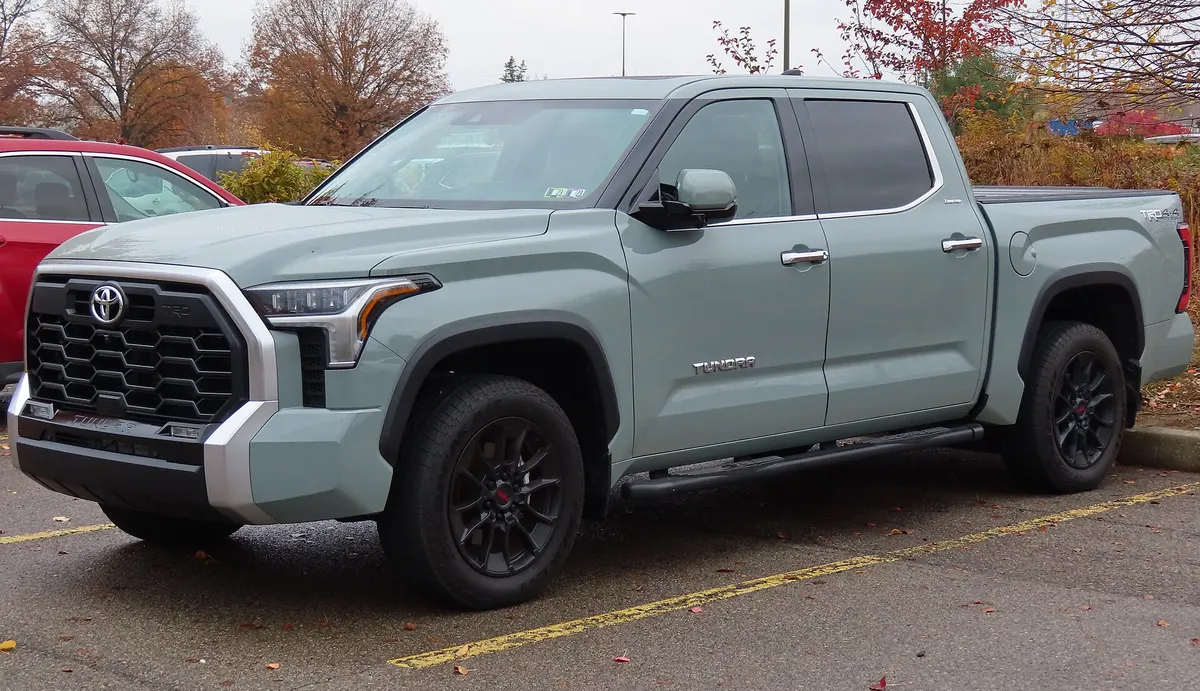
Engines
- V35A-FTS · 3.4L gasoline, 389 hp
- V35A-FTS (i-FORCE MAX hybrid) · 3.4L hybrid, 437 hp
Transmissions
- automatic , 10-speed
Drivetrain
RWD / 4WD
Body
double cab, CrewMax
Trims
SR, SR5, Limited, Platinum, 1794 Edition, TRD Pro, Capstone
Toyota Tundra part-number cross-reference
Start from the OEM number, then pick the brand you trust. Verified equivalents for the Toyota Tundra (2022–present).
Part links go to Amazon, and to eBay where Amazon does not stock the part. Affiliate links, so we may earn a commission if you buy. Your price is unchanged, and a commission never changes a verdict.
Oil filter
Toyota
factory-fit filter; Toyota's current stock number for the same application is 90915-YZZN3
Find Toyota oil filter on AmazonFram
Extra Guard; TG4386 (Tough Guard) and XG4386 (Ultra Synthetic) are the upgraded lines
Look up Fram oil filterVerified via: ToyotaPartsDeal: 90915-10010 listed for 2022-2024 Tundra V35A-FTS incl. hybrid, Lakeland Toyota: 90915-YZZN3 oil filter, 2022-2026 Toyota, Tundras.com: 90915-10010 (factory) vs 90915-YZZN3 (parts-counter) thread, Oil Filter Cross Reference: Toyota 90915-10010 equivalents (Fram PH4386 family)
Engine air filter
Verified via: Toyota OEM Parts Online: 17801-F4010, 2022-2026 Toyota air filter, Toyota of Nashua: 17801-F4010, 2022-2024 Toyota air filter
Cabin air filter
Verified via: Toyota OEM Parts Online: 87139-0C010, 2022-2026 Toyota cabin air filter, Elmhurst Toyota: 87139-0C010 fitment (2022+ Tundra, 2023+ Sequoia, 2024+ Tacoma)
Wiper blades
Bosch ICON
size-coded; any quality 24-inch blade in the correct mount fits
Find Bosch ICON wiper bladesVerified via: AutoPadre: Toyota Tundra wiper sizes (2022+ = 24"/24"), WiperSized: Toyota Tundra wiper blade sizes 2000-2025
Should I buy a 2022–present Toyota Tundra?
Buy it only after the recall homework is done. This generation's biggest risk is entirely trackable by VIN. On any 2022–2024 non-hybrid truck, the V35A engine sits inside one of three machining-debris recalls (24V381, 25V767, 26V320): the first bought owners a complete free engine, the second a software-based bearing inspection with replacement if it fails, and the third (2024 trucks) is still waiting on a remedy. A truck with a documented replacement engine or a passed inspection is a solid buy; a truck with an open engine recall is a negotiation chip at best. The i-FORCE MAX hybrids dodge the engine recalls entirely, and 2025+ trucks were built with the improved main-bearing design. Those are the low-drama picks. Avoid unsorted early 2022 trucks: they stacked wastegate failures, the axle-nut recall, and the most complaints of the generation.
Best years
2025, 2026
Years to avoid
2022 (wastegate actuator failures, axle-nut recall, most complaints of the generation), Any 2022–2024 non-hybrid truck with an open or undocumented engine recall
Pre-Purchase Checklist for Toyota Tundra
- ☐Run the VIN at nhtsa.gov/recalls before anything else. This generation carries three engine recalls (24V381, 25V767, 26V320) plus fuel-tube, axle, transmission, and reverse-light campaigns. The printout is the whole story on these trucks.
- ☐On 2022–2024 non-hybrid trucks, get paper: either a completed engine replacement under 24V381, or a passed #1 main-bearing inspection under 25V767. A Toyota dealer can pull the VIN's campaign history.
- ☐Cold-start it and listen for knocking or rough running. Main-bearing failures announced themselves with knock, power loss, and in the worst cases a stall. Walk away from any bottom-end noise.
- ☐On 2022 trucks, check service history for turbo wastegate actuator replacement and scan for stored codes in the P0243/P0247 family. The turbos sit at the rear of the engine. Out-of-warranty access is a major labor job.
- ☐Confirm the fuel-tube recall (23V566, 2022–2023) and the rear-axle flange-nut recall (22V445, 2022 only) show as completed.
- ☐Check that both reverse lights actually work. Recall 25V322 covers moisture intrusion on 2022–2025 trucks, fixed with new lamp assemblies free.
- ☐On the 10-speed, confirm the 24V125 transmission software update was done, then test for clean shifts and no movement in Neutral.
- ☐On i-FORCE MAX hybrids, verify the hybrid battery warranty window (10 years/150,000 miles on these model years) and that the under-seat battery area is dry and unmodified.
Common Toyota Tundra problems & repair costs
Engine main-bearing failure from machining debris (V35A)
Symptoms: Engine knocking, rough running, hard starting, power loss, and in the worst cases a sudden stall with no restart, including at speed. Root cause: machining debris (swarf) left in the engine during assembly gets trapped in the #1 main bearing and destroys it under load.
Fix: All free under recall, but which recall matters. 24V381 (May 2024) covered 102,092 vehicles with a complete engine assembly replacement: 98,568 non-hybrid Tundras built Nov 2, 2021–Feb 13, 2023 plus Lexus LX600s. 25V767 (Nov 2025) expanded coverage to 126,691 more 2022–2024 Tundra/LX/GX vehicles, with a software-based inspection of the #1 main bearing and engine replacement only if it fails. 26V320 (May 2026) added 43,566 more 2024 Tundras built before the improved main-bearing design went in; its remedy is still being developed. Recalls never expire. Run the VIN and get the work done.
Sources: NHTSA recall 24V381: 2022–2023 Tundra engine (Part 573 report), NHTSA recall 24V381: Justia summary (engine replacement remedy), NHTSA recall 25V767: expansion, bearing inspection remedy (126,691 vehicles), Recall 26V320 and root-cause findings (43,566 more 2024 Tundras), CarComplaints: 2022 Tundra engine problems (top complaint category)
Turbo wastegate actuator failure (2022)
Symptoms: Check engine light with wastegate-actuator codes (P0243, P0247 and related stuck-open/stuck-closed DTCs), a 'reduced power' message, and the truck dropping into limp mode. Toyota traced it to a bad batch of electrically failing wastegate actuators from a supplier.
Fix: Toyota's Tech Tip T-TT-0681-22 directs dealers to replace per the DTC. The turbocharger sub-assembly is not adjustable or repairable. Repairs were done under warranty, and Toyota changed wastegate suppliers for 2023, after which reports dropped off. The catch for used buyers: the turbos are mounted at the rear of the engine, so an out-of-warranty turbo job means major disassembly. Confirm the fix was already done on any 2022 truck.
Sources: Toyota Tech Tip T-TT-0681-22: wastegate actuator DTCs (NHTSA copy), autoevolution: 2022 Tundra turbo wastegate issues keep piling up, Tundras.com: wastegate actuator owner thread
Rear axle flange nuts can loosen (2022 recall)
Symptoms: Abnormal noise from the rear, differential oil leak, or vibration. Left alone, an axle shaft sub-assembly can separate from the axle housing entirely, a loss of stability and braking.
Fix: Recall 22V445 covered 46,176 trucks (44,928 gas + 1,248 hybrids). Dealers inspect the rear axle, retighten the flange nuts, and replace any damaged components free. A five-minute VIN check confirms it was done.
Sources: NHTSA recall 22V445: technical instructions (safety recall 22TA05), The Drive: Toyota recalls almost 50,000 Tundras for rear axle issue
Fuel tube chafing against brake lines (fire risk)
Symptoms: Usually none until it matters: a plastic fuel tube routed near metal brake lines can rub through over time, and a fuel leak near an ignition source is a fire risk. Fuel smell is the tell if it's already leaking.
Fix: Recall 23V566 covers 168,179 trucks built through mid-2023. The final remedy replaces the fuel tube with an improved part plus additional clamps, free. This one took Toyota over a year to finalize. Verify the fix (not just an interim inspection) shows as completed on the VIN.
Sources: NHTSA recall 23V566: Justia summary (2022 Tundra fuel tube), autoevolution: Toyota recalls 168,179 Tundras over potential fuel leak
Transmission stays engaged in Neutral (creep) + shift-quality complaints
Symptoms: Recall issue: with the shifter in Neutral and brakes off, parts of the 10-speed can remain engaged and the truck can creep forward. Separately, owners log complaints about clunky low-speed shifting and drivetrain shudder on early trucks.
Fix: Recall 24V125 (about 280,000 vehicles including Tundra, Tundra Hybrid, Sequoia, and Lexus LX600) is a free transmission-control software update. Confirm it's done. The shift-quality gripes are complaint-log material rather than a defined defect: no recall, some improvement via software updates over the years. Test-drive at parking-lot speeds and judge for yourself.
Sources: NHTSA recall 24V125: Justia summary (unexpected movement in Neutral), Toyota campaign 24TA02: vehicle may move while in Neutral (2022–2024 Tundra), CarComplaints: 2022 Tundra drivetrain complaints
Reverse lights fail from moisture intrusion
Symptoms: One or both reverse lamps stop working. A vent-patch adhesive on the lamp assembly separates with thermal cycling, moisture gets in, and the circuit board or wiring corrodes.
Fix: Recall 25V322 covers 443,444 Tundras and Tundra Hybrids built June 2021–March 2025, nearly the whole generation. Dealers replace both reverse lamp assemblies with an improved design and repair the harness if needed, free. Easy to check on any test drive: put it in reverse at night.
Sources: Toyota USA Newsroom: recall of certain 2022–2025MY Tundra trucks, NHTSA recall 25V322: owner notification letter
Here's the unusual part: almost every documented third-gen problem is a recall, which means the fixes are free at any Toyota dealer, forever. The real cost is your time and the risk of buying a truck whose previous owner ignored the letters. Routine ownership is ordinary modern-truck money: 0W-20 synthetic on 10,000-mile intervals (the non-hybrid takes about 7.7 quarts), tires and brakes sized for a 5,000-plus-pound truck, and fuel economy that owners complain rarely matches the window sticker. 'Poor fuel economy' is a top-three complaint on the 2022. The twin-turbo V6 is more plumbing than the old 5.7 V8, so out-of-warranty turbo or hybrid work will be expensive; that's the trade this generation made, and it's why the remaining factory powertrain warranty (5yr/60k, hybrid components longer) has real value on these trucks.
Cost calculator
What will this Toyota Tundra cost you by a given mileage?
Drag to a mileage. We total the documented problems whose typical onset falls at or before it. The same cost ranges listed above, nothing new invented.
$0 estimated repair range
Have a repair quote for this Toyota Tundra?
Audit against OEM book times, uncover duplicate pad and rotor labor, and verify parts markups.
How to fix common Toyota Tundra problems (DIY)
Oil & filter change (3.4L twin-turbo V6)
Tools: Floor jack + jack stands or ramps, Oil filter wrench, Drain pan (8+ quart), 14mm socket for the drain plug, Funnel and torque wrench
- Warm the engine a few minutes, then raise and support the truck. The V35A uses a conventional spin-on filter, no cartridge housing to fight.
- Pull the drain plug and drain into a large pan. With the filter, this engine takes about 7.7 quarts, more than most owners expect.
- Spin off the old filter, oil the new filter's gasket, and install it hand-tight plus a snug.
- Reinstall the drain plug with a fresh crush washer and torque it.
- Fill with 0W-20 full synthetic, start, check for leaks, then verify the level on the dipstick after it settles.
Parts
- Oil filter (2022+ Tundra 3.4 V6) · Amazon $6–$15
- 0W-20 full synthetic oil (8 quarts) · Amazon $45–$75
Engine & cabin air filter change
Tools: None (hand tools optional for airbox clips)
- Unclip the airbox lid in the engine bay, lift it, and swap in the new panel filter with the seal seated all the way around.
- Open the glovebox and squeeze the sides to drop it past its stops.
- Slide the old cabin filter out of the housing, insert the new one with the airflow arrow pointing the right way, and reassemble.
Parts
- Engine air filter (2022+ Tundra) · Amazon $15–$30
- Cabin air filter (2022+ Tundra) · Amazon $10–$20
Wiper blade replacement
Tools: None
- Buy two 24-inch blades. This generation runs 24" on both the driver and passenger sides.
- Lift each wiper arm off the glass and note how the old blade attaches.
- Press the release tab, slide the old blade off, and click the new one on until it locks.
- Lower the arms gently and test on a wet windshield.
Parts
- Wiper blades, 24" pair (2022+ Tundra) · Amazon $20–$45
Some parts links are affiliate links. We may earn a commission at no cost to you. We only list parts that fit this generation.
The short version
Toyota retired the most trusted V8 in the truck world and replaced it with the V35A twin-turbo V6, and the launch went badly. Machining debris left inside some engines during assembly can lodge in the #1 main bearing and destroy it, which is why 2022–2024 non-hybrid trucks are covered by three NHTSA recalls: 24V381 (a complete free engine replacement for the earliest ~102,000 vehicles), 25V767 (a software-based bearing inspection for ~127,000 more, engine replaced if it fails), and 26V320 (another ~44,000 2024 trucks, remedy still in development). Per Toyota’s own filings, trucks built after early 2024 got an improved main-bearing design.
On top of that, early 2022 trucks suffered a rash of turbo wastegate actuator failures (limp mode, fixed under warranty, supplier changed for 2023), and the generation has collected recalls for loose rear-axle nuts, a chafing fuel tube, a transmission that could creep in Neutral, and reverse lights that fail from moisture.
What that means when you’re shopping
This is the rare truck where the pre-purchase inspection starts at a keyboard. Run the VIN at nhtsa.gov/recalls before you drive anything. A 2022–2024 truck with a documented replacement engine, or a passed bearing inspection, has had its scariest problem solved at Toyota’s expense. A truck with an open engine recall is worth less than the seller thinks, and one with bottom-end knock is worth nothing to you at all.
Two clean paths through this generation: the i-FORCE MAX hybrids, which are excluded from all three engine recalls, and the 2025+ trucks, built with the improved bearing design after the wastegate and first-year issues were sorted. Complaint volumes back this up. 2022 dominates the generation’s complaint counts, and every year since is dramatically quieter.
The stuff that’s just truck ownership
Owners gripe about fuel economy trailing the sticker, morning brake squeal in reverse (documented widely, mostly surface rust and pad clearance, not a defect), and clunky low-speed shifting on early trucks. Annoying, known, and none of it strands you. The bigger mindset shift: this drivetrain is turbocharged, intercooled, and (in the hybrid) electrified. Out-of-warranty work costs real money, which makes remaining factory powertrain warranty worth paying for.
How this file is built: failure modes and recall details are compiled from NHTSA recall filings and complaint data, Toyota’s own campaign bulletins and tech tips, CarComplaints data, and owner-forum reporting, then sanity-checked against shop-floor experience. Recall repairs are free at any Toyota dealer regardless of age or mileage. Spot something off? Tell us.
Viral car myths, checked against this car
- Misleading
Is the "$1 Japanese oil trick" that stops engine wear forever real?
The 'Japanese oil trick' is almost certainly MoS2 (molybdenum disulfide), a real industrial friction modifier. It is German, not Japanese (Liqui Moly popularized it), sold openly at every parts store for $15-20, has real but modest measured friction benefits, and was never buried by anyone.
- Dangerous
Is the "$2 liquid that destroys engine sludge forever" real? Our shop-floor verdict.
An aggressive solvent flush on a high-mileage engine is a textbook way to spin a bearing. The viral 'kitchen-cabinet flush' is folklore that real shops spend money cleaning up after.
Frequently asked questions
What is the Toyota Tundra engine recall?
Machining debris left inside some 2022–2024 V35A twin-turbo V6 engines can lodge in the #1 main bearing and destroy it, causing knock, power loss, or a stall. Toyota has run three NHTSA campaigns on it: 24V381 (102,092 vehicles, complete free engine replacement), 25V767 (126,691 more, a software-based bearing inspection with engine replacement if it fails), and 26V320 (43,566 more 2024 trucks, remedy still in development as of mid-2026). Hybrid i-FORCE MAX trucks are not included. Run any VIN at nhtsa.gov/recalls.
Is the third-generation Toyota Tundra reliable?
Not yet by Toyota standards. The first three model years produced an engine recall covering hundreds of thousands of trucks, first-year turbo wastegate failures, and a long list of smaller campaigns. The honest read: a 2022–2024 truck with all recall work documented has had its biggest risks addressed for free, and complaint volumes dropped sharply after 2022. The 2025+ trucks, built with the improved main-bearing design, are where this generation starts looking like a normal Toyota.
Which Toyota Tundra years should I avoid?
2022 is the year to treat with the most suspicion. It stacked the wastegate actuator failures, the rear-axle flange-nut recall, and the most complaints of the generation, and it sits in the engine-recall population. More precisely, avoid any 2022–2024 non-hybrid truck whose engine recall status you can't document. A 2022 with a replacement engine and all campaigns closed is a fair buy at the right price.
How many miles will a Toyota Tundra last?
Previous Tundra generations routinely passed 300,000 miles, but nobody can honestly claim that number for the twin-turbo V35A yet. The oldest trucks are only a few years in, and the generation's defining engine problem was a manufacturing defect, not wear. What we can say: an engine that passed the bearing inspection or was replaced under recall has had the known killer addressed, and the rest of the truck (TNGA-F frame, 10-speed) has shown no pattern of early wear-out so far.
How do I know if a Tundra's engine was replaced under the recall?
Two ways: run the VIN at nhtsa.gov/recalls to see whether the engine campaigns show open or completed, and have a Toyota dealer pull the VIN's full campaign and warranty history, which shows exactly what was performed and when. On 25V767 trucks, ask specifically whether the truck passed the bearing inspection or got a replacement engine. Both count as 'completed.'
Is the Tundra i-FORCE MAX hybrid reliable?
It has one big point in its favor: the hybrid trucks are excluded from all three V35A machining-debris engine recalls. They share the rest of the platform's recall list (fuel tube, transmission software, reverse lights) and the 2022 hybrids were part of the axle-nut campaign, but no widespread hybrid-specific failure has been documented so far. The hybrid battery carries a 10-year/150,000-mile warranty on these model years.
Does the new Toyota Tundra have a V8?
No. The third generation dropped the 5.7L V8 entirely. Every 2022+ Tundra runs the 3.4L twin-turbo V6, either as the i-FORCE (348–389 hp) or the i-FORCE MAX hybrid (437 hp). If you want the V8, you're shopping the 2007–2021 generation.
Every Toyota Tundra generation
The full case file run, beyond the generation before and after this one.
Cross-shopped rivals
Files on what buyers weigh against the Toyota Tundra of this era.