Case file · FORD-F-150-2021-2023 · 14th gen (P702)
Ford F-150 2021–presentCommon problems, reliability & repair costs
The 14th-gen F-150 is a genuinely capable truck that launched badly and got better. 2021 trucks rack up the recalls: wiper motors, driveshafts, and a batch of 2.7L EcoBoost engines with intake valves that can shatter. The 10-speed 10R80 still shifts harshly for plenty of owners, and the PowerBoost hybrid adds impressive capability plus its own electrical headaches. The 2024 refresh brought new styling and the Pro Access tailgate without touching the mechanicals, and 2024–2026 trucks log far fewer complaints, though the recall cadence (backup camera, rear axle shafts, trailer brake module) hasn't stopped. A 2023–2025, or a 2021–2022 with all recall work documented, is a solid buy.
2023 (launch-year mess sorted, pre-refresh value pick), 2024–2025 (refresh years, far fewer complaints so far; most recalls are free software fixes)
2021 (launch year, the bulk of the recalls and complaints) +1 more
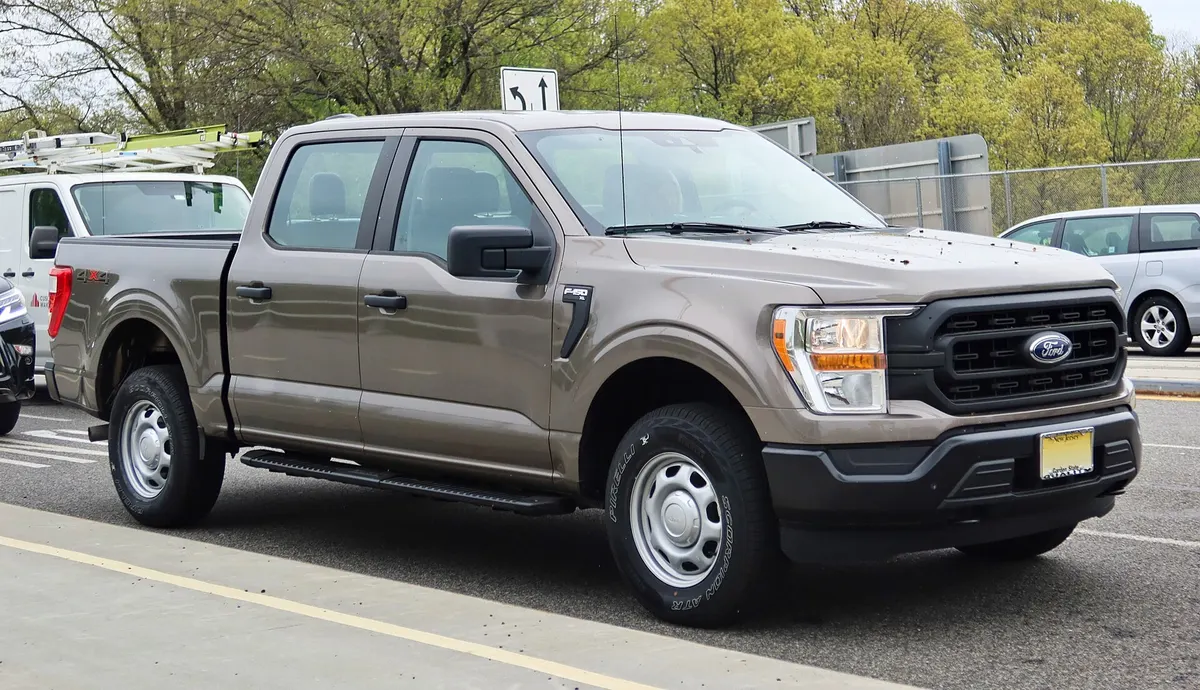
Engines
- 3.3L Ti-VCT V6 · 3.3L gasoline, 290 hp
- 2.7L EcoBoost (Nano) · 2.7L gasoline, 325 hp
- 3.5L EcoBoost · 3.5L gasoline, 400 hp
- 5.0L Coyote V8 · 5.0L gasoline, 400 hp
- 3.5L PowerBoost hybrid · 3.5L hybrid, 430 hp
- 5.2L supercharged V8 (Raptor R) · 5.2L gasoline
Transmissions
- 10R80 · automatic, 10-speed
Drivetrain
RWD / 4WD
Body
pickup (regular cab), pickup (SuperCab), pickup (SuperCrew)
Trims
XL, XLT, Lariat, Tremor, King Ranch, Platinum, Platinum Plus, Limited, Raptor, Raptor R
Ford F-150 part-number cross-reference
Start from the OEM number, then pick the brand you trust. Verified equivalents for the Ford F-150 (2021–present).
Part links go to Amazon, and to eBay where Amazon does not stock the part. Affiliate links, so we may earn a commission if you buy. Your price is unchanged, and a commission never changes a verdict.
Engine oil filter (spin-on)
Motorcraft
Find Motorcraft engine oil filter on AmazonPurolator
Listed as cross-reference of Fram XG10575 / FL-500S family
See Purolator engine oil filterMobil 1
Listed as cross-reference of Fram XG10575 / FL-500S family
Compare Mobil 1 engine oil filterVerified via: PartCatalog: Wix 57502 fitment (2021-2023 3.3/3.5/5.0), FinditParts: FRAM XG10575 cross-reference and fitment, FordPartsGiant: F-150 oil filter catalog (AA5Z-6714-A 2011-2025 incl. 3.5L gas/hybrid)
Engine oil filter (2.7L EcoBoost cartridge)
Fram
Cartridge; cross-references Motorcraft FL-2062/FL-2062A, listed for F-150 2015-2026
Look up Fram engine oil filterPurolator
Listed as cross-reference of Fram CH11955 / FL-2062A
See Purolator engine oil filter, 2021-2023Mobil 1
Listed as cross-reference of Fram CH11955 / FL-2062A
Compare Mobil 1 engine oil filter, 2021-2023Verified via: FordPartsGiant: F-150 oil filter catalog (KU2Z-6731-A element kit, 2015-2025), FinditParts: FRAM CH11955 cross-reference (Motorcraft FL-2062/FL-2062A) and fitment, F150Forum: 2.7 EcoBoost oil filter thread (Motorcraft FL-2062 consensus)
Engine air filter
Motorcraft
Find Motorcraft engine air filter on AmazonWix
Fitment page verified through 2022 F-150; crosses Ford 7C3Z9601A / Motorcraft FA1883
Look up Wix engine air filterVerified via: FordPartsGiant: F-150 air filter catalog (7C3Z-9601-A 2010-2025; FR3Z-9601-B 2023-2025), Amazon: Motorcraft FA-1883 listing (09-26 F-150), PartsHawk: Wix 49883 fitment and OEM cross-references
Cabin air filter
Verified via: FordPartsGiant: F-150 cabin air filter catalog (KL3Z-19N619-AA 2015-2025; MU2Z-19N619-A 2021-2025), FinditParts: Motorcraft FP79 cross-reference (Ford FL3Z19N619A; Fram/Wix/Purolator)
Should I buy a 2021–present Ford F-150?
Buy it with the paperwork, not on faith. Mechanically this is a strong truck, with proven engine designs and an excellent chassis, but 2021 was a rough launch year: 20+ recalls including failing wiper motors, driveshafts that can fracture, and a batch of 2.7L EcoBoosts with intake valves that can grenade the engine (recall 24S55 / NHTSA 24V-635). The recall cadence never really stopped: the 2021–2024 backup-camera software recall (25V-315) covers over half a million F-150s, Trailer Tow Max Duty trucks got two rear-axle recalls (23V-896, then 25V-512 with free axle-shaft replacement), and a February 2026 trailer-brake-module campaign (26V-104) swept in 4.4 million Ford trucks. Nearly all of it is fixed free, much of it over-the-air. Run the VIN through NHTSA's recall lookup and confirm every campaign is closed before money changes hands. The 2024 refresh changed styling and tech, not mechanicals, and 2024–2026 trucks log far fewer complaints. The PowerBoost hybrid is genuinely useful (onboard generator, real MPG gains) but adds electrical failure modes that can strand the truck. Buy one with a warranty. The 10-speed's clunky shifting is the thing you test-drive for on every example, every year.
Best years
2023 (launch-year mess sorted, pre-refresh value pick), 2024–2025 (refresh years, far fewer complaints so far; most recalls are free software fixes)
Years to avoid
2021 (launch year, the bulk of the recalls and complaints), 2021–2022 2.7L EcoBoost built May–Oct 2021, unless recall 24S55 engine test/replacement is documented
Pre-Purchase Checklist for Ford F-150
- ☐Run the VIN at nhtsa.gov/recalls and at a Ford dealer. This generation's recall list is long and still growing. Campaigns as recent as 2026 (trailer brake module 26V-104, backup camera 26V-489) are still rolling out, and on 2025s that includes the blank-instrument-cluster (25V-540) and brake-booster (25V-488) software updates. Every open campaign should be closed before purchase.
- ☐On a 2021–2022 2.7L EcoBoost: confirm recall 24S55 (NHTSA 24V-635, intake valves) was performed. The remedy is an engine cycle test, with engine replacement if it fails. Get the dealer printout.
- ☐Test-drive with the 10-speed cold and hot: feel for hard 1–2 and 2–3 shifts, clunks when coming to a stop, shudder around 25–45 mph, and any slip or bang on light throttle.
- ☐On a PowerBoost: watch for 'Stop Safely Now' history, check both 12V batteries (there are two, one under the hood and one under the rear seat), and verify Pro Power Onboard actually powers a load.
- ☐On a 5.0L V8: check the oil level against service records and ask how much oil it uses between changes. Look for top-off receipts.
- ☐On a 2021: cycle the wipers on high (the motors were recalled twice) and look underneath at the two-piece driveshaft and underbody insulators (2021–2022 recalls for insulators contacting and damaging the aluminum driveshaft).
- ☐On any 2021–2024 truck: shift into reverse through a few restarts and watch the backup camera. Screen freezes and black-screen reboots drove recalls 25V-315 and 26V-489. Also check the power tailgate and running boards for erratic behavior; electrical gremlins are this generation's most-complained category.
- ☐If the truck has the Trailer Tow Max Duty package (9.75-inch heavy-duty axle): listen for clicking from the rear axle when pulling away, and confirm the axle-shaft replacement under recall 25V-512 (which expands 23V-896) was done.
Common Ford F-150 problems & repair costs
10R80 10-speed harsh shifting, clunks, and shudder
$150–$4,500Symptoms: Hard or delayed 1–2 and 2–3 upshifts, a clunk or bang coming to a stop or on light throttle tip-in, torque-converter shudder at steady cruise, occasional gear hunting. CarComplaints ranks the 10-speed as the 2021 truck's #1 reported problem, showing up at an average of about 14,000 miles. Complaint volume drops sharply on 2024+ trucks, but drivetrain complaints are still among their top categories.
Fix: First stop is the free stuff: Ford issued multiple TSBs and PCM/TCM software calibrations that recalibrate shift scheduling and line pressure, and many trucks improve after a reflash and a transmission relearn. Trucks with mechanical damage (valve body, clutch packs, torque converter) need repair or a rebuilt unit. That's the four-figure end. The 10R80's shifting behavior is the subject of ongoing class-action litigation; there is no recall for shift quality on this generation.
Sources: NHTSA: 2021 Ford F-150 complaints, CarComplaints: 2021 Ford F-150, CarComplaints: 2024 Ford F-150, ClassAction.org: 10R80 harsh-shifting class action
2.7L EcoBoost intake valve failure (recall 24S55)
$0–$11,000Symptoms: Sudden loss of power, rough running or a catastrophic misfire when an intake valve cracks and drops into the cylinder. The valves were over-hardened during supplier grinding and can shatter in service.
Fix: Ford recall 24S55 (NHTSA 24V-635, about 90,736 vehicles including F-150s with the 2.7L Nano EcoBoost) has dealers run an engine cycle test and replace the engine free if it fails. Ford changed the valve material for production after October 31, 2021, so later builds aren't affected. If you're outside the recall population and a valve lets go, you're into a used or reman engine out of pocket. That's why the recall paperwork matters on these two model years.
Sources: Ford: recall 24S55 (engine intake valves), NHTSA: recall report 24V-635, F150gen14 forum: 2.7L broken intake valve recall thread
Backup camera freezes, goes black, or is blocked in reverse (recalls 25V-315, 26V-489)
Symptoms: The SYNC screen freezes or reboots while backing up, leaving the rearview image frozen, black, or missing; on trucks with the 8-inch screen, the infotainment home menu can pop up over the camera image in reverse.
Fix: Two free software campaigns. Recall 25V-315 (Ford 25S49, May 2025) covers 1,075,299 Ford and Lincoln vehicles, 527,371 of them 2021–2024 F-150s, for a SYNC 4 (APIM) fault that can freeze or drop the camera image; the fix is a software update at the dealer or over-the-air. Recall 26V-489 (Ford 26C37, July 2026) covers 47,587 trucks, including 2021–2023 F-150s with the 8-inch screen, whose home menu can obstruct the camera image, same free software remedy. No repair cost either way; just confirm by VIN that both are done.
Sources: F150gen14: recall 25S49 / NHTSA 25V-315 (rear camera display freezing), CBS News: Ford recalls more than 1 million vehicles over rearview camera glitch, NHTSA: 2023 Ford F-150 recalls (26V-489 listed)
Rear axle hub bolt fatigue: Trailer Tow Max Duty trucks (recalls 23V-896, 25V-512)
Symptoms: Clicking or ratcheting noise from the rear axle, especially pulling away from a stop. A fatigued hub bolt lets the hub and axle-shaft splines wear against each other. Worst case is a loss of drive power, or a truck that won't hold Park and rolls away.
Fix: Ford first recalled 112,965 trucks (2021–2023) in December 2023 under 23V-896 (Ford 23S65). The original fix didn't fully solve it, so in August 2025 Ford issued 25V-512 (Ford 25S82) covering 103,174 2023–2025 trucks. This time dealers replace both rear axle shaft assemblies free, with owner letters phased through May 2026. Only trucks with the Trailer Tow Max Duty package and the 9.75-inch 3/4-float axle are affected. A standard-axle truck is not in this population.
Sources: Ford: recall 23S65 (2021–2023 rear axle bolt breakage), Cars.com: Ford recalls 103,000 F-150s for damaged axle bolts (25V-512), TFLTruck: Ford recalls 113,000 F-150s for rear axle hub bolt failure
PowerBoost hybrid electrical faults ('Stop Safely Now', battery failures)
$200–$8,500Symptoms: 'Stop Safely Now' warning and a truck that won't restart or locks in park; powertrain malfunction (wrench) light with code P2C44; dead or draining 12V batteries (the truck has two, and the under-seat auxiliary battery is often missed in diagnosis); in the worst cases, high-voltage hybrid battery or connector failure.
Fix: Start cheap: both 12V batteries tested and replaced as needed, plus the software updates Ford issued for the wrench-light fault. Hybrid battery replacement is the ugly end. Owner reports put non-warranty replacement in the thousands. The hybrid system carries an 8-year/100,000-mile federal warranty, so verify coverage before paying for anything high-voltage.
Sources: Cars.com: 2021 F-150 hybrid 12V battery failure (long-term test), F150gen14 forum: PowerBoost hybrid battery failure, NHTSA TSB: 2021–2022 F-150 3.5L PowerBoost wrench light / P2C44
Windshield wiper motor failure (recalled twice)
$0–$450Symptoms: Wipers slow down, stop mid-sweep, or quit entirely, a real hazard in rain. Caused by a defective spline in the wiper motor. Ford logged hundreds of failure reports before recalling roughly 450,000 trucks, then expanding the campaign by another 220,000+ in 2023.
Fix: Dealer replaces the wiper motor free under recall with a corrected-production part. Out of recall, a wiper motor is a straightforward independent-shop job: parts plus about an hour of labor.
Sources: Consumer Reports: F-150 wiper motor recall expansion, NHTSA: 2021 Ford F-150 recalls
Driveshaft damage and fracture (two recalls)
$0–$2,600Symptoms: Underbody clunk, vibration at speed, or in the worst case a driveshaft that separates or fractures, meaning loss of drive and potential loss of control. Two distinct defects: some 2021 two-piece driveshafts were improperly assembled, and on 2021–2022 trucks the underbody heat/noise insulators can loosen, rub the aluminum driveshaft, and eventually crack it.
Fix: Both are recall repairs: dealers inspect, re-secure the insulators, and replace damaged driveshafts free. Confirm by VIN that both campaigns are closed; a truck that missed them and cracked a driveshaft later is looking at a four-figure replacement at an independent shop.
Sources: Fox Business: Ford recalls 615,000+ vehicles for wiper, driveshaft defects, NHTSA: 2021 Ford F-150 recalls
5.0L V8 oil consumption
$100–$1,500Symptoms: Oil level drops noticeably between changes, a quart every 1,000–3,000 miles in owner reports, usually with no visible leak and no smoke. This is the tail end of the 2018–2020 Coyote oil-consumption saga; Ford moved the 5.0L to 5W-30 oil for 2021, which reduced but didn't eliminate complaints.
Fix: No recall. Ford's approach has been dealer TSBs (PCM reprogramming to reduce deceleration vacuum that pulls oil past the PCV system) plus the oil-spec change. Most 14th-gen cases are managed with the reflash and disciplined level checks; document consumption with the dealer while under powertrain warranty in case yours is one of the bad ones.
Sources: F150gen14 forum: oil consumption on the 2021+, CarComplaints: 2021 Ford F-150 (excessive oil consumption), MyCarVoice: Ford F-150 5.0L oil consumption lawsuit
Routine costs are normal full-size-truck money: oil changes on a big V6/V8, tires that run $900–$1,400 a set, and brakes that wear faster if you tow. The recall-heavy run actually works in a used buyer's favor. Most of the scary stuff (wipers, driveshaft, intake valves, backup camera, rear axle shafts, trailer brake module) is fixed free by VIN, and most of the 2024+ campaigns are software patches Ford can push over-the-air. The real ownership risk concentrates in two places: a 10R80 that eventually needs mechanical work instead of a reflash, and PowerBoost electricals after the 8-year/100k hybrid warranty. Turbo EcoBoost engines also want their oil changes on time. Turbos punish neglect. Budget-wise, a well-sorted 3.5L or 2.7L gas truck is the predictable one; the hybrid saves fuel but carries the bigger worst-case repair bill.
Cost calculator
What will this Ford F-150 cost you by a given mileage?
Drag to a mileage. We total the documented problems whose typical onset falls at or before it. The same cost ranges listed above, nothing new invented.
$0 estimated repair range
5-Year Maintenance Schedule & Cost to Own
Every scheduled service by mileage, fluid capacities, independent shop ranges, and parts cross-references.
Have a repair quote for this Ford F-150?
Audit against OEM book times, uncover duplicate pad and rotor labor, and verify parts markups.
How to fix common Ford F-150 problems (DIY)
Engine + cabin air filter change
Tools: None required (airbox uses clips; glovebox drops by hand)
- Unclip the airbox lid on the driver's side of the engine bay and swing it open.
- Swap in the new engine air filter with the seal seated all the way around, then re-clip the lid.
- Open the glovebox, squeeze the sides to release the stops, and let it hang down.
- Slide the cabin filter cover off, pull the old filter, and insert the new one with the airflow arrow pointing the correct direction.
- Reinstall the cover and snap the glovebox back onto its stops.
Parts
- Engine air filter (2021–2023 F-150) · Amazon $18–$35
- Cabin air filter (2021–2023 F-150) · Amazon $12–$25
Replace the 12V battery (both, on a PowerBoost)
Tools: Socket set (8–13mm), Battery terminal brush, Memory saver (optional but recommended), FORScan or dealer visit for BMS reset
- Buy the correct AGM battery. This generation uses a battery monitoring sensor and expects AGM; a bargain flooded battery causes electrical gremlins.
- Disconnect negative first, then positive, then the hold-down; lift the old battery out of the underhood tray.
- On a PowerBoost, also check/replace the auxiliary 12V battery under the rear seat. It's the one dealers often skip and a common source of 'dead truck' complaints.
- Install, torque terminals snug, and reconnect positive first, negative last.
- Reset the battery monitoring system (FORScan, a capable scan tool, or a dealer) so charging strategy matches the new battery.
- Drive and confirm no charging warnings; on a PowerBoost, confirm clean starts and Pro Power operation.
Parts
Front brake pads and rotors
Tools: Floor jack + jack stands, Socket set + breaker bar, Large C-clamp or caliper piston tool, Torque wrench, Brake cleaner
- Loosen the lug nuts, jack the front end, set it on stands, and pull the wheels.
- Remove the caliper bolts, hang the caliper from the spring with a hook (never by the hose), and slide out the old pads.
- Remove the caliper bracket and the old rotor; clean the hub face until the new rotor sits flat.
- Compress the caliper piston, install the new rotor and pads with fresh hardware and a smear of brake grease on the contact points.
- Reassemble, torque caliper and bracket bolts to spec, refit the wheels, and torque lug nuts.
- Pump the pedal firm before moving, then bed the pads with a series of moderate stops.
Parts
- Front brake pad and rotor kit (2021–2023 F-150) · Amazon $120–$260
Some parts links are affiliate links. We may earn a commission at no cost to you. We only list parts that fit this generation.
The short version
The 14th-gen F-150 (2021–present) is a very good truck that launched badly. The 2021 model year alone piled up 20+ recalls and hundreds of complaints: failing windshield wiper motors (recalled twice), driveshafts that could rub through and fracture, and a batch of 2.7L EcoBoost engines built in mid-2021 whose intake valves can shatter, covered by recall 24S55 (NHTSA 24V-635) with a free engine replacement if the truck fails Ford’s test.
Layered on top of the launch-year chaos is a familiar face: the 10R80 10-speed automatic, still generating harsh-shift and clunk complaints and still in class-action litigation. And the PowerBoost hybrid, genuinely brilliant on paper with a built-in generator, brought its own electrical failure modes, from dead 12V batteries to “Stop Safely Now” shutdowns.
Ford refreshed the truck for 2024 without touching the bones: new styling, a 12-inch screen on every trim, the Pro Access swing-out tailgate, and the 2.7L EcoBoost taking over as the base engine. Complaint counts on 2024+ trucks are a fraction of 2021’s, but the recall machine kept running: a million-vehicle backup-camera software campaign, a second round of rear-axle-shaft replacements on tow-package trucks, a blank-instrument-cluster fix on 2025s, and a 4.38-million-truck trailer-brake-module recall in February 2026. Almost all of it is free software.
What that means when you’re shopping
Almost everything scary on this generation is either recall-covered or testable, which makes your job procedural rather than lucky. Run the VIN at nhtsa.gov/recalls and demand the dealer printout showing every campaign closed. Pay special attention to the intake-valve recall on 2021–2022 2.7L trucks, the wiper and driveshaft campaigns on 2021s, the backup-camera software (25V-315, and 26V-489 on 8-inch-screen trucks), and the rear-axle-shaft replacement (25V-512) on anything with the Trailer Tow Max Duty package.
Then drive it like you’re trying to annoy the transmission: cold start, stop-and-go, light throttle around town. A 10R80 that clunks coming to a stop or bangs its 1–2 shift on the test drive is not going to improve after you buy it.
A 2023 skips most of the launch-year mess and is the cleanest pre-refresh pick. A fully-recalled 2021 can be a bargain for the same reason people fear it.
The 2024–2026 trucks
The refresh years look genuinely cleaner. The 2024 has logged just 164 owner complaints on CarComplaints, a fraction of the 2021’s tally. But they collected their own stack of mostly small recalls: steering-fastener campaigns on a few hundred 2024s (24V-329) and 9,181 2025s (25V-309), a reverse-gear valve-body defect on 269 trucks (25V-164), windshield bonding (24V-486), a rapid oil leak from a misaligned engine cup plug on small batches of 3.5L EcoBoosts (24V-851, 25V-198), and defective connecting rods on 154 engines (25V-344).
Two 2025 campaigns were bigger but are software fixes: a blank instrument cluster at startup on 278,376 F-150s (25V-540), and an electronic brake booster fault that can drop power brake assist on 312,120 Ford/Lincoln vehicles (25V-488, plus a 679-truck hardware follow-up, 25V-823). Then in February 2026 Ford recalled 4.38 million trucks and SUVs, 2021–2026 F-150s among them, because the integrated trailer brake module can lose communication and drop trailer brakes and lights (26V-104); the fix is another free software update. The takeaway isn’t “avoid these years.” It’s check the VIN and confirm the updates landed.
Model-year housekeeping: 2026 is largely a carry-over, with new colors, the STX Lobo street-truck package, a one-time-purchase option for BlueCruise, and the V8 option dropped from King Ranch and Platinum.
Which engine should you pick?
The 2.7L EcoBoost (post-recall) is the everyday sweet spot, and from 2024 it’s the base engine. The 3.3L V6 was a 2021–2023 item. The 3.5L EcoBoost is the tow engine. The 5.0L V8 is durable but check oil use. Ford’s oil-consumption saga from 2018–2020 didn’t fully die with the switch to 5W-30. The PowerBoost is the most capable and the most complex; buy it under the 8-year/100k hybrid warranty or price the risk in.
How this file is built: failure modes and cost ranges are compiled from NHTSA complaint and recall data, Ford’s recall campaigns and service bulletins, CarComplaints data, and owner-forum reporting, then sanity-checked against shop-floor experience. Cost figures are independent-shop estimates and vary by region. Spot something off? Tell us.
Viral car myths, checked against this car
- Outdated
Does a "$1 mineral" really double car battery life? The Epsom-salt reality.
The mineral is Epsom salt (magnesium sulfate). It was a real desulfation hack for serviceable flooded-cell batteries 40+ years ago. It does not work on modern sealed AGM or EFB batteries, and trying it on yours will void the warranty without helping the battery.
- Dangerous
Is the "$2 liquid that destroys engine sludge forever" real? Our shop-floor verdict.
An aggressive solvent flush on a high-mileage engine is a textbook way to spin a bearing. The viral 'kitchen-cabinet flush' is folklore that real shops spend money cleaning up after.
- Misleading
Is the "$1 Japanese oil trick" that stops engine wear forever real?
The 'Japanese oil trick' is almost certainly MoS2 (molybdenum disulfide), a real industrial friction modifier. It is German, not Japanese (Liqui Moly popularized it), sold openly at every parts store for $15-20, has real but modest measured friction benefits, and was never buried by anyone.
Frequently asked questions
What years of the 14th-gen Ford F-150 should I avoid?
2021 is the year to be most careful with. It's the launch year and carries the bulk of the recalls (wiper motors, driveshafts) and the highest complaint counts. A 2021 with every recall closed and clean service history is fine. On 2021–2022 2.7L EcoBoost trucks, specifically verify the intake-valve recall (24S55 / NHTSA 24V-635) was performed. 2023–2025 are the lowest-drama picks. 2024 and newer log far fewer complaints, and most of their recalls are free software fixes.
Is the F-150 10-speed transmission reliable?
Mixed. Plenty of 10R80s run trouble-free, but harsh shifting, clunks, and shudder are this generation's most common powertrain complaint, and the transmission is the subject of class-action litigation. Complaint volume drops on 2024+ trucks, but the pattern hasn't disappeared. Many trucks are fixed with free software updates; a minority need real mechanical work. Test-drive any example cold and hot, and walk away from one that bangs into gear.
Is the PowerBoost hybrid worth buying used?
Yes, if it's still under the 8-year/100,000-mile hybrid warranty and it checks out on a test drive. The fuel economy and the onboard generator are real advantages. The risk is electrical: 'Stop Safely Now' faults, 12V battery drain (it has two 12V batteries), and rare but expensive hybrid battery failures. Out of warranty, price that risk into your offer.
Was there an engine recall on the 2021–2022 F-150?
Yes. Recall 24S55 (NHTSA 24V-635) covers 2.7L (and 3.0L) Nano EcoBoost engines built roughly May–October 2021, where over-hardened intake valves can crack and break. The dealer runs an engine cycle test and replaces the engine free if it fails. The 3.5L EcoBoost, 5.0L V8, and 3.3L V6 are not part of that recall. Check any candidate truck's VIN at nhtsa.gov/recalls.
Is there a recall on the Ford F-150 backup camera?
Yes, two. Recall 25V-315 (Ford 25S49, May 2025) covers 527,371 F-150s from 2021–2024 whose SYNC 4 screen can freeze or go black in reverse; the fix is a free software update, often delivered over-the-air. A second campaign, 26V-489 (July 2026), covers 2021–2023 trucks with the 8-inch screen, where the home menu can block the camera image. Check your VIN at nhtsa.gov/recalls. Both fixes are free.
What changed on the 2024 Ford F-150?
The 2024 model year was a mid-cycle refresh of this same generation, not a redesign: new front and rear styling, a 12-inch screen standard across the lineup, the available Pro Access swing-out tailgate, a new Platinum Plus flagship trim replacing the Limited, and the 2.7L EcoBoost replacing the 3.3L V6 as the base engine. The engines and 10-speed otherwise carried over, so the mechanical story is the same as 2021–2023, minus the launch-year build problems.
Which engine is the most reliable in the 14th-gen F-150?
The 3.3L V6 (2021–2023 only) has the fewest complaints but the least capability. Among the popular choices, a 3.5L EcoBoost or a post-recall 2.7L are both solid; the 5.0L V8 is durable but watch oil consumption between changes. The PowerBoost is the most capable and the most complex: great truck, biggest worst-case repair bill.
Every Ford F-150 generation
The full case file run, beyond the generation before and after this one.
Cross-shopped rivals
Files on what buyers weigh against the Ford F-150 of this era.