Case file · FORD-EXPLORER-2020-2024 · 6th gen (U625)
Ford Explorer 2020–presentCommon problems, reliability & repair costs
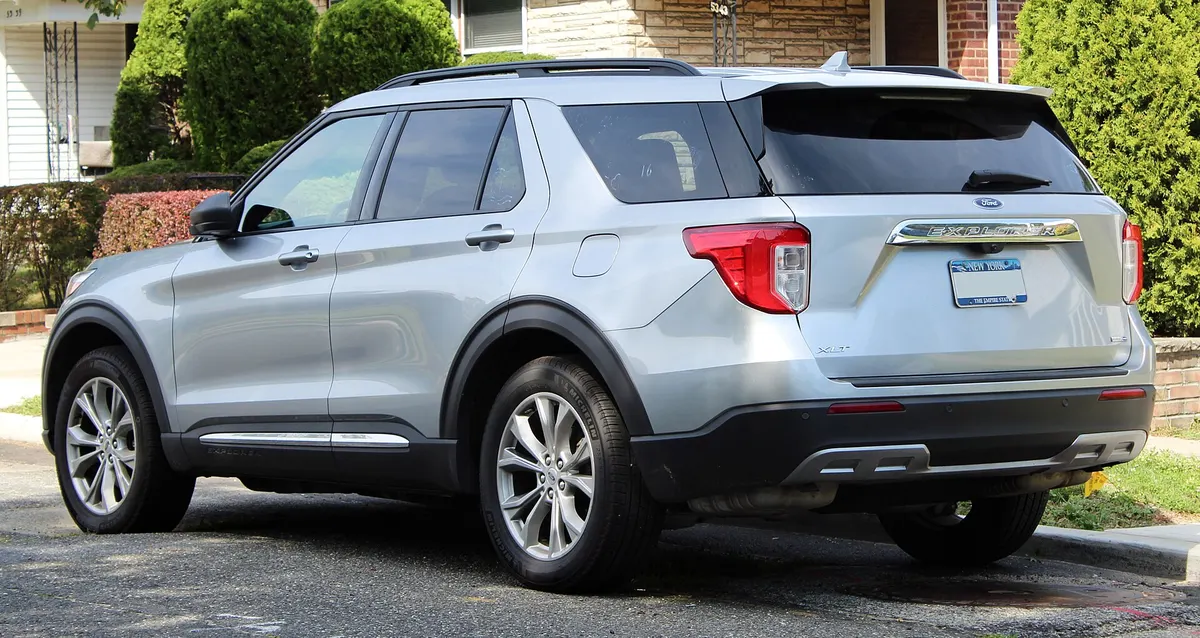
The 6th-gen Explorer moved back to a rear-drive platform and got quicker, roomier, and nicer to drive, and then stumbled badly out of the gate. The 2020 launch year was a quality mess, and 2020–2022 cars carry a rear axle bolt defect that took Ford three recalls to actually fix. The sorted 2023–2024 cars are the generation's sweet spot. A heavy 2025 refresh (new interior, Google-based infotainment) restarted the first-year clock. The refresh years have already stacked up their own recall pile, from stalling EGR valves to engines built wrong enough to need replacement. Still on sale today, this is a verify-the-recalls-by-VIN purchase in every year, not a buy-on-faith one.
2023 (launch chaos sorted, pre-refresh), 2024 (the last and most-debugged pre-refresh year)
2020 (launch-year quality: the worst year by complaint volum +2 more
Engines
- 2.3L EcoBoost · 2.3L gasoline, 300 hp
- 3.0L EcoBoost · 3.0L gasoline, 400 hp
- 3.3L hybrid · 3.3L hybrid, 318 hp
Transmissions
- 10R60 · automatic, 10-speed
- automatic , 10-speed
Drivetrain
RWD / AWD
Body
suv
Trims
Base (through 2024), XLT (through 2024), Limited (through 2024), ST, Platinum, King Ranch (through 2024), Timberline (through 2024), Active (2025+), ST-Line (2025+), Tremor (2026+)
Ford Explorer part-number cross-reference
Start from the OEM number, then pick the brand you trust. Verified equivalents for the Ford Explorer (2020–present).
Part links go to Amazon, and to eBay where Amazon does not stock the part. Affiliate links, so we may earn a commission if you buy. Your price is unchanged, and a commission never changes a verdict.
Oil filter
Motorcraft
Ford's books print it FL-910-S. The 2025-2026 books list FL-2127 for the 2.3L
Find Motorcraft oil filter on AmazonVerified via: Ford.com: Motorcraft FL910S, Wix 51348 (replaces Motorcraft FL910/FL910S, NAPA Gold 1348, ACDelco PF53), oilfilter-crossreference: Motorcraft FL910S (Fram PH3614)
Oil filter
Motorcraft
Find Motorcraft oil filter on Amazon, 2.3LVerified via: Ford 2025 Explorer owner's manual, Motorcraft parts, 2.3L (printed p423), Ford 2026 Explorer owner's manual, Motorcraft parts, 2.3L (printed p398)
Oil filter
Motorcraft
Cartridge element, not spin-on. TRAP: some catalogs list FL-910S for the ST. That is wrong; the 3.0L Nano V6 uses the FL-2062-A cartridge.
Look up Motorcraft oil filter on AmazonVerified via: SVTPerformance: FL-2062-A for 3.0L & 2.7L Nano EcoBoost, FinditParts: Motorcraft FL2062A cross reference
Oil filter
Verified via: Ford.com: Motorcraft FL500S, Walmart: Motorcraft FL-500S fits Ford Explorer Limited Hybrid, oilfilter-crossreference: Motorcraft FL500S
Engine air filter
Motorcraft
Panel element carried over from the 5th-gen 3.5L. Ford's 2025-2026 books list FA-2067 for the 2.3L instead. Do NOT use FA-1947 here. That is the 3.3L filter.
See Motorcraft engine air filter on AmazonK&N
washable. TRAP: K&N 33-5075 is cross-listed to the Explorer at some retailers but actually fits Kia/Hyundai (Telluride/Palisade/Sorento), not this vehicle.
Find K&N engine air filterVerified via: Walmart: Motorcraft FA-1884 (fits Ford Explorer), Fram CA10242 (Explorer 2.3L/3.0L application), airfilter-crossreference: Motorcraft FA1884 (K&N 33-2395, Hastings AF1331)
Engine air filter
Motorcraft
Check Motorcraft engine air filter on AmazonVerified via: Ford 2025 Explorer owner's manual, Motorcraft parts, 2.3L (printed p423), Ford 2026 Explorer owner's manual, Motorcraft parts, 2.3L (printed p398)
Engine air filter
Motorcraft
6th-gen-specific design for the 3.3L; distinct airbox from the 2.3L/3.0L. Aftermarket cross-references are not yet well established for this newer part number.
See Motorcraft engine air filter on Amazon, 3.3LVerified via: Walmart: Motorcraft FA-1947 fits 2020-2023 Ford Explorer, Ford Parts Direct: Motorcraft FA-1947 (2020-2025 Ford)
Cabin air filter
Verified via: Ford 2020 Explorer owner's manual, Motorcraft parts (printed p377-379), Ford 2021 Explorer owner's manual, Motorcraft parts (printed p388-390)
Cabin air filter
Motorcraft
Find Motorcraft cabin air filter on AmazonVerified via: Ford 2022 Explorer owner's manual, Motorcraft parts (printed p383-384)
Cabin air filter
Verified via: Ford 2023 Explorer owner's manual, Motorcraft parts (printed p382-383), Ford 2024 Explorer owner's manual, Motorcraft parts (printed p385-386)
Cabin air filter
Motorcraft
Check Motorcraft cabin air filter on AmazonVerified via: Ford 2025 Explorer owner's manual, Motorcraft parts (printed p423-425), Ford 2026 Explorer owner's manual, Motorcraft parts (printed p398-399)
Spark plugs
Motorcraft
Iridium, Ford CYFS12YRT3; gap 0.028-0.031 in. Ford's 2022 to 2026 books list SP-594. The 2020-2021 books list SP-578 for both engines. The 2025-2026 books move the 2.3L to SP-597-X. Aftermarket NGK/Denso crosses exist but only as unconfirmed 'indirect' matches, so they are omitted here.
See Motorcraft spark plugs on AmazonVerified via: Ford.com: Motorcraft SP594 iridium, FinditParts: Motorcraft SP594 (2019-2022 Explorer/Ranger 2.3), 5 Star Tuning: SP-594 for Ford/Lincoln 2.7L & 3.0L EcoBoost, Ford 2022 Explorer owner's manual, specs and Motorcraft parts
Spark plugs
Verified via: Ford 2025 Explorer owner's manual, Motorcraft parts, 2.3L (printed p423), Ford 2026 Explorer owner's manual, Motorcraft parts, 2.3L (printed p398)
Spark plugs
Motorcraft
Gap 0.049-0.053 in (1.25-1.35 mm). Ford's 2025-2026 books list SP-589 for the 3.3L
Find Motorcraft spark plugs on AmazonVerified via: Ford 2022 Explorer owner's manual, 3.3L specs (printed p380-381) and Motorcraft parts (printed p384), Ford 2020 Explorer owner's manual, Motorcraft parts, 3.3L
Front brake pads
Motorcraft
Ford OE L1MZ-2001-G. Base/standard-brake trims use Motorcraft BRF-1915 instead; the ST uses Brembo front calipers and takes a different pad. TRAP: Akebono ACT2208 does NOT fit here (it is a rear/Ranger pad); the correct Explorer front is ACT2229.
Look up Motorcraft front brake pads on AmazonAkebono
ProACT ceramic, front; cross-refs Ford L1MZ-2001-G/D/C/F; fits 2020-2023 Explorer front per Newparts
Check Akebono front brake padsVerified via: Ford OEM Parts Outlet: Motorcraft BRF-1911 (high-series, no Brembo, 18in rotor), Lakeland Ford: 2020 Explorer front pad set L1MZ-2001-G, Newparts: Akebono ACT2229 front, 2020-2023 Explorer fitment + OE cross
Wiper blades
OE size
Front beam blades. Sizes verified; specific brand part numbers vary by attachment and are omitted where unverified. TRAP: some listings show 28/22. The correct fronts are 26/21.
See OE size wiper blades on AmazonVerified via: Wiper Blades USA: 2020 Ford Explorer sizes (26/21), windshieldwipers.com: 2020 Ford Explorer 26/21
Serpentine (accessory drive) belt
Ford (Motorcraft)
2020-2024 Explorer main accessory belt (2.3L, water-pump/alternator drive). A second OE number L1MZ-8620-H also exists for this generation; the correct belt depends on engine and whether the HD/tow package is fitted.
Compare Ford serpentine on AmazonVerified via: Ford OEM Parts Online: Serpentine Belt L1MZ-8620-G (2020-2024 Explorer), Lakeland Ford: Accessory Drive Belt L1MZ-8620-H
Battery
Motorcraft
BCI Group 48 (H6), AGM, ~760 CCA / 70 Ah. Ford's 2025 book lists BAGM-94RH7-800 or BAGM-49H8 for the 3.0L and BAGM-49H8 for the 3.3L instead. Confirms the 6th-gen spec differs from the 5th-gen's Group 65.
Check Motorcraft battery on AmazonVerified via: Ford.com: Motorcraft BAGM-48H6-760, Group 48, 760 CCA, Interstate Batteries: MTX-48/H6 (Group 48, 760 CCA), AutoZone: 2021 Ford Explorer battery (Group 48/H6), Ford 2025 Explorer owner's manual, Motorcraft parts by engine (printed p424-425)
Should I buy a 2020–present Ford Explorer?
Buy a sorted 2023 or 2024, and only with the recall homework done. The 2020 model year was a genuinely rough launch, with over a thousand owner complaints on CarComplaints and more than a dozen recalls, and 2020–2022 cars carry the rear axle bolt defect that Ford recalled three separate times before replacing the actual hardware. A 2023 or 2024 with a clean VIN-checked recall history is the value pick of the generation: quick, comfortable, and genuinely three-row usable. The heavily refreshed 2025–2026 cars are nicer inside and better equipped, but the refresh restarted the first-year clock. The 2025 logged ten NHTSA recalls in roughly its first 18 months, from EGR valves that can stall the engine to camera/ADAS software to small batches of engines that need outright replacement. Whatever the year, run the VIN through NHTSA's recall lookup before money changes hands: on 2020–2022 cars confirm the axle bolt hardware fix (not just the parking-brake software patch), and on 2025–2026 cars confirm the EGR, camera-software, and seat-hardware campaigns are closed.
Best years
2023 (launch chaos sorted, pre-refresh), 2024 (the last and most-debugged pre-refresh year)
Years to avoid
2020 (launch-year quality: the worst year by complaint volume, by far), 2021 early builds (many of the same defects, lower rate), 2025 (first year of the heavy refresh: ten recalls in ~18 months; buy only with every campaign closed)
Pre-Purchase Checklist for Ford Explorer
- ☐Run the VIN through NHTSA's recall lookup (nhtsa.gov/recalls) on ANY year. 2020–2022: confirm the rear axle bolt recall was completed with the hardware repair (new bolt + subframe bushing), not only the earlier parking-brake software updates. 2025–2026: check the EGR valve (26V-122), camera/ADAS software (26V-165), seat belt anchor (26V-159), and second-row seat switch (26V-451) campaigns. Several remedies weren't available until late 2026 or early 2027.
- ☐Test drive at a steady 35–60 mph and light throttle. A rumble-strip vibration points to torque converter shudder in the 10-speed.
- ☐Force some hard downshifts (brake firmly from ~45 mph) and listen for harsh clunks, especially the known 7-6 downshift bang on early 2.3L cars.
- ☐Put it in reverse and watch the camera: blank, flipped, or inverted image means the recall software update was never done, or the camera itself is failing.
- ☐Cycle the digital instrument cluster through drive modes and watch for flicker, wavy lines, or a blank screen.
- ☐Work the second-row easy-entry seat switches and confirm the seats latch solidly. They were recalled for unlatching or folding while driving.
- ☐On any 2020, be extra skeptical: check panel gaps, interior rattles, paint quality, and demand complete service records. Launch-year cars had problems everywhere, not just the driveline.
- ☐On a 2025–2026, work the 13.2-inch screen hard through a full test drive and confirm the software is current. Blackouts of the new Google-based Ford Digital Experience system are the most common early owner complaint.
Common Ford Explorer problems & repair costs
Rear axle mounting bolt fracture (driveshaft disconnect)
$0–$2,500Symptoms: Clunk from the rear, loss of drive power while moving, or the vehicle rolling away when parked if the parking brake isn't set. Caused by the rear axle horizontal mounting bolt fracturing.
Fix: Recall repair is free: dealers replace the rear axle bolt and subframe bushing and inspect the axle cover for damage. Ford's first two recalls (April 2022, March 2023) only added software that auto-applies the electronic parking brake. The ~238,000-vehicle recall that followed a NHTSA investigation finally replaces the hardware. Ford logged 396 bolt-failure reports. The dollar range above is what a broken bolt plus collateral driveline damage costs if you're somehow outside the recall net.
Sources: NHTSA: 2022 Ford Explorer recalls, CarComplaints news: rear axle bolt fracture recall, CBS News: Ford recalls 238,000+ Explorers
Driveshaft weld-seam fracture (2020 only)
$0–$1,800Symptoms: Vibration or clunk under load; in a full failure, loss of drive or rollaway in Park. A deformed driveshaft can also contact the fuel tank.
Fix: Recall 20V-693 (Ford 20S65, December 2020): dealers inspect the driveshaft and replace it free if the weld seam is suspect. Applies to certain 2020 Explorers with the 10-speed and AWD. Confirm by VIN that it was done; a driveshaft out of pocket runs high hundreds to low thousands at an independent shop.
Sources: Ford Safety Recall 20S65: driveshaft weld seam, NHTSA: 2020 Ford Explorer recalls
10-speed (10R60) harsh shifting, shudder, and failures
$400–$7,500Symptoms: Hard or erratic shifts, jerking between gears, a distinct bang on the 7-6 downshift, rumble-strip shudder at 35–60 mph steady cruise (torque converter clutch), delayed engagement from Park, and occasional full transmission failure. Roughly a third of 2020 NHTSA complaints are transmission-related.
Fix: Depends on the failure. The harsh 7-6 downshift on early 2.3L cars is a dislodged A-clutch snap ring. Ford TSB 22-2411 fixes it with a redesigned front support. Shudder sometimes responds to a fluid service with the correct Mercon ULV; internal failures mean a rebuild or replacement at $4,500+. Many early cars were repaired under powertrain warranty. Get records. The same 10-speed carries into the refreshed 2025–2026 cars; early NHTSA complaints on the 2025 include uncommanded shifts to neutral at speed, but the volume so far is a small fraction of what the 2020 generated.
Sources: CarComplaints: 2020 Explorer transmission, Transmission Digest: 10R60 harsh 7-6 downshift (TSB 22-2411), NHTSA: 2025 Ford Explorer complaints
Rearview camera image failures (multiple recalls)
$0–$900Symptoms: Blank, distorted, flipped, or inverted image on the center screen when in reverse. Some failures are the camera hardware; the 2020–2024 Explorer recall population is a software defect that can invert the image. On the refreshed 2025, the image-processing module can reset and drop the camera feed along with driver-assist features.
Fix: Recall fixes are free. 2020–2024 Explorers were included in an ~890,000-vehicle software recall (OTA or dealer update), and 2020 cars were also swept into Ford's larger 1.45-million-vehicle camera hardware recall covering 2015–2020 models. The problem followed the generation into the refresh: recall 26V-165 (March 2026, 254,640 Ford/Lincoln vehicles including the 2025 Explorer) covers image-processing software that can reset unexpectedly, killing the rearview camera plus pre-collision assist, lane keeping, and blind-spot monitoring until it recovers, fixed by a free OTA or dealer update. A failed camera outside recall coverage runs a few hundred dollars installed.
Sources: Fox Business: Ford recalls 1.74M vehicles over camera software, Top Class Actions: Ford rearview camera recalls, CBS News: recall 26V-165, camera/ADAS software reset (254,640 vehicles), WardsAuto: image processing module recall detail
Digital instrument cluster and electrical gremlins
$200–$1,500Symptoms: Flickering or blank digital gauge cluster, wavy lines, unreadable speedometer, plus scattered reports of dead 12V batteries and infotainment glitches. Electrical is a top complaint category for 2021 and 2022 on CarComplaints.
Fix: Software updates cure some of it; a failed digital cluster is a module replacement at four figures with programming. A weak 12V battery causes a surprising share of the electronic weirdness. Test it first before chasing modules.
Sources: CarComplaints: 2021 Ford Explorer problems, Lemberg Law: 2021 Explorer complaint summary
Second-row seat and seat-belt hardware recalls
$0–$300Symptoms: Easy-entry second-row seat switch can bind, letting the seat unlatch, fold, or slide while driving (300,000+ vehicles recalled). Separately, second-row seat belt anchor and buckle bolts were recalled for being improperly secured on 2020–2021 cars, then again on 2025–2026 cars (recall 26V-159).
Fix: All recall repairs are free: dealers inspect the seat switch and replace the bezel, and inspect/re-secure the seat belt anchor bolts. The seat-switch fix itself had to be re-done: Ford's July 2026 recall 26V-451 (387,911 Explorers and Aviators, model years 2020–2026) supersedes the earlier campaign after 14 reports of seats moving while driving, six of them on vehicles that had already received the first fix. The new higher-retention bezel and housing wasn't scheduled to reach dealers until January 2027, so check for the open campaign on any car you shop. The range above covers a switch or bezel out of pocket.
Sources: Consumer Reports: Explorer/Aviator back seat recall, WardsAuto: 240K SUVs recalled for loose seat belt bolts, Carscoops: recall 26V-451 re-fixes the seat switch (387,911 vehicles, 2020–2026), CarComplaints news: Explorer/Aviator recalled again for seat problems
2025–2026 refresh teething: EGR valve stalls, engine-build recalls, screen blackouts
$0–$0Symptoms: Loss of drive power or an outright stall from a failed EGR valve on 2025 cars; ticking or tapping noises preceding engine failure on small batches of 2025–2026 2.3L engines; the 13.2-inch Ford Digital Experience screen going black mid-drive; windshields with visible air bubbles or improper bonding; loose trailer-hitch bolts; false forward-collision alerts and parking-brake glitches in early NHTSA complaints.
Fix: Everything listed is recall-covered and free. The catch is open campaigns and remedy timing. Recall 26V-122 (March 2026, 47,804 Ford/Lincoln vehicles including 2025 Explorers) covers EGR valves whose poppet head can detach from a bad laser weld and stall the engine at speed; the final remedy wasn't due until September 2026. Recall 26V-343 (May 2026) covers dislodged camshaft roller finger followers on 895 2025–2026 Explorers. The fix is a full engine long-block replacement, scheduled from November 2026. Recall 26V-205 covers mis-installed piston circlips on 2026 Explorers from a late-February 2026 build window, with engine inspection and replacement as needed. Screen blackouts show up in NHTSA complaints and owner forums; the fixes so far have been software updates. Buy a 2025–2026 only after confirming every campaign on the VIN is closed or booked.
Sources: Ford Authority: recall 26V-122, EGR valve failures (47,804 vehicles), Ford Authority: recall 26V-343, 2.3L engine failures (long-block replacement), Ford Authority: recall 26V-205, piston circlips (2026 Explorer/Mustang), Cars.com: 2025 Ford Explorer recall list
Budget like a mid-pack turbo SUV, not a Camry. Routine service is reasonable and the 2.3L is cheap to feed parts-wise, but both EcoBoost engines want premium-ish care: oil changes on time, quality fuel, and cooling system attention. The two wildcards are the 10-speed, anywhere from a free TSB repair under warranty to a $4,500–$7,500 replacement, and electronics, where a digital cluster or camera module out of warranty stings. A huge share of this generation's known defects are recall-covered, so a car with every recall closed out costs meaningfully less to own than the model's reputation suggests. The 3.0L ST adds brakes, tires, and turbo plumbing to the budget; the 3.3L hybrid, which Ford's 2020–2024 books cover and the 2025 book ties to the police build, has been comparatively quiet but adds battery-system complexity that's still young. On 2025–2026 cars the math shifts slightly: the Google-based infotainment stack lives and dies by software updates, and the recall sheet is long but free. The real cost risk is buying one with open campaigns whose remedies weren't yet available.
Cost calculator
What will this Ford Explorer cost you by a given mileage?
Drag to a mileage. We total the documented problems whose typical onset falls at or before it. The same cost ranges listed above, nothing new invented.
$0 estimated repair range
5-Year Maintenance Schedule & Cost to Own
Every scheduled service by mileage, fluid capacities, independent shop ranges, and parts cross-references.
Have a repair quote for this Ford Explorer?
Audit against OEM book times, uncover duplicate pad and rotor labor, and verify parts markups.
How to fix common Ford Explorer problems (DIY)
Cabin & engine air filter change
Tools: Screwdriver or small socket (airbox clips/screws)
- Open the glovebox, release the side stops, and drop it down to expose the cabin filter door.
- Slide out the old cabin filter and insert the new one with the airflow arrow pointing the correct direction (marked on the housing).
- Under the hood, release the airbox clips, lift the lid, and swap the engine air filter.
- Re-seat the lid so the seal sits flat, then re-clip and reinstall the glovebox.
Parts
- Cabin air filter (2020–2024 Ford Explorer) · Amazon $12–$25
- Engine air filter (2020–2024 Ford Explorer) · Amazon $15–$30
Front brake pads and rotors
Tools: Floor jack + jack stands, Socket set + breaker bar, Caliper piston compressor or large C-clamp, Torque wrench, Brake cleaner + caliper grease
- Loosen the lug nuts, jack the front, support on stands, and remove the wheels.
- Remove the caliper bolts, hang the caliper with wire (never by the hose), and slide off the pads.
- Remove the caliper bracket, pull the old rotor, and clean the hub face thoroughly.
- Install the new rotor and bracket, compress the caliper piston, and fit the new pads with grease on the contact points.
- Reassemble, torque everything to spec, then pump the brake pedal until firm BEFORE moving the vehicle.
- Bed the pads: several moderate stops from 35 mph, cooling between runs.
Parts
- Front brake pads + rotors kit (2020–2024 Explorer) · Amazon $120–$260
12V battery replacement (with BMS reset)
Tools: 10mm socket + extension, Memory saver (optional but recommended), OBD2 scanner capable of BMS reset (or FORScan)
- With the vehicle off, disconnect the negative terminal first, then the positive, then the hold-down bracket.
- Swap in the correct-spec AGM battery (match group size and CCA to the original).
- Reconnect positive first, then negative, and refit the hold-down.
- Perform a battery monitoring system (BMS) reset with a scan tool so the charging system treats the new battery correctly. Skipping this shortens the new battery's life.
Parts
- AGM battery (2020–2024 Ford Explorer spec) · Amazon $180–$280
Some parts links are affiliate links. We may earn a commission at no cost to you. We only list parts that fit this generation.
The short version
The 6th-gen Explorer (2020–present) is a good vehicle wrapped in a bad launch. Ford moved the Explorer back to a rear-drive platform (CD6), and the result drives better, tows more, and packages a genuinely usable third row. But the 2020 model year rolled out of Chicago Assembly in rough shape: over 1,100 owner complaints on CarComplaints, more than a dozen recalls, and problems spanning the driveline, transmission, electronics, and basic build quality.
The defining defect is the rear axle mounting bolt on 2020–2022 cars. When it fractures, the driveshaft can disconnect: loss of power while driving, or a rollaway in Park. Ford’s first two recalls only added a software patch that auto-applies the parking brake; it took a federal investigation before Ford recalled roughly 238,000 vehicles to replace the actual hardware.
The 2025–2026 refresh
For 2025 Ford gave the Explorer its biggest update of the generation. Same platform and engines, but a new interior built around a standard 13.2-inch touchscreen running Google-based Ford Digital Experience software, BlueCruise hands-free driving for the first time, and a simplified lineup: Active, ST-Line, Platinum, ST. Ford’s 2025 owner’s manual ties the 3.3L hybrid to the police build. For 2026, the off-road Tremor replaced the Timberline, with a Torsen rear differential, 31.5-inch all-terrain tires, and the ST’s 400-hp V6 available.
History rhymed. Ford held early 2025 production at the factory for weeks of extra quality checks, and the refresh years still racked up roughly ten recalls each in short order: EGR valves that can stall the engine (recall 26V-122, 47,804 vehicles), camera and driver-assist software that can reset mid-drive (26V-165, 254,640 vehicles), seat belt anchor bolts, bubbled and poorly bonded windshields, loose hitch bolts, and small batches of 2.3L engines built badly enough to need replacement (26V-343, 26V-205). None of it approaches 2020’s chaos, with 88 NHTSA complaints against the 2025 so far, a small fraction of the 2020’s tally. But a 2025 is a first-year car wearing a familiar body, and it deserves first-year skepticism.
What that means when you’re shopping
Shop 2023–2024 first. Those years shed most of the launch chaos, complaint volume drops off sharply after 2021, and they dodge the refresh’s own teething wave.
On any 2020–2022 car, the recall check is not optional. Run the VIN at nhtsa.gov/recalls and confirm three things: the rear axle bolt hardware repair (not just the parking-brake software), the rearview camera updates, and the second-row seat recalls. On a 2025–2026, the same discipline applies to the new campaigns: EGR valve, camera/ADAS software, seat belt anchors, and the re-issued second-row seat switch fix. Note that several remedies weren’t available until late 2026 or early 2027. A car with every recall closed is a fundamentally different purchase than one with open campaigns.
Then drive it like you’re trying to break it: steady cruise at 35–60 mph hunting for torque converter shudder, firm braking from 45 mph listening for a harsh downshift clunk, reverse gear watching for a blank or flipped camera image, and a full sweep of the digital cluster and second-row seat switches.
Engine choice matters less than year and history, but the 2.3L is the low-drama pick. The ST is quick and fun and costs more to run; the hybrid has been quiet so far.
The 2020 question
A cheap 2020 isn’t automatically a trap. Some were sorted under warranty and recall work and have run clean since. But it needs complete records, every recall closed, and a discount that reflects the risk. If the seller can’t produce the paper, there are plenty of 2021–2024 cars that can.
How this file is built: failure modes and cost ranges are compiled from NHTSA recall and complaint data, Ford’s own recall and TSB documents, CarComplaints owner reports, and owner-forum reporting, then sanity-checked against shop-floor experience. Cost figures are independent-shop estimates and vary by region. Spot something off? Tell us.
Viral car myths, checked against this car
- Outdated
Does a "$1 mineral" really double car battery life? The Epsom-salt reality.
The mineral is Epsom salt (magnesium sulfate). It was a real desulfation hack for serviceable flooded-cell batteries 40+ years ago. It does not work on modern sealed AGM or EFB batteries, and trying it on yours will void the warranty without helping the battery.
Frequently asked questions
Which Ford Explorer years should I avoid?
2020, without hesitation. It's the launch year of an all-new platform built during a chaotic production ramp, and it shows in the complaint data (over 1,100 problems logged on CarComplaints, more than 2021 and 2022 combined). Early 2021 builds share some of the same defects at a lower rate. 2023 and 2024 are the years to shop. And treat the refreshed 2025 like a first-year car, because it is one: ten NHTSA recalls in roughly its first 18 months. Buy a 2025–2026 only with every campaign closed.
Was the rear axle bolt problem ever actually fixed?
Eventually. Ford's first two recalls (2022 and 2023) only added software that auto-applies the parking brake if the driveshaft disconnects. The broken bolt itself wasn't addressed. After a NHTSA investigation, Ford recalled about 238,000 2020–2022 Explorers again to replace the bolt and subframe bushing. The defect never extended past 2022. The recall population stops there, and no axle campaign has hit 2023-or-later cars. Check the VIN on nhtsa.gov/recalls and confirm the hardware repair specifically was performed.
Which engine is the most reliable in the 6th-gen Explorer?
The 2.3L EcoBoost has the best track record of the three. It's the simplest, the parts are cheapest, and it moves the vehicle fine. The 3.0L twin-turbo is strong but more complex, with more early driveability complaints. The 3.3L hybrid has been comparatively trouble-free but adds hybrid-system complexity. Ford's 2020–2024 owner's manuals print 3.3L hybrid specs, and the 2025 manual ties the 3.3L hybrid to the police build. One asterisk on the 2.3L: small batches of 2025–2026 engines were recalled for build defects (dislodged cam followers, mis-installed piston circlips). Both are fixed free under recall, some with outright engine replacement.
Are the 10-speed transmission problems fatal?
Usually not. Most complaints are harsh or clunky shifting, annoying, and often fixable with a TSB repair (the harsh 7-6 downshift has a documented fix) or a proper fluid service with Mercon ULV. Outright failures happen but are a minority. Test drive for shudder at steady 35–60 mph cruise and hard-downshift clunks, and walk away from a car that does both with no repair records.
How long will a 6th-gen Explorer last?
The bones are fine: a rear-drive platform, proven engine architecture, and a transmission that behaves once sorted. A 2023–2024 car, or an earlier one with all recalls closed and the transmission running right, should be a 180,000–220,000-mile vehicle with normal maintenance. The risk isn't longevity; it's buying an early car with open defects and paying to sort someone else's launch-year lemon.
What changed in the 2025 Ford Explorer refresh?
It's a heavy mid-cycle refresh on the same platform and powertrains. The interior and software were overhauled: a new dash with a standard 13.2-inch touchscreen running Ford Digital Experience (Android Automotive with Google built-in, plus wireless Apple CarPlay and Android Auto), and BlueCruise hands-free highway driving offered on an Explorer for the first time. The trim walk was simplified to Active, ST-Line, Platinum, and ST, replacing Base/XLT/Limited/Timberline/King Ranch; 2026 added the off-road Tremor (Torsen limited-slip rear differential, 31.5-inch all-terrain tires, up to the ST's 400-hp V6). The 2.3L (300 hp) and 3.0L (400 hp) carry over with the 10-speed automatic, and Ford's 2025 owner's manual ties the 3.3L hybrid to the police build.
Is the 2025 Ford Explorer reliable?
Too early for a final verdict, and the early signals are mixed. The refresh didn't touch the proven powertrains, and complaint volume is far below the disastrous 2020 launch: 88 NHTSA complaints in roughly its first 18 months, versus the 1,100+ CarComplaints reports the 2020 amassed. But the 2025 also logged ten recalls in that same span (EGR valves that can stall the engine, camera/ADAS software, seat belt anchors, windshields, hitch bolts), Ford held the first cars at the factory for extra quality checks before shipping them, and the most common owner complaints target the new electronics, from screens going black to false collision alerts and parking-brake glitches. Buy late-build, confirm every recall is closed, and keep the software current.
Every Ford Explorer generation
The full case file run, beyond the generation before and after this one.
Cross-shopped rivals
Files on what buyers weigh against the Ford Explorer of this era.