Case file · FORD-F-150-2009-2014 · 12th gen (P415)
Ford F-150 2009–2014Common problems, reliability & repair costs
The 12th-gen F-150 is really two trucks: the 2009–2010 carryover Triton V8s, and the all-new 2011+ engine lineup. Which engine sits under the hood matters far more than the year on the title. The 5.0L Coyote V8 is the safe, proven pick; the first-gen 3.5L EcoBoost is strong but carries timing-chain and intercooler-condensation baggage; the 5.4L 3V still drags its cam-phaser reputation around. Add a 1.2-million-truck transmission recall and known power-steering and brake issues, and this is a generation you buy by drivetrain, not by badge.
2013–2014 with the 5.0L Coyote, 2012–2014 with the 3.7L V6
2009–2010 5.4L 3V with no oil-change history (cam-phaser ris +1 more
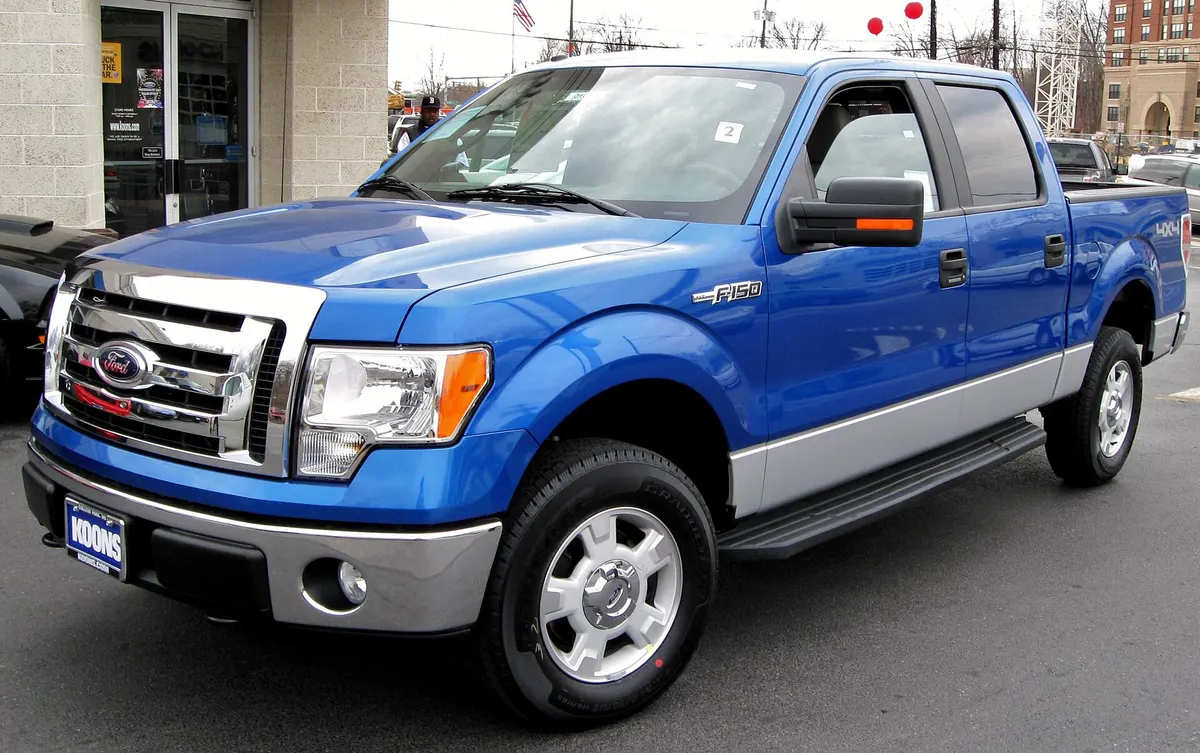
Engines
- 4.6L 2V/3V (Triton) · 4.6L gasoline, 248 hp
- 5.4L 3V (Triton) · 5.4L gasoline, 310 hp
- 3.7L Duratec V6 · 3.7L gasoline, 302 hp
- 5.0L Coyote V8 · 5.0L gasoline, 360 hp
- 6.2L V8 · 6.2L gasoline, 411 hp
- 3.5L EcoBoost (1st gen) · 3.5L gasoline, 365 hp
Transmissions
- 4R75E · automatic, 4-speed
- 6R80 · automatic, 6-speed
Drivetrain
RWD / 4WD
Body
regular cab, supercab, supercrew
Trims
XL, STX, XLT, FX2, FX4, Lariat, King Ranch, Platinum, Harley-Davidson, SVT Raptor, Limited
Ford F-150 part-number cross-reference
Start from the OEM number, then pick the brand you trust. Verified equivalents for the Ford F-150 (2009–2014).
Part links go to Amazon, and to eBay where Amazon does not stock the part. Affiliate links, so we may earn a commission if you buy. Your price is unchanged, and a commission never changes a verdict.
Engine oil filter
Motorcraft
Find Motorcraft engine oil filter on AmazonWix
Fitment page lists 2011-2014 F-150 5.0L and 3.5L; replaces Ford FL500S/AA5Z6714A
Look up Wix engine oil filterFram
Ultra Synthetic; cross-references Motorcraft FL-500S, listed for F-150 2011-2026
Check Fram engine oil filterPurolator
Listed as cross-reference of Fram XG10575 / FL-500S family
See Purolator engine oil filterMobil 1
Listed as cross-reference of Fram XG10575 / FL-500S family
Compare Mobil 1 engine oil filterVerified via: FordPartsGiant: genuine Ford FL-500-S product page, FordPartsGiant: F-150 oil filter catalog (filter-to-engine/year mapping), PartCatalog: Wix 57502 fitment, FinditParts: FRAM XG10575 cross-reference and fitment
Engine air filter
Motorcraft
Find Motorcraft engine air filter on AmazonWix
Fitment page lists 2009-2022 F-150; crosses Ford 7C3Z9601A / Motorcraft FA1883
Look up Wix engine air filterVerified via: Pure Diesel Power: Motorcraft FA-1883 fitment by engine/year, PartsHawk: Wix 49883 fitment and OEM cross-references, FordPartsGiant: F-150 air filter catalog (7C3Z-9601-A, 2010-2025)
Cabin air filter
Verified via: Infinity Overland: Does the 2009-2014 F-150 have a cabin air filter? (no; retrofit kits available), F150Forum, owner consensus: no factory cabin filter 2009-2014, reintroduced 2015+, FordPartsGiant: F-150 cabin air filter catalog (no part listed for 2009-2014)
Should I buy a 2009–2014 Ford F-150?
Buy it by engine, not by year. A 2011–2014 truck with the 5.0L Coyote (or the 3.7L V6 if you don't tow) is a genuinely durable, easy-to-own used truck. The 3.5L EcoBoost is a fine engine after its known issues are addressed (timing-chain TSB work, intercooler condensation fix, and the extended-coverage brake vacuum pump), but you're buying a maintenance history, so demand records. The 2009–2010 5.4L 3V is better than its 2004–2008 ancestor, yet the cam-phaser risk is real on neglected trucks. On any 2011–2013 truck, confirm the 6R80 downshift recall (19S07) is closed by VIN, and on 2013–2014 EcoBoost trucks confirm the brake master cylinder recall (16S24). A recall-closed, records-in-hand Coyote truck is one of the best used half-tons of its decade.
Best years
2013–2014 with the 5.0L Coyote, 2012–2014 with the 3.7L V6
Years to avoid
2009–2010 5.4L 3V with no oil-change history (cam-phaser risk), 2011–2012 3.5L EcoBoost with no TSB/repair records (timing chain + condensation teething years)
Pre-Purchase Checklist for Ford F-150
- ☐Cold-start the engine after it has sat overnight. On the 5.4L, listen for a diesel-like rattle or knock (cam phasers). On the 3.5L EcoBoost, a ticking/rattle for the first few seconds points to a stretched timing chain.
- ☐Run the VIN with a Ford dealer for open recalls, especially 19S07 (6R80 unexpected downshift, 2011–2013) and 16S24 (brake master cylinder, 2013–2014 EcoBoost trucks).
- ☐On 3.5L EcoBoost trucks, ask whether the intercooler condensation TSB (13-8-1 deflector relocation) or an updated intercooler was done, and test-drive with hard acceleration after a long highway pull. Any stumble or shudder is the tell.
- ☐Turn the wheel lock-to-lock at parking speed and watch for warning lights or heavy spots. EPAS (electric power steering) assist failure is a documented, expensive problem on 2011–2014 trucks.
- ☐Check brake pedal feel with the engine running: a slow sink or spongy pedal on a 2013–2014 truck can be the master cylinder seal issue; hard pedal on cold starts on a 2011–2012 EcoBoost can be the electric vacuum pump.
- ☐Listen for an exhaust tick on cold start that fades as the engine warms. Broken exhaust manifold studs are a classic Triton-era problem and a labor-heavy repair.
- ☐On trucks with MyFord Touch (2011+ Lariat and up), test the screen thoroughly: freezes, black screens, and dead backup cameras are common and the fix is a module or a shrug.
- ☐Get oil-change receipts. Nearly every expensive failure mode on this generation (phasers, timing chains, turbos) is accelerated by stretched oil intervals.
Common Ford F-150 problems & repair costs
Cam phaser / VCT failure: 'death rattle' (5.4L and 4.6L 3V, 2009–2010)
$1,800–$3,500Symptoms: Loud diesel-like knock or rattle at cold start or hot idle, rough running, P0340/P0345 or VCT-related codes. Caused by worn cam phasers that can no longer hold valve timing, usually downstream of low oil pressure or sludge from stretched oil changes.
Fix: Replace the cam phasers along with timing chains, guides, tensioners, and VCT solenoids in one job. Piecemeal repairs don't last. The 2009–2010 trucks got revised heads and better phasers than 2004–2008, so failure is less common, but the design carried over and neglected trucks still develop it. Ford's knowledge of the defect was central to the Schmidt v. Ford class action.
Sources: NHTSA complaints: 2010 Ford F-150 engine, CarComplaints: Ford F-150 engine problems, FordF150.net forum: 2009–10 5.4L cam phasers
Timing-chain stretch (3.5L EcoBoost)
$1,500–$3,000Symptoms: Ticking, tapping, or rattle from the front of the engine for 2–5 seconds on cold start (after sitting 6+ hours), sometimes with a P0016 cam/crank correlation code as the stretch worsens.
Fix: Replace the timing chain, guides, tensioners, and cam phasers with Ford's updated parts. Ford acknowledged the cold-start rattle in a TSB covering 3.5L EcoBoost F-150s built through May 2015. Clean oil on schedule is the best prevention. Chain wear on this engine tracks oil neglect closely.
Sources: Ford TSB: 3.5L EcoBoost cold start rattle (NHTSA copy), F150 EcoBoost forum: timing chain stretch TSB thread
Intercooler condensation misfire / shudder (3.5L EcoBoost)
$150–$900Symptoms: Intermittent stumble, shudder, or misfire under hard acceleration, classically after a long highway cruise in humid weather, sometimes with a flashing check-engine light and misfire codes. Condensation pools in the intercooler and gets ingested under boost.
Fix: Ford's TSB 13-8-1 relocates the intercooler air deflector so heat evaporates the trapped condensation; later trucks got a revised intercooler. Shops and owners also fit intercoolers with a drain provision. Cheap to address. The risk is buying a truck where it was never done and mistaking the misfire for something worse.
Sources: F150 EcoBoost forum: intercooler condensation fix, TruckInsiders: 3.5L EcoBoost common problems (TSB 13-8-1)
6R80 unexpected downshift into first gear (recall 19S07)
$0–$150Symptoms: While driving at speed, the transmission abruptly downshifts into first gear: rear wheels chirp or lock momentarily, engine flares, truck lurches hard. Caused by an intermittent loss of the output-shaft speed sensor signal to the PCM.
Fix: Free PCM reprogram under Ford recall 19S07, which covered roughly 1.2 million 2011–2013 F-150s. NHTSA's investigation tied the defect to crashes and injuries before the recall. The only cost is verifying by VIN that the work was actually done. On an unrepaired truck, this is a get-it-done-before-you-drive-it item.
Sources: Consumer Reports: F-150s recalled over transmission downshift, MotorSafety: Ford recalls 1.2 million F-150s (19S07)
Electric power steering (EPAS) assist failure
$1,200–$2,000Symptoms: Power assist quits without warning, often with a wrench or steering warning light, leaving very heavy manual steering. It can be intermittent at first. CarComplaints ranks it the #1 problem on the 2013 truck, at an average of about 74,000 miles.
Fix: The assist motor lives inside the steering rack, so the fix is a complete rack-and-pinion replacement plus alignment. Ford recalled only a narrow band of mid-2014 builds (misassembled sensor magnet); most 2011–2013 failures fall outside any recall, so this is an out-of-pocket repair. Budget for it on any high-mileage truck.
Sources: CarComplaints: 2013 F-150 (power steering failure, worst problem), CarComplaints: 2011 F-150 steering complaints
Brake master cylinder leak & EcoBoost vacuum pump failure
$0–$900Symptoms: Two related complaints: a slowly sinking or spongy pedal with brake fluid loss and no visible leak (fluid escapes past the master cylinder's rear cup seal into the booster, 2013–2014), and hard cold-start pedal or increased stopping distance from a failed electric vacuum pump (2011–2012 EcoBoost, which has no engine vacuum to run the booster).
Fix: The master cylinder issue became recall 16S24 on 2013–2014 3.5L EcoBoost trucks. Dealer replaces the master cylinder (and booster if contaminated) free. The vacuum pump got customer satisfaction program 15N05 extending coverage to 10 years/150k miles after NHTSA investigation EA15-006; out of coverage, a pump runs a few hundred dollars. Verify both by VIN before buying.
Sources: Consumer Reports: Ford recalls F-150 for brake concerns (16S24), NHTSA investigation EA15-006: F-150 brake vacuum pump, CarComplaints: 2013 F-150 service brakes
Routine costs are classic full-size-truck: tires, brakes, and fuel are all bigger numbers than a car, but parts are everywhere and cheap because Ford built millions of these. The 3.7L and 5.0L trucks have no signature big-ticket failure. Most owner spend is wear items, a possible EPAS rack, blend-door actuators clicking behind the dash, and exhaust manifold studs on V8s. Budget seriously only for an EcoBoost with no service history (chain job plus turbo-era maintenance) or a neglected 5.4L (phaser job). MyFord Touch gremlins on 2011+ upper trims are an annoyance, not a wallet event. Live with it or retrofit.
Cost calculator
What will this Ford F-150 cost you by a given mileage?
Drag to a mileage. We total the documented problems whose typical onset falls at or before it. The same cost ranges listed above, nothing new invented.
$0 estimated repair range
5-Year Maintenance Schedule & Cost to Own
Every scheduled service by mileage, fluid capacities, independent shop ranges, and parts cross-references.
Have a repair quote for this Ford F-150?
Audit against OEM book times, uncover duplicate pad and rotor labor, and verify parts markups.
How to fix common Ford F-150 problems (DIY)
Spark plug change (5.4L 3V)
Tools: 3/8 ratchet with 9/16 (or 14mm) thin-wall spark plug socket, Long extensions and swivel, Torque wrench, Compressed air (blow out the plug wells first), Anti-seize and dielectric grease
- Work on a cold engine only. Remove the engine cover and the coil-on-plug units (one 7mm bolt each), then blow debris out of each plug well with compressed air.
- Crack each plug loose about a quarter turn, then work it out slowly. 2009+ trucks use conventional one-piece plugs, so the 2004–2008 break-off drama largely doesn't apply, but go gently anyway.
- Gap-check the new plugs, apply a light film of anti-seize to the threads, and hand-thread each one to avoid cross-threading the aluminum heads.
- Torque to spec (do not gorilla them), add dielectric grease to the coil boots, and reinstall the coils.
- Start the truck and confirm smooth idle with no misfire codes.
Parts
- Spark plug set (2009–2010 F-150 5.4L, 8 plugs) · Amazon $40–$80
- Coil-on-plug boot kit (if boots are torn) · Amazon $20–$40
Blend door actuator replacement (clicking behind the dash)
Tools: 8mm socket and ratchet with small extension, Trim tool, Flashlight
- Confirm the symptom: a rapid clicking or knocking from behind the dash when you change temperature or airflow mode, a stripped actuator gear.
- Drop the plastic panel under the glovebox (or the driver's side lower panel, depending on which actuator is clicking) to expose the HVAC box.
- Unplug the actuator connector and remove the two or three 8mm screws holding it to the HVAC housing.
- Clock the new actuator's output to match the door shaft, seat it, and reinstall the screws snug, not tight, into the plastic housing.
- Reconnect, cycle the climate controls through all modes, and confirm the clicking is gone before reinstalling the trim.
Parts
- HVAC blend door actuator (2009–2014 F-150) · Amazon $20–$45
Engine air filter change (all engines)
Tools: Flathead screwdriver (housing clamps on some years)
- Open the hood and locate the black airbox on the driver's side.
- Release the clips (and hose clamp if fitted), lift the lid, and pull the old panel filter.
- Wipe loose debris out of the housing, seat the new filter with the seal fully in its channel, and re-clip the lid.
- On EcoBoost trucks, check the intake tract connections are fully seated. A boost leak here mimics bigger problems.
Parts
- Engine air filter (2009–2014 F-150) · Amazon $15–$30
Some parts links are affiliate links. We may earn a commission at no cost to you. We only list parts that fit this generation.
The short version
The 12th-generation F-150 is two different trucks wearing the same body. The 2009–2010 trucks carry over the old 4.6L and 5.4L Triton V8s. They are better than their 2004–2008 versions (the break-off spark plugs were fixed with revised heads and one-piece plugs), but the 5.4L’s cam-phaser design came along for the ride, and the cold-start “death rattle” still shows up on neglected trucks. The 2011–2014 trucks got an all-new engine lineup, and that’s where the buying decision really lives.
Of the new engines, the 5.0L Coyote V8 is the proven one: no signature failure, routinely 250k+ miles. The 3.7L V6 is quietly excellent for a work truck. The 3.5L EcoBoost tows like a diesel but was in its first generation here: timing-chain stretch (Ford TSB), intercooler condensation that causes a misfire and shudder under hard throttle (TSB 13-8-1), and an electric brake vacuum pump that earned extended coverage after an NHTSA investigation.
Which engine matters more than which year
Two trucks from the same year can be completely different ownership propositions. A 2012 with the Coyote and records is a keeper. A 2012 EcoBoost with no history is a stack of deferred TSBs. That’s why our best-years and avoid-years lists name engines, not just model years.
What that means when you’re shopping
Three things are non-negotiable on a test drive. Cold-start it. Phaser rattle on a 5.4L or a few seconds of chain rattle on an EcoBoost are the two most expensive noises this generation makes. Run the VIN for recalls. 19S07 (the 6R80 unexpected-downshift recall on 1.2 million 2011–2013 trucks) and 16S24 (2013–2014 brake master cylinder) are both genuine safety items with free fixes. Work the steering and brakes. EPAS assist failure is the single most-reported 2013 problem on CarComplaints at around $1,900 to fix, and it’s mostly outside any recall.
Everything else is normal truck stuff: blend-door actuators clicking behind the dash, exhaust manifold studs that snap and tick on the V8s, and MyFord Touch (2011+ upper trims) freezing often enough that it drew a class action. Annoyances, priced accordingly.
How this file is built: failure modes and cost ranges are compiled from NHTSA complaint, investigation, and recall records, Ford’s own TSBs and customer-satisfaction programs, CarComplaints data, and owner-forum reporting, then sanity-checked against shop-floor experience. Cost figures are independent-shop estimates and vary by region. Spot something off? Tell us.
Viral car myths, checked against this car
- Dangerous
Is the "$2 liquid that destroys engine sludge forever" real? Our shop-floor verdict.
An aggressive solvent flush on a high-mileage engine is a textbook way to spin a bearing. The viral 'kitchen-cabinet flush' is folklore that real shops spend money cleaning up after.
Frequently asked questions
Which 2009–2014 F-150 engine is the most reliable?
The 5.0L Coyote V8 (2011+) is the safe pick. It routinely reaches 250,000 miles with normal maintenance and has no signature failure mode, though some early builds use a bit of oil. The 3.7L V6 is a close second if you don't tow heavy. The 3.5L EcoBoost is strong once its known TSB items are sorted, and the 2009–2010 5.4L is the one that demands a documented oil-change history.
Is the first-gen 3.5L EcoBoost a bad engine?
No. It's a good engine with two well-documented, fixable issues. Timing-chain stretch (cold-start rattle, covered by a Ford TSB) and intercooler condensation causing a misfire or shudder under hard acceleration (TSB 13-8-1, mainly 2011–2012). A truck with records showing both were addressed is a fine buy. A truck with neither addressed and no maintenance history is a gamble.
Do the spark plugs still break off in the 2009–2010 5.4L?
Mostly no. The infamous two-piece plugs that snapped off in the head were a 2004–2008 3V problem. Ford revised the heads and switched to conventional one-piece plugs for 2009, so a plug change on a 12th-gen 5.4L is a normal job. Just do it on a cold engine and don't rush. The 5.4L issue that did carry over is the cam-phaser rattle.
What's the F-150 transmission recall I keep hearing about?
Ford recall 19S07 covered about 1.2 million 2011–2013 F-150s with the 6R80 six-speed automatic. An intermittent output-speed-sensor signal loss could make the truck abruptly downshift into first gear at speed, and NHTSA linked it to crashes. The fix is a free PCM reprogram at any Ford dealer. Run the VIN before you buy; an open recall on this one is a genuine safety issue.
Which years of the 12th-gen F-150 are the best used buy?
A 2013–2014 with the 5.0L Coyote is the sweet spot: last of the steel-body trucks, most of the generation's bugs already engineered or recalled out, and the most proven engine of the lineup. Just verify the 16S24 brake recall (EcoBoost trucks), test the power steering, and get maintenance records like you would on any used truck.
Every Ford F-150 generation
The full case file run, beyond the generation before and after this one.
Cross-shopped rivals
Files on what buyers weigh against the Ford F-150 of this era.