Case file · HONDA-ACCORD-2023-2026 · 11th gen (CY1/CY2)
Honda Accord 2023–2026Common problems, reliability & repair costs
The 11th-gen Accord kept everything that made the 10th gen good and, so far, dropped its worst habits. No oil-dilution pattern has re-emerged, there's no CVT horror story, and the hybrid is excellent. What the 2023–2024 cars did collect is recall paperwork: a high-pressure fuel pump that can crack and leak fuel, seat belt pretensioners that may be missing a rivet, and a telematics unit that kills 12V batteries. Every one has a free fix. This is a young generation. The honest read is 'strong so far, verify the recalls, and know that nobody has 150k-mile data yet.'
2025, 2026
2023: not a true avoid, but it's the first year and carries
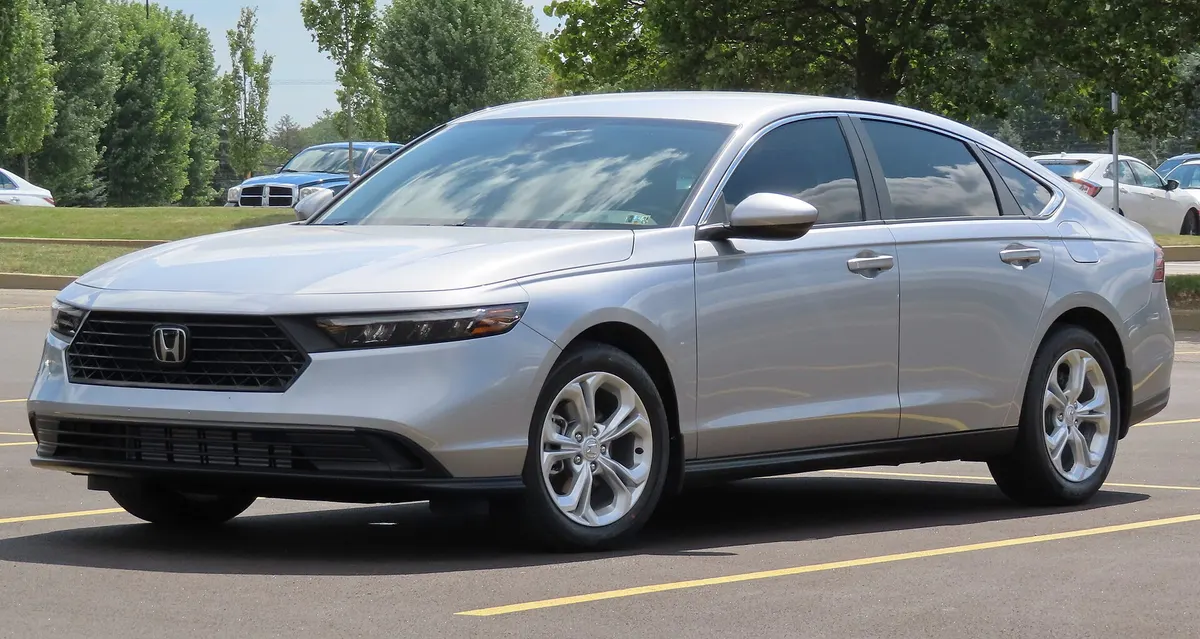
Engines
- L15BE · 1.5L turbo gasoline, 192 hp
- LFB (2.0L two-motor hybrid) · 2.0L hybrid, 204 hp
Transmissions
- cvt
- e-CVT · cvt
Drivetrain
FWD
Body
sedan
Trims
LX, EX (2023–2024), SE (2025 on), Sport (hybrid), EX-L (hybrid), Sport-L (hybrid), Touring (hybrid)
Honda Accord part-number cross-reference
Start from the OEM number, then pick the brand you trust. Verified equivalents for the Honda Accord (2023–2026).
Part links go to Amazon, and to eBay where Amazon does not stock the part. Affiliate links, so we may earn a commission if you buy. Your price is unchanged, and a commission never changes a verdict.
Oil filter
Fram
Extra Guard; TG7317 (Tough Guard) and XG7317 (Ultra Synthetic) are the upgraded lines
Look up Fram oil filterVerified via: HondaPartsNow: 2023 Accord OEM oil filter (15400-PLM-A02), College Hills Honda: 2023-2026 Accord maintenance parts, Oil Filter Cross Reference: Honda 15400-PLM-A02
Engine air filter (1.5T)
Honda
New part number for this generation. The big filter brands' cross-reference databases hadn't picked it up yet when we checked, so verified aftermarket equivalents are thin
Find Honda engine air filter on AmazonVerified via: College Hills Honda: 17220-64A-A00 (Accord 1.5L), Bernardi Parts: 17220-64A-A00 Accord sedan fitment
Engine air filter (hybrid)
Verified via: College Hills Honda: 17220-6MA-J01 (hybrid), Bernardi Parts: 17220-6MA-J01 (Accord Hybrid, CR-V Hybrid)
Cabin air filter
Honda
Current supersession; the factory element was 80292-TBA-A11
Check Honda cabin air filter on AmazonEPAuto
Sold as CP182 (CF11182), activated-carbon; Amazon fitment listing covers Honda 80292-TBA-A11
See EPAuto cabin air filterVerified via: College Hills Honda: 2023-2026 Accord maintenance parts (80291-TF3-E01), HondaPartsNow: 2023 Accord cabin air filter (80292-TBA-A11, replaced by 80291-TF3-E01), Amazon: EPAuto CP182 (CF11182) fitment listing
Spark plugs
Verified via: HondaPartsNow: 2023 Accord spark plug 12290-6A0-A01 (1.5T fitment), Honda Parts Connection: 12290-6A0-A01 (DILKAR8P8SY), 2018-2025 fitment
Wiper blades
Verified via: AutoPadre, 2023-2024 Accord wiper sizes: 24"/17", College Hills Honda: OEM wiper inserts 600mm/425mm (11th-gen maintenance parts), O'Reilly: Bosch ICON 24A = 24", O'Reilly: Bosch ICON 17A = 17"
Should I buy a 2023–2026 Honda Accord?
Buy it with a VIN check, not a leap of faith. The fundamentals are the best of any recent Accord: the hybrid system is proven and dilution-free, the 1.5T's documented 10th-gen problems have not re-appeared in this generation's complaint data, and the 11th gen dodged Honda's huge sticky-steering recall entirely. What you're verifying instead is recall paperwork, almost all of it on 2023–2024 cars: the high-pressure fuel pump (24V-763), the seat belt pretensioners (23V-782), and (on 2023s) the telematics battery-drain TSB. All free fixes. The one thing nobody can give you yet is long-term data; the oldest cars are barely past 3 years old. If that bothers you, the 2018–2022 hybrid is the known quantity next door.
Best years
2025, 2026
Years to avoid
2023: not a true avoid, but it's the first year and carries nearly all of the generation's recalls and complaints; buy it only with the recall work verified closed by VIN
Pre-Purchase Checklist for Honda Accord
- ☐Run the VIN at nhtsa.gov/recalls or recalls.honda.com before the test drive. On 2023–2024 cars, confirm the high-pressure fuel pump recall (24V-763) and seat belt pretensioner recall (23V-782) both show completed.
- ☐Sniff for raw fuel around the engine bay at idle. The defective high-pressure fuel pump presented as a fuel smell before it leaked. Any gas odor on a 2023–2024 car that hasn't had 24V-763 done is a walk-away until it's fixed.
- ☐Ask when the 12V battery was last replaced, and let the car sit during your inspection before restarting it. 2023 builds had a telematics-unit parasitic draw (Honda TSB 23-056) that flattens batteries; a car with multiple dead-battery events needs the TCU fix, not another battery.
- ☐Cycle the infotainment hard: wireless CarPlay/Android Auto connect and reconnect, backup camera, screen brightness. Dropouts and blank screens are this generation's top owner complaint. They're annoying and usually software, but confirm the dealer updates are done.
- ☐On the 1.5T, pull the dipstick anyway: oil above the full mark or a gasoline smell is the classic dilution tell. It is NOT a documented pattern on this generation. The check is free insurance, not a red flag hunt.
- ☐Drive a straight, crowned highway hands-light: a small cluster of 2024 owners reported steering pull/drift to NHTSA. No recall or TSB. Just make sure the car you're buying tracks straight.
- ☐On a very early 2023 Hybrid (built Jan–Apr 2023), the VIN check also covers the 19-car e-CVT recall (23V-588). Odds are near zero your car is one of them, but the check costs nothing.
- ☐Ask for oil-change receipts like you would on any turbo direct-injection car. The maintenance-minder interval is fine here, but a paper trail still protects you.
Common Honda Accord problems & repair costs
High-pressure fuel pump cracks (fuel leak): recall 24V-763
$0–$0Symptoms: Fuel smell while idling or driving is the tell. Improper machining of the pump's solenoid housing can let cracks form and grow with use until the pressurized pump leaks fuel, a fire risk with any ignition source. This drove an October 2024 stop-sale.
Fix: Free under NHTSA recall 24V-763 (Honda code PJW, ~720,000 vehicles including 2023–2024 Accord and Accord Hybrid): the dealer inspects the high-pressure fuel pump and replaces it if it's from a bad lot. Owner letters went out from December 2024. On any used 2023–2024 car, confirm completion by VIN. This is the recall that matters most on this generation.
Sources: NHTSA Part 573 recall report 24V-763 (PDF), Honda: ~720,000 vehicles recalled for high-pressure fuel pumps, NPR: Honda recalls fuel pumps in Accord, Civic, CR-V
Front seat belt pretensioner missing rivet: recall 23V-782
$0–$0Symptoms: Nothing you can feel in normal driving. The pretensioner may be missing the rivet that secures the quick connector and wire plate, so the belt may not restrain you properly in a crash. Found via warranty claims, not owner complaints.
Fix: Free under NHTSA recall 23V-782 (Nov 2023, ~304,000 Accords and HR-Vs): the dealer inspects and replaces the pretensioner assembly if the rivet is missing. Worth knowing: in April 2024 NHTSA opened a recall query into whether Honda scoped this recall widely enough. Its paperwork covered ~85,000 more vehicles than the original recall. All the more reason to run the VIN rather than assume.
Sources: Honda: 2023–2024 Accord and HR-V seat belt pretensioner recall, NHTSA recall acknowledgement 23V-782 (PDF), Carscoops: Feds look beyond the initial seat belt fix
12V battery dies: telematics control unit parasitic draw
$0–$500Symptoms: Car won't start after sitting; repeated dead 12V batteries that test fine after charging; a wall of warning messages after a jump that clears with driving. Honda traced one root cause: a telematics control unit that failed to finish its activation process and got stuck in a reboot loop, draining the battery.
Fix: Honda TSB 23-056 (July 2023, all 2023 Accords): the dealer measures the parasitic draw and replaces the telematics control unit if it's the culprit. Cars in the warranty window pay nothing. Out of warranty, push for goodwill, since the TSB documents the defect. Otherwise the high end of the range covers diagnosis, a TCU, and a fresh battery. Don't just keep buying batteries; a battery that's been run flat repeatedly is permanently weakened.
Sources: Honda TSB 23-056: Parasitic Draw from the Telematics Control Unit (NHTSA PDF), DriveAccord: 2023 Accord killing 12V batteries, CarComplaints: 2023 Accord electrical complaints
Infotainment glitches: wireless CarPlay dropouts, blank screens
Symptoms: Wireless CarPlay/Android Auto randomly disconnects or won't connect, audio drops, the screen freezes or goes black, sometimes recovering on restart, sometimes minutes later. Phone-connection trouble is the single most-reported problem category on the 2023 car at CarComplaints.
Fix: Software, not hardware, in nearly every report: dealer head-unit updates and phone re-pairing resolve most cases, and behavior improved over the generation's run. Some owners sidestep wireless flakiness entirely by using a USB cable. No recall. Treat it as an annoyance to verify on the test drive, not a reason to walk.
Sources: CarComplaints: 2023 Accord (phone connection is the top reported problem), DriveAccord: CarPlay freezes, screen goes black, DriveAccord: infotainment screen changing intermittently
Day-to-day this is one of the cheapest midsize sedans to own: no timing belt on either engine, simple fluids, inexpensive filters, and, unlike the 10th gen, no engine-specific oil-change paranoia documented so far. The hybrid asks for almost nothing beyond tires and, eventually, a 12V battery. The realistic cost exposure on a used 2023 is unfinished recall work (free, but you burn a dealer visit) and possibly a 12V battery if a previous owner lived with the telematics drain instead of fixing it. Complaint volume tells the story: about 300 NHTSA complaints on the 2023, half that on the 2024, and near-zero on 2025–2026 so far.
Cost calculator
What will this Honda Accord cost you by a given mileage?
Drag to a mileage. We total the documented problems whose typical onset falls at or before it. The same cost ranges listed above, nothing new invented.
$0 estimated repair range
5-Year Maintenance Schedule & Cost to Own
Every scheduled service by mileage, fluid capacities, independent shop ranges, and parts cross-references.
Have a repair quote for this Honda Accord?
Audit against OEM book times, uncover duplicate pad and rotor labor, and verify parts markups.
How to fix common Honda Accord problems (DIY)
Oil & filter change with a dilution spot-check (1.5T)
Tools: Ramps or floor jack + jack stands, Socket set (17mm drain plug), Small-cap oil filter wrench (65mm) or strap wrench, Drain pan + funnel
- Before draining, pull the dipstick: note the level against the full mark and give it a sniff. A rising level or gasoline smell is the classic dilution tell. It is not a documented pattern on this generation, but the check is free and takes ten seconds.
- Warm the engine briefly, raise the car, and drain the oil at the 17mm drain plug.
- Swap the spin-on filter (Honda 15400-PLM-A02 fits the whole generation) and reinstall the drain plug with a fresh crush washer.
- Refill with 0W-20 full synthetic, start the engine, check for leaks, then set the final level on the dipstick. Top up rather than overfill.
- Reset the maintenance minder and log the date and mileage; a paper trail always helps resale on a turbo direct-injection engine.
Parts
- 0W-20 full synthetic oil (5 qt) · Amazon $25–$40
- Oil filter (2023-2026 Honda Accord) · Amazon $7–$12
Cabin & engine air filter change
Tools: None (the airbox clips are hand-tools-optional)
- Open the glovebox, squeeze the sides past the stops to drop it, and pull the cabin-filter cover behind it.
- Slide the old cabin filter out and the new one in with the airflow arrow pointing the direction marked on the housing.
- Unclip the engine airbox lid and swap the panel filter. Note that the 1.5T and the hybrid use different engine filters (17220-64A-A00 vs 17220-6MA-J01), so match your engine before ordering.
Parts
- Cabin air filter (2023-2026 Honda Accord) · Amazon $12–$20
- Engine air filter (2023-2026 Honda Accord, match 1.5T or hybrid) · Amazon $15–$28
Replace the 12V battery
Tools: 10mm socket or wrench, Memory saver (optional, keeps radio/window settings)
- Read the group size off the label of the battery in the car. Fitment charts disagree on this generation (H5 and H6 both appear), so match what's fitted rather than guessing from a chart.
- With the car off, disconnect the negative terminal first, then the positive, then the hold-down bracket.
- Swap batteries, reinstall the hold-down, and reconnect positive first, negative last.
- Drive 15+ minutes so the systems relearn; expect to reset the auto-up windows (hold the switch up a few seconds).
- If the new battery also goes flat within weeks, stop replacing batteries. Have the parasitic draw measured per Honda TSB 23-056; on 2023 cars the telematics unit is the documented culprit.
Parts
- 12V battery (2023-2026 Honda Accord, match your trim's group size) · Amazon $150–$260
Some parts links are affiliate links. We may earn a commission at no cost to you. We only list parts that fit this generation.
The short version
The 11th-gen Accord is, so far, the cleanest Accord launch in years where it counts. The two things that dogged the 10th gen (1.5T oil dilution and the phantom-braking investigation) have not followed it: the class action, warranty extension, and NHTSA engineering analysis all stop at 2022, and this generation’s complaint data shows no dilution cluster and no braking probe. The Accord also sat out Honda’s massive 2024 sticky-steering recall that caught the Civic, CR-V, and HR-V.
What the early cars did collect is recall paperwork. The 2023–2024 cars are in the high-pressure fuel pump recall (24V-763: cracks, fuel leak, October 2024 stop-sale) and the seat belt pretensioner recall (23V-782: a missing rivet). The 2023 also has a documented telematics-unit defect (TSB 23-056) that flattens 12V batteries. Every one of these is a free dealer fix.
What that means when you’re shopping
This is a VIN-check generation, not a which-engine-do-I-trust generation. Run any 2023–2024 candidate through nhtsa.gov/recalls and confirm the fuel pump and pretensioner work shows completed, then sniff for fuel at idle anyway. On a 2023, ask about the 12V battery history; a car that’s eaten batteries needs the telematics fix, not battery number three.
The test drive covers the rest: cycle wireless CarPlay and the screen hard (this generation’s top complaint is electronics, not mechanicals), and hold a straight highway lane hands-light. A small cluster of 2024 owners reported steering pull to NHTSA, with no recall or TSB behind it.
Engine choice is preference, not risk management: the hybrid is the better car and the volume seller; the 1.5T is the cheaper door in. Nothing documented so far penalizes either.
Years, simply
2025–2026 are the sorted years: the recalls’ production windows had closed and complaint counts are near zero so far. 2024 is fine with the recall work verified. 2023 carries nearly all of this generation’s baggage (recalls, the battery TSB, the heaviest complaint year), but every item has a free fix, so a 2023 with a clean VIN report is a fair buy, not a trap. The honest unknown on all of them is simply age: nobody has 150,000-mile data yet.
How this file is built: failure modes are compiled from NHTSA recall records (24V-763, 23V-782, 23V-858, 23V-588), Honda’s own TSB 23-056, CarComplaints data, and owner reporting on DriveAccord, then sanity-checked against shop-floor experience. This is a young generation. We listed only what’s documented, and the file will grow as the cars age. Cost figures are independent-shop estimates and vary by region. Spot something off? Tell us.
Viral car myths, checked against this car
- Outdated
Does a "$1 mineral" really double car battery life? The Epsom-salt reality.
The mineral is Epsom salt (magnesium sulfate). It was a real desulfation hack for serviceable flooded-cell batteries 40+ years ago. It does not work on modern sealed AGM or EFB batteries, and trying it on yours will void the warranty without helping the battery.
- Misleading
Is the "$1 Japanese oil trick" that stops engine wear forever real?
The 'Japanese oil trick' is almost certainly MoS2 (molybdenum disulfide), a real industrial friction modifier. It is German, not Japanese (Liqui Moly popularized it), sold openly at every parts store for $15-20, has real but modest measured friction benefits, and was never buried by anyone.
Frequently asked questions
Is the 2023 Honda Accord a reliable car?
So far, yes, with a first-year asterisk. The 2023 collected this generation's recalls (fuel pump, seat belt pretensioners, a small seat-frame batch) and its complaints (about 300 at NHTSA, led by electronics), while the 2024 cut that roughly in half and 2025–2026 are near-zero so far. Nothing documented points at the engines or transmissions. The honest caveat is age: the oldest 11th-gen cars are only a few years old, so 'reliable so far' is the strongest claim anyone can truthfully make.
What are the common problems with the 11th-generation Honda Accord?
Documented so far: a high-pressure fuel pump that can crack and leak fuel (recall 24V-763, 2023–2024), front seat belt pretensioners that may be missing a rivet (recall 23V-782, 2023–2024), a telematics unit that drains the 12V battery on 2023s (Honda TSB 23-056), and infotainment glitches (wireless CarPlay dropouts and occasional blank screens). The recalls are free fixes; the rest is mostly software. No engine or transmission failure pattern has been documented on this generation.
Does the new Accord still have the 1.5T oil dilution problem?
Not as a documented pattern, no. The oil-dilution issue and class-action coverage apply to the 2018–2022 (10th-gen) 1.5T. On the 11th gen we found only scattered individual reports (including on the hybrid, where a faint fuel smell in the oil can be normal for an Atkinson-cycle engine on short trips) and no TSB, no lawsuit, and no complaint cluster. The engine is a revised version of the same L15 family, so the smart move is the free one: check the dipstick level and smell occasionally, especially in a cold climate. But buying a 2023+ because you feared dilution and finding it anyway is not a story the data currently supports.
What recalls does the 2023 Honda Accord have?
Five campaigns touch the 2023: the high-pressure fuel pump (24V-763), front seat belt pretensioners (23V-782), a slice of cars swept into the Denso low-pressure fuel-pump recall (23V-858), and two very small driver's-seat cushion-frame recalls (24V-859 and 26V-054; the latter covered only about 32 vehicles). Early-build 2023 Hybrids also had a 19-car e-CVT recall (23V-588). Every one is a free dealer fix, and one VIN check at nhtsa.gov/recalls covers them all.
How many miles will a Honda Accord last?
Past generations routinely clear 200,000 miles with routine maintenance, and nothing documented on the 11th gen suggests it broke that streak, but nobody, including us, has real high-mileage data on a generation this young. The oldest cars are around three years old. What you can do is stack the odds: the hybrid has the fewest moving-part risks, and a 1.5T with a clean oil-change trail is a proven formula from the prior gen.
Should I buy the 1.5T or the hybrid Accord?
The hybrid, if the price walk isn't crazy. It's the volume seller this generation (all the upper trims are hybrids), it delivers real-world high-40s mpg, it has no belt CVT and no turbo to feed, and no documented issues beyond the shared recalls. The 1.5T is the budget door into the generation and has been well-behaved so far. Its main penalty is the 10th gen's reputation, not anything documented on these cars. Either way, the VIN recall check matters more than the engine choice.
Every Honda Accord generation
The full case file run, beyond the generation before and after this one.
Cross-shopped rivals
Files on what buyers weigh against the Honda Accord of this era.