Case file · HONDA-ACCORD-2003-2007 · 7th gen (CM4–CM8 (UC1 Hybrid))
Honda Accord 2003–2007Common problems, reliability & repair costs
The 7th-gen Accord is a genuinely great used car with one expensive asterisk: the 5-speed automatic, especially behind the V6 in 2003–2004, fails often enough that CarComplaints rated the 2003 'Avoid Like the Plague.' A 2005–2007 car, or any manual, sidesteps most of the risk and will run past 250k miles on routine maintenance.
2005, 2006, 2007
2003–2004 automatics (transmission-failure risk, worst on V6 +1 more
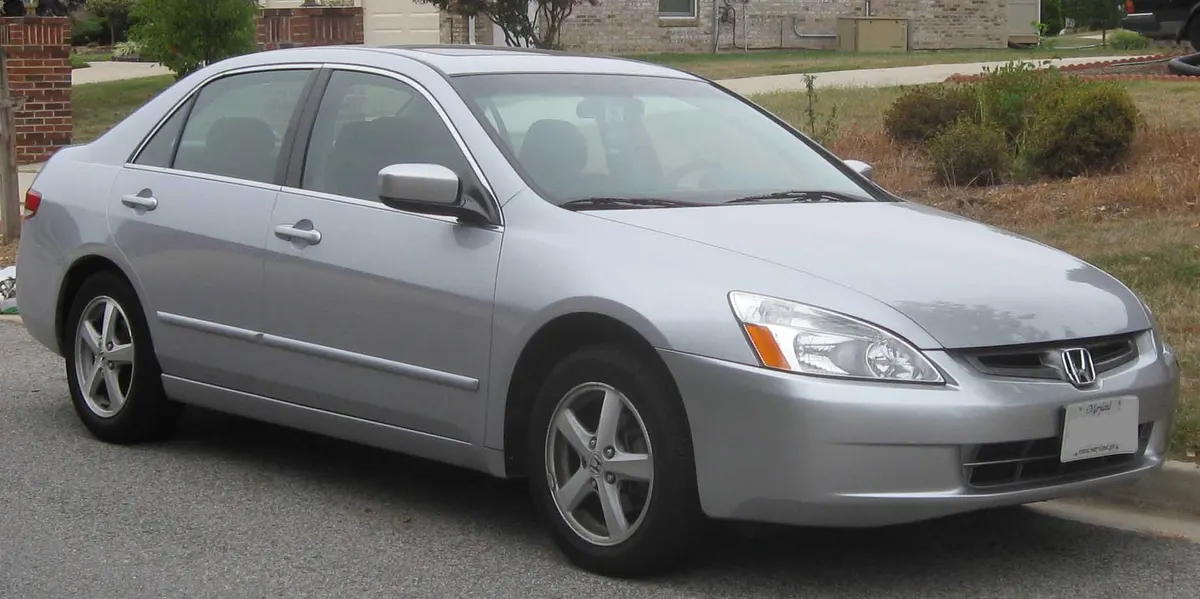
Engines
- K24A4 / K24A8 · 2.4L gasoline, 160 hp
- J30A4 / J30A5 · 3.0L gasoline, 240 hp
- J30A4 + IMA (Hybrid) · 3.0L hybrid, 255 hp
Transmissions
- automatic , 5-speed
- manual , 5-speed
- manual , 6-speed
Drivetrain
FWD
Body
sedan, coupe
Trims
DX, LX, EX, EX-L, SE, Hybrid
Honda Accord part-number cross-reference
Start from the OEM number, then pick the brand you trust. Verified equivalents for the Honda Accord (2003–2007).
Part links go to Amazon, and to eBay where Amazon does not stock the part. Affiliate links, so we may earn a commission if you buy. Your price is unchanged, and a commission never changes a verdict.
Engine oil filter
Fram
Extra Guard; TG7317 (Tough Guard) and XG7317 (Ultra Synthetic) also cross-referenced
Check Fram engine oil filterVerified via: oilfilter-crossreference.com: Honda 15400-PLM-A02 equivalents, GETOPAUTO: 15400-PLM-A02 cross-reference guide, HondaPartsNow: 2005 Accord OEM oil filter (lists 15400-PLM-A02)
Engine air filter
EPAuto
sold as GP564 (CA9564); listed for Accord L4 2003-2007 and Acura TSX 2004-2008
Check EPAuto engine air filterVerified via: airfilter-crossreference.com: Honda 17220-RAA-A00 equivalents, Bernardi Parts: Honda air filter 17220-RAA-A00 (2003-2007 Accord 4-cyl), Amazon: EPAuto GP564 (CA9564) fitment listing
Cabin air filter
Verified via: College Hills Honda: 80292-SDA-407 fitment (Accord 4dr 2003-2022) and supersessions, airfilter-crossreference.com: Honda 80292-SDA-A01 equivalents, FinditParts: Fram CF10134 fitment and cross-references
Should I buy a 2003–2007 Honda Accord?
Buy it, but buy the right one. A 2005–2007 Accord, or any manual-transmission car, is one of the best cheap used sedans of its era: simple, roomy, and routinely good for 250,000 miles. The 2003–2004 automatics, above all the V6, carry a real transmission-failure risk that Honda addressed with a recall and quiet goodwill repairs, but that is entirely on you today. On an early automatic car, a documented transmission replacement or recent fluid-service history is the difference between a bargain and a $3,000 surprise. Also confirm every Takata airbag recall is done by VIN before money changes hands.
Best years
2005, 2006, 2007
Years to avoid
2003–2004 automatics (transmission-failure risk, worst on V6), 2003 specifically, CarComplaints' worst 7th-gen year (transmission + dead radio display)
Pre-Purchase Checklist for Honda Accord
- ☐On any automatic, especially 2003–2004 V6, drive it hard enough to hit every gear. Flaring RPM between 2nd and 3rd, harsh or delayed engagement, or slipping under load means walk away or price in a transmission.
- ☐Ask for transmission history: a replaced/updated unit or regular Honda ATF drain-and-fills are strong points in the car's favor.
- ☐Run the VIN through Honda's recall lookup. Takata airbag inflators (multiple recalls, 2003–2007) and the V6 power steering hose recall must show as completed.
- ☐Turn the wheel lock-to-lock with the engine cold and listen for power steering whine or groan; check the reservoir for foamy fluid.
- ☐Check the radio and climate-control display works. A dark display is the known audio-unit failure, and all the console lighting runs through it.
- ☐Test the A/C on a warm day; if the compressor clutch won't engage, it may only be the relay, or it may be a compressor.
- ☐Look down the sides of the car in sunlight for peeling clear coat, common on this generation and expensive to make right.
- ☐On V6 cars, ask when the timing belt and water pump were last done (roughly every 105k miles).
Common Honda Accord problems & repair costs
5-speed automatic transmission failure
$2,000–$4,500Symptoms: Slipping, classically flaring RPM on the 2–3 shift, plus harsh or delayed engagement, random downshifts, fluid leaks, and eventually no drive. CarComplaints logs 500+ failure reports on the 2003 alone, average repair around $2,700 near 98k miles.
Fix: Rebuilt or used transmission replacement. Root cause was insufficient cooling of second-gear components leading to gear-tooth damage; a 2004 recall added an oil-cooler jet kit to low-mileage cars and replaced transmissions showing damage. Honda later ran goodwill repairs and faced a class action, but every assistance window is long closed. Today the fix is out of your pocket. Frequent Honda ATF drain-and-fills are the best insurance on a surviving unit.
Sources: CarComplaints: 2003 Accord transmission failure (505 reports), HondaProblems: 1999–2004 automatic transmission failures, DriveAccord: 7th-gen transmission failures logbook
Power steering whine (and V6 hose recall)
$20–$600Symptoms: Whine or groan when turning, loudest on cold start and fading as the car warms up; foamy or bubbly fluid in the reservoir. Pitch rises with RPM.
Fix: Usually NOT the pump: air gets sucked past a hardened inlet-hose O-ring (Honda part 91345-RDA-A01, a few dollars) and aerates the fluid. Replace the O-ring and flush before condemning the pump; a pump replacement runs $250–$600 at a shop. Separately, Honda recalled 2003–2007 V6 cars because the power steering pressure hose can crack from heat and leak fluid, a fire risk. That recall is free; confirm it's done by VIN.
Sources: HondaProblems: power steering whine explainer, DriveAccord: 2007 power steering loud whining noise, V6Performance: PS pump whine symptoms and TSB fix
Takata airbag inflator recalls
$0–$0Symptoms: None until deployment. That's the danger. Degraded inflator propellant can cause the metal inflator to rupture in a crash, sending fragments into the cabin. Early 'Alpha' inflators in 2001–2003 Hondas have shown rupture rates as high as ~50% in testing.
Fix: Free recall repair at any Honda dealer, but many cars this old still haven't had it done. Run the VIN at Honda's recall site or NHTSA before buying, and don't drive an unrepaired Alpha-inflator car. Honda itself says to stop driving them until fixed.
Sources: Honda: Takata airbag inflator recall fact sheet, The Car Connection: 2004–2007 Accord Takata recall
Radio / climate-control display goes dark
$150–$500Symptoms: The stereo and HVAC display backlight dies, leaving the screen black, and because the console control lighting is powered through the audio unit, those buttons go dark too. The radio itself usually still plays.
Fix: It's a failed component on the audio unit's circuit board, not a bulb. Honda covered many units under an extended-coverage program (long expired). Today the fix is a repaired/refurbished board or unit ($150–$500), a used OEM head unit, or an aftermarket stereo swap. Handy owners repair the board itself for almost nothing.
Sources: CarComplaints: 2003 Accord stereo backlight failure, RepairPal: radio/climate control display may go dark
A/C compressor clutch relay (and compressor) failure
$15–$1,200Symptoms: A/C suddenly blows warm; the compressor clutch doesn't click on. Because the A/C relay is identical to the radiator-fan relay on these cars, swapping the two is the classic 60-second driveway diagnosis.
Fix: Very often just the relay, a $15–$30 part in the under-hood fuse box (the original Omron relays had a known weakness; the updated Mitsuba part is the fix). If the clutch has 12V and still won't engage, or the compressor is noisy, you're into a compressor/clutch job at $700–$1,200 with a system flush.
Sources: DriveAccord: A/C relay vs bad compressor vs bad clutch, MotorBiscuit: common 7th-gen Accord problems past 100k
Peeling paint and clear-coat failure
$500–$3,000Symptoms: Clear coat hazes, cracks, then peels off in sheets: hoods, roofs, and trunk lids first, worst in sunny climates and on certain colors. Cosmetic, but exposed paint invites corrosion.
Fix: No cheap fix: a proper panel respray or full repaint runs well into four figures ($2,000–$3,000+ for good work); a single panel is less. Honda issued no blanket paint coverage for this generation. Price it into your offer rather than planning to fix it.
Sources: HondaProblems: 7th-generation Accord known problems, MotorBiscuit: common 7th-gen Accord problems past 100k
Away from the transmission, a 7th-gen Accord is cheap to keep: parts are everywhere, the K24 four-cylinder needs little beyond fluids and normal wear items, and independent shops know these cars cold. Budget lines that matter: Honda ATF drain-and-fills every 30k on any automatic (cheap insurance for the known weakness), the V6's timing belt + water pump service (~$900–$1,400 every ~105k miles), and the usual brakes-tires-mounts of a 20-year-old car. The big four-figure risks are exactly what the pre-buy checklist screens for: a failed automatic, a tired A/C compressor, or a respray.
Cost calculator
What will this Honda Accord cost you by a given mileage?
Drag to a mileage. We total the documented problems whose typical onset falls at or before it. The same cost ranges listed above, nothing new invented.
$0 estimated repair range
5-Year Maintenance Schedule & Cost to Own
Every scheduled service by mileage, fluid capacities, independent shop ranges, and parts cross-references.
Have a repair quote for this Honda Accord?
Audit against OEM book times, uncover duplicate pad and rotor labor, and verify parts markups.
How to fix common Honda Accord problems (DIY)
Power steering inlet O-ring replacement (the whine fix)
Tools: Pliers for the hose clamp, Flat screwdriver or pick, Fresh Honda power steering fluid, Turkey baster or fluid extractor (to swap fluid)
- With the engine cold, locate the inlet hose where it joins the power steering pump and note the spring clamp position.
- Slide the clamp back, work the hose off the pump inlet joint, and pull the old O-ring off the joint with a pick.
- Seat the new O-ring (Honda 91345-RDA-A01), refit the hose, and reposition the clamp.
- Extract old fluid from the reservoir with a baster, refill with genuine Honda PS fluid, and repeat after a short drive to freshen the fluid.
- Start the engine and turn lock-to-lock a few times; the whine should fade as trapped air works out over a day or two of driving.
Parts
- Power steering inlet O-ring (Honda 91345-RDA-A01) · Amazon $5–$12
- Honda power steering fluid · Amazon $8–$15 per bottle
A/C compressor clutch relay swap
Tools: None: fingers or small pliers to pull the relay
- Open the under-hood fuse/relay box (driver's side) and find the A/C compressor clutch relay using the lid diagram.
- For a free test: the radiator-fan relay is the identical part, so swap the two and see if the A/C clutch now engages.
- If the A/C works with the swapped relay, buy the updated relay (Mitsuba-type replacement for the failure-prone original) and install it.
- Confirm cold air at the vents and that the radiator fans still cycle normally.
Parts
- A/C compressor clutch relay (2003–2007 Accord) · Amazon $10–$25
Automatic transmission fluid drain and fill
Tools: 3/8" ratchet (the drain plug takes the square drive directly), Drain pan, Funnel with long neck, New drain plug crush washer
- Warm the car up, park level, and remove the transmission drain plug with a 3/8" ratchet; drain into a pan.
- Reinstall the plug with a new crush washer and torque snug.
- Refill through the dipstick tube with 2.5–3 quarts of Honda ATF (DW-1, the successor to ATF-Z1). Measure what came out and match it.
- Check the level on the dipstick with the engine warm and off, then drive through all gears and re-check.
- On a neglected car, repeat the drain-and-fill two or three times over a few hundred miles instead of doing a flush.
Parts
- Honda ATF DW-1 (3 quarts) · Amazon $30–$45
- Drain plug crush washer (18mm) · Amazon $5–$10
Some parts links are affiliate links. We may earn a commission at no cost to you. We only list parts that fit this generation.
The short version
The 2003–2007 Accord is most of what people mean when they say “just buy a Honda”: roomy, cheap to run, and built around engines that shrug off 250,000 miles. The asterisk is the 5-speed automatic, above all in 2003–2004 V6 cars. Inadequate cooling of the second-gear set led to chipped and broken gear teeth, a 2004 recall, quiet goodwill repairs, a class action, and more than 500 failure reports on the 2003 alone at CarComplaints, which rated that year “Avoid Like the Plague.” Typical failure lands around 90,000–120,000 miles and costs $2,000–$4,500 to put right today.
One car with a bad transmission history isn’t a reason to skip the whole generation. It’s a reason to shop the right years and test-drive like you mean it.
What that means when you’re shopping
A 2005–2007 car, or any manual, clears most of the risk. On any automatic, and doubly so on a 2003–2004 V6, drive it through every gear under real throttle: flaring RPM between 2nd and 3rd, harsh engagement, or any slip is your cue to walk. A car with a documented replacement transmission or a stack of Honda ATF service receipts is worth paying up for.
Two paperwork checks are non-negotiable on a car this age: run the VIN for the Takata airbag recalls (multiple, 2003–2007; free fix, still not done on plenty of cars) and, on V6s, the power steering hose recall.
The cheap stuff that looks scary
The rest of the generation’s known issues are more nuisance than nightmare. Power steering whine is usually a few-dollar O-ring, not a pump. A dead radio/climate display is a known board failure with used and refurb fixes. A/C that quits is very often a $20 relay. Swap it with the identical radiator-fan relay to prove it in the driveway. Peeling clear coat is the one cosmetic issue with a real price tag; negotiate it off the asking price rather than planning a respray.
How this file is built: failure modes and cost ranges are compiled from NHTSA recall actions, CarComplaints owner-report data, Honda’s recall and warranty communications, and owner-forum reporting (DriveAccord, V6Performance), then sanity-checked against shop-floor experience. Cost figures are independent-shop estimates and vary by region. Spot something off? Tell us.
Viral car myths, checked against this car
- Misleading
Is the "$2 liquid that stops any leak" really banned in 11 states?
Automotive stop-leak products are not banned in any US state. The products are real (Bar's Leaks, BlueDevil), they work in specific narrow situations, and they can permanently damage your cooling or oiling system if applied to the wrong leak.
Frequently asked questions
Which 2003–2007 Honda Accord years should I avoid?
The 2003 and 2004 automatics, especially the V6. That's where the 5-speed automatic failures concentrate, and CarComplaints rated the 2003 'Avoid Like the Plague.' A 2005–2007 car is meaningfully safer, and any manual-transmission Accord sidesteps the issue almost entirely.
Was there a recall for the Accord transmission problem?
Yes. In 2004 Honda recalled early cars because inadequately cooled second-gear components could chip or break gear teeth. Low-mileage cars got an added oil-cooler jet kit; damaged units were replaced. Honda also made goodwill repairs beyond warranty and later faced a class action, but all of that assistance is long over. If a 2003–2004 automatic fails today, the $2,000–$4,500 bill is yours.
How many miles will a 7th-gen Accord last?
The engines are the easy part. 250,000+ miles is routine for a maintained K24 four-cylinder, and the V6 gets there too with its timing-belt services done. The realistic life-limiter is the automatic transmission on early cars and ordinary old-car attrition, not the drivetrain wearing out.
Is the V6 or the 4-cylinder the better used buy?
For most buyers, the 4-cylinder: it dodges the worst of the transmission risk, skips the V6's timing-belt service, and still moves the car fine. The V6 is quick and smooth. If you want one, prefer 2005–2007, verify the power steering hose recall is done, and scrutinize the transmission's history and behavior on the test drive.
My Accord's power steering whines. Do I need a new pump?
Probably not. On these cars the usual culprit is a hardened O-ring on the pump's inlet hose letting air into the system. A few-dollar part (Honda 91345-RDA-A01) and a fluid refresh cures most whines. Only condemn the pump if the noise survives the O-ring fix and fresh fluid.
Every Honda Accord generation
The full case file run, beyond the generation before and after this one.
Cross-shopped rivals
Files on what buyers weigh against the Honda Accord of this era.