Case file · HONDA-ACCORD-2018-2022 · 10th gen (CV1/CV2/CV3)
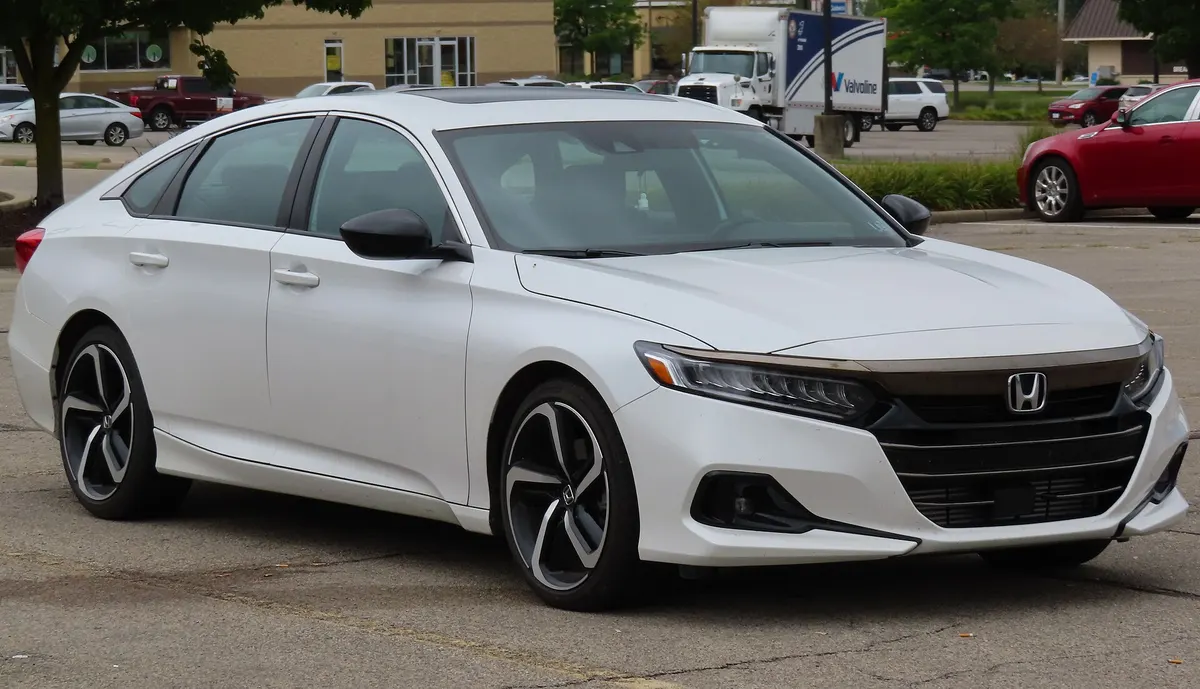
Honda Accord 2018–2022Common problems, reliability & repair costs
The 10th-gen Accord is a genuinely excellent midsize sedan with one engine-specific caveat: the 1.5L turbo can dilute its oil with fuel (especially in cold climates and on short trips), and it's the subject of a class-action lawsuit. The 2.0T and the hybrid largely sidestep that. Pick the right engine and verify the recalls, and this generation is a long-haul keeper.
2021, 2022
2018 (highest complaint volume of the generation: first-year +1 more
Engines
- L15BE · 1.5L turbo gasoline, 192 hp
- K20C4 · 2.0L turbo gasoline, 252 hp
- 2.0L Atkinson (hybrid) · 2.0L hybrid, 212 hp
Transmissions
- cvt
- automatic , 10-speed
- manual , 6-speed
- e-CVT · cvt
Drivetrain
FWD
Body
sedan
Trims
LX, Sport, EX, EX-L, Touring, Hybrid (base/EX/EX-L/Touring)
Honda Accord part-number cross-reference
Start from the OEM number, then pick the brand you trust. Verified equivalents for the Honda Accord (2018–2022).
Part links go to Amazon, and to eBay where Amazon does not stock the part. Affiliate links, so we may earn a commission if you buy. Your price is unchanged, and a commission never changes a verdict.
Motor oil
Honda
Honda Ultimate Full Synthetic 0W-20, sold by the quart at any Honda dealer; exceeds API SN and ILSAC GF-6. Genuine oil is the safe default, not a requirement. Any API-certified 0W-20 meets the same spec.
Find Honda motor oil on AmazonMobil 1
API SQ/SP, ILSAC GF-7A, dexos1 Gen 3, more approvals than this car needs. Sold in 5-quart jugs and single quarts.
Look up Mobil 1 motor oilPennzoil
Independent lab sampling reads API SP / ILSAC GF-6A off the label. Common warehouse-club jug.
Check Pennzoil motor oilCastrol
Exceeds API SQ/SP, ILSAC GF-7. Note there is no cheaper conventional option in this grade: 0W-20 is only sold full synthetic or synthetic blend.
See Castrol motor oilValvoline
ILSAC GF-7A, API SQ/SP; Valvoline now labels it Advanced Protection. Stocked in 1-quart and 5-quart at most big-box stores.
Compare Valvoline motor oilVerified via: College Hills Honda: Genuine Honda Ultimate Full Synthetic 0W-20, part 08798-9137 (exceeds ILSAC GF-6 and API SN), Oil-Select: Honda specifies API-certified 0W-20 with no proprietary approval on modern gasoline engines; Honda Genuine is the factory fill, not a requirement, OilCapacityGuide, 2020 Accord by engine: 1.5L L15BE 3.7 qt with filter (3.4 qt without), 2.0L K20C4 5.1 qt, 2.0L LFB2 hybrid 3.7 qt, all 0W-20, AutoPadre, Honda Accord oil capacity by engine: 3.7 qt 1.5T, 5.1 qt 2.0T, hybrid LFB2 listed at 4.0 qt (3.7 qt for 2021), all 0W-20, Costa Oil, 2022 Accord 2.0L Turbo: 5.1 qt with filter change, 0W-20 full synthetic, Mobil 1 Extended Performance 0W-20 product page: API SQ/SP, ILSAC GF-7A, dexos1 Gen 3, PQIA lab report: Pennzoil Platinum SAE 0W-20 label reads API SP / ILSAC GF-6A, Castrol EDGE: exceeds API SQ/SP/SN PLUS/SN, ILSAC GF-7, Valvoline, Advanced Protection Full Synthetic SAE 0W-20: ILSAC GF-7A, API SQ/SP, sold in 1 qt and 5 qt
Engine oil filter
Fram
Extra Guard; TG7317 (Tough Guard) and XG7317 (Ultra Synthetic) also cross-referenced
Check Fram engine oil filterVerified via: oilfilter-crossreference.com: Honda 15400-PLM-A02 equivalents, GETOPAUTO: 15400-PLM-A02 cross-reference guide, HondaPartsNow: 2018 Accord OEM oil filter (15400-PLM-A02 across LX/EX/Sport/Touring trims)
Engine air filter
Fram
Extra Guard rigid panel; PartsHawk interchange shows it replaces 17220-6A0-A00
Look up Fram engine air filterVerified via: College Hills Honda: 17220-6A0-A00 (2018-2022 Accord 1.5L), PartsHawk: Fram CA12290, interchange to 17220-6A0-A00, Amazon: EPAuto GP290 (CA12290) fitment listing
Engine air filter
Verified via: College Hills Honda, 17220-6B2-A00 engine air filter, 2018-2022 Accord 2.0L, Walmart Fram CA12297, fits select 2018-2022 Honda Accord (2.0T application), PartsHawk, Wix WA10872 air filter for 18-22 Accord 2.0L turbo
Engine air filter
Verified via: Honda Parts Hub, genuine 17220-5K0-A00, 14-22 Accord Hybrid and 20-22 CR-V Hybrid, Amazon filter set listing replacing 17220-5K0-A00 for 2017-2022 Accord 2.0L Hybrid
Cabin air filter
Fram
Fresh Breeze; FinditParts fitment shows Honda Accord 2003-2022 and cross-references 80292-TZ3-A41
See Fram cabin air filterVerified via: College Hills Honda: 80292-SDA-407 fitment (Accord 4dr 2003-2022), 2018-2022 supersession note, FinditParts: Fram CF10134 fitment and cross-references (incl. 80292-TZ3-A41)
Spark plugs
Verified via: HondaPartsNow Accord spark plug catalog (fitment: 1.5T LX/EX/EX-L/Sport and 2.0T Sport/Touring), Two Step Performance, Honda genuine NGK DILKAR8P8SY set, 2018-2024 Accord 1.5T fitment, Honda Automotive Parts (Majestic Honda), 12290-6A0-A01
Spark plugs
Verified via: HondaPartsNow genuine 12290-6C1-A01 (fitment table lists 2018-2022 Accord Hybrid, all trims), Honda Parts Hub, 18-22 Accord Hybrid and CR-V Hybrid spark plug
Front brake pads
Verified via: HondaPartsNow Accord brake pad catalog (45022-TVA-A00 fitment: 2018-2022 1.5T EX-L/LX/EX), Honda Parts Hub, 18-22 Accord LX/EX/EX-L front pads 45022-TVA-A00
Front brake pads
Verified via: HondaPartsNow Accord brake pad catalog (45022-TVC-A51 fitment: 1.5T Sport plus all 2.0T trims, 2018-2022; supersedes 45022-TVC-A02 used on 2018-2020), HondaPartsNow Accord Hybrid brake pad catalog (45022-TVC-A51 fitment: 2018-2022 Accord Hybrid, all trims), Honda Parts Hub, 45022-TVC-A51 front pad set (18-21 Accord incl. Hybrid application, 22-24 Civic Si; independently corroborates the HondaPartsNow fitment)
Serpentine belt
Honda (Bando)
See Honda serpentine belt on AmazonVerified via: HondaPartsNow genuine 31110-5AG-Z01 (fitment table: 2018-2022 Accord 1.5T trims incl. 2022 1.5T Sport SE), Honda Factory Parts, belt alternator (Bando) 31110-5AG-Z01, 2018+ Accord
Serpentine belt
Honda (Bando)
Compare Honda serpentine belt on AmazonVerified via: HondaPartsNow genuine 31110-6B2-A01 (fitment table: 2018-2022 Accord 2.0T Sport/Touring/EX-L 2.0 only, no 1.5T or hybrid entries), Bernardi Parts Honda, 31110-6B2-A01 belt alternator, Accord Hybrid electric water pump 19200-5K0-A01 (2014-2022 Accord Hybrid), evidence of beltless accessory drive
Battery
Verified via: HondaPartsNow Accord battery catalog (31500-TGG-100M 'Battery (LN2)', 2018-2020 Accord EX/EX-L/LX/Sport/Touring), hondaaccordbattery.com size chart (10th gen: 1.5T commonly H5/47), PowerTex Batteries, 2020 Accord BCI group 47 H5 listing
Battery
Verified via: HondaPartsNow Accord battery catalog (31500-TZ3-100M 'Battery (H6/FLA)', fitment 2018-2022 Accord 2.0T Sport/Touring/EX-L 2.0), hondaaccordbattery.com size chart (10th gen: 2.0T/Touring H6/48), Autopadre Accord battery size table (2019 L4/2.0L = H6/48)
Battery
Verified via: HondaPartsNow 2019 Accord Hybrid battery page (31500-SB2-100M 'Battery Assembly (51/500Amp85)', fits 2019 Accord Hybrid LX/EX/EX-L/Touring), DriveAccord: 'Does it matter if I use 51R instead of 51 group? Why yes it does' (10th-gen hybrid takes group 51; AutoZone lists 51 as OE for Accord Hybrid)
Wiper blades
Verified via: Honda Parts Connection, 76620-TVA-A01 driver blade 650mm, 2018-2022 Accord, Honda Factory Parts, 76630-TVA-A01 passenger blade 400mm, 2018-2022 Accord, Bosch ICON 26A16A set (26 in driver + 16 in passenger) listed for 2018-2022 Accord, Otto Blades 2019 Accord set, confirms 26 in driver / 16 in passenger
Should I buy a 2018–2022 Honda Accord?
Buy it, but pick your engine deliberately. The 2.0T and the hybrid are the safe picks; both avoid the 1.5T's documented oil-dilution problem. A 1.5T car is still a reasonable buy in a warm climate with highway miles and documented oil changes, but in a cold-winter state with short-trip history, walk in skeptical: smell the dipstick, check the oil level for overfill, and confirm the fuel-pump recall (23V-858) and any injector work by VIN. 2021–2022 cars are the most sorted; 2018 carries by far the most complaints of the run.
Best years
2021, 2022
Years to avoid
2018 (highest complaint volume of the generation: first-year 1.5T, infotainment, battery, and 10AT issues all peak here), 2018–2019 1.5T in cold climates without documented oil-change history
Pre-Purchase Checklist for Honda Accord
- ☐On 1.5T cars: pull the dipstick and smell it. A gasoline smell or an oil level ABOVE the full mark is the classic oil-dilution tell. Walk away or price in the risk.
- ☐Run the VIN at nhtsa.gov/recalls: confirm the Denso fuel-pump recall (23V-858, 2018–2020 1.5T) and the backup-camera/infotainment software update were completed.
- ☐Ask for oil-change receipts. On a 1.5T you want intervals of ~5,000 miles or less, not the 7,500+ the maintenance minder allows.
- ☐On 2.0T cars: drive it cold in stop-and-go. Harsh 2–3 shifts or a clunk from park into reverse points to the known 10AT rough-shift behavior. Some cars got a clutch break-in procedure or software update, some didn't.
- ☐Let the car sit during your inspection, then restart it: slow cranking or a dash full of warnings suggests the known 12V battery parasitic-drain issue.
- ☐Cycle the infotainment unit through CarPlay/Android Auto and the backup camera; freezing or black screens are a documented complaint on 2018–2019 cars.
- ☐On the highway, note any unprompted braking events or constant CMBS warnings. The phantom-braking issue is real and under NHTSA investigation; some cars exhibit it far more than others.
- ☐On hybrids, verify the 12V battery age and check for any IMA-era prejudice pricing. The two-motor system itself has a strong record and hybrid trims are often the best value.
Common Honda Accord problems & repair costs
Oil dilution (1.5T, worst in cold climates)
$150–$5,000Symptoms: Rising oil level on the dipstick (above the full mark), gasoline smell in the oil, occasionally rough running or misfires. Almost exclusively reported in cold-weather use and short-trip driving. The engine warms too slowly for fuel that washes past the rings to evaporate back out of the crankcase.
Fix: For most cars the management is cheap: the dealer software update (Honda addressed the sister issue via TSB 19-091-era product updates) plus disciplined 5,000-mile-or-less oil changes. The expensive tail of the range is the rare car that ran diluted oil long enough to wear the bearings. That's an engine. A class-action lawsuit covering 2018–2022 Accord 1.5T cars alleges premature bearing wear from exactly this; Honda has acknowledged the cold-climate mechanism.
Sources: ClassAction.org: Honda oil dilution suit (2018–2022 Accord 1.5T), CarComplaints: Honda oil dilution lawsuit coverage, NHTSA TSB index: Honda oil dilution service bulletin
Fuel-injector failure and misfires (1.5T)
$800–$1,600Symptoms: Check-engine light with misfire codes, jerking or shaking under acceleration, rough idle. Multiple owners report failures shortly after the 3-year/36,000-mile bumper-to-bumper warranty ends. Injectors are NOT covered by the 5yr/60k powertrain warranty.
Fix: Replace the failed injector(s); many shops and dealers recommend all four at once since the labor overlaps and the replacement-part warranty is short. Some owners have gotten partial goodwill coverage from Honda when just out of warranty. Ask before paying full freight.
Sources: DriveAccord: 2018 1.5T misfire / fuel injector thread, AccordXClub: injector failure at 58k, not covered by 60k warranty
Fuel-pump impeller failure, recall 23V-858
$0–$900Symptoms: Engine that cranks but won't start, hesitation, or a stall while driving. The Denso pump's low-density impeller absorbs fuel, swells, and jams the pump, the same defect behind Honda's 2.5-million-vehicle Denso recall.
Fix: Free under NHTSA recall 23V-858. The dealer installs a pump with a higher-density impeller. Check the VIN and get it done; an out-of-pocket pump replacement on a non-covered car runs a few hundred to $900 at an independent shop.
Sources: NHTSA Part 573 recall report 23V-858, Honda service bulletin: 2018–19 Accord fuel pump motor
Phantom braking (Collision Mitigation Braking System)
$0–$400Symptoms: The automatic emergency braking activates hard with nothing in the car's path, often at highway speed, sometimes repeatedly on the same stretch of road. NHTSA's engineering analysis covers roughly 3 million 2018–2022 Accords and 2017–2022 CR-Vs, with 1,200+ complaints and dozens of crashes logged.
Fix: There is no definitive hardware fix. Dealers apply software updates and recalibrate the front camera/radar, which helps some cars. Know that you can shut CMBS off per-drive via the settings if a car proves prone to it, and factor the open NHTSA investigation into your buying decision.
Sources: Consumer Reports: NHTSA investigates Honda unexpected braking, Carscoops: NHTSA phantom-braking probe expanded to 3M Hondas
12V battery parasitic drain / dead battery
$200–$500Symptoms: Battery dies after the car sits a few days; repeated jump-starts; batteries that test 'good' but keep going flat. Owners and a class-action suit point to parasitic draw (VSA software bug, A/C relay circuit) on top of a small factory battery. Honda issued TSBs, including 19-039 for cars parked for extended periods.
Fix: Have the parasitic draw diagnosed (dealer software updates address the known VSA drain), then replace the battery. Many owners upsize from the small factory unit. A battery alone doesn't fix a car with an active draw.
Sources: HondaProblems: battery drain / parasitic draw, AccordXClub: 2019 Accord battery dying fast
Rough low-speed shifting (2.0T 10-speed automatic)
$150–$2,500Symptoms: Harsh or slamming 2–3 shifts, hesitation then a jolt at low speed, clunks going from park to reverse/drive on an incline, jerky engine braking in stop-and-go traffic.
Fix: Start cheap: software updates and a dealer 'clutch break-in' (C3) procedure resolved it for many owners; a transmission fluid service is sensible on any used example. The expensive end is valve-body or torque-converter work on the minority of cars where the behavior persists or returns. Not a widespread catastrophic failure (the 10AT holds up mechanically), but test-drive for it.
Sources: DriveAccord: 2.0T 10AT rough shifting fixed (break-in procedure), AccordXClub: serious 10-speed issues thread
Day-to-day, a 10th-gen Accord is cheap to run: normal-wear brakes and tires, inexpensive filters, and no timing belt on any engine (all chain or hybrid). The real ownership cost variable is engine choice. A 1.5T in a cold climate should get oil changes every 5,000 miles or less. Call it one extra $75–$100 service per year as insurance against the dilution issue. The 2.0T wants premium-adjacent care of its 10AT fluid, and the hybrid asks for almost nothing beyond tires and its eventual 12V battery. Infotainment glitches on early cars are annoying but usually a free software update, not a hardware bill.
Cost calculator
What will this Honda Accord cost you by a given mileage?
Drag to a mileage. We total the documented problems whose typical onset falls at or before it. The same cost ranges listed above, nothing new invented.
$0 estimated repair range
5-Year Maintenance Schedule & Cost to Own
Every scheduled service by mileage, fluid capacities, independent shop ranges, and parts cross-references.
Have a repair quote for this Honda Accord?
Audit against OEM book times, uncover duplicate pad and rotor labor, and verify parts markups.
How to fix common Honda Accord problems (DIY)
Oil & filter change with dilution check (1.5T)
Tools: Floor jack + jack stands or ramps, 17mm socket or wrench (drain plug), Oil filter wrench (small-diameter cartridge-style cap or strap), Drain pan + funnel
- Before draining, pull the dipstick: note whether the level sits above the full mark and whether the oil smells like gasoline. That's your dilution check, and it's the whole reason to DIY this on a 1.5T.
- Warm the engine briefly, raise the car, and drain the oil via the 17mm drain plug into a pan.
- Replace the oil filter (front of the block, easy access) and reinstall the drain plug with a new crush washer.
- Refill with 0W-20 full synthetic (~3.7 qt with filter), start the engine, check for leaks, then set the level on the dipstick.
- Reset the maintenance minder, and log the date/mileage. A paper trail of short intervals protects resale on this engine.
Parts
- 0W-20 full synthetic oil (5 qt) · Amazon $25–$40
- Oil filter (2018-2022 Honda Accord 1.5T) · Amazon $7–$12
Replace the 12V battery
Tools: 10mm socket or wrench, Memory saver (optional but avoids re-doing radio/window settings)
- Buy the correct group-size battery for your engine. This generation splits by engine, not by year: Group H5 (47) on 1.5T cars, Group H6 (48) on 2.0T cars, Group 51 on Hybrid cars. Many owners fitting a 1.5T or 2.0T replacement go one step up in capacity from the small factory unit given this generation's drain history.
- With the car off, disconnect the negative terminal first, then the positive, then the hold-down bracket.
- Swap batteries, reinstall the hold-down, and connect positive first, negative last.
- Drive the car for 15+ minutes so the systems relearn; expect the windows to need an auto-up reset (hold the switch up for a few seconds).
- If the new battery also drains when parked for days, stop replacing batteries and have the parasitic draw diagnosed. The known VSA software drain needs a dealer update.
Parts
- Group H5 (47) battery, 1.5T (2018-2022 Honda Accord) · Amazon $120–$200
- Group H6 (48) battery, 2.0T (2018-2022 Honda Accord) · Amazon $130–$210
- Group 51 battery, Hybrid (2018-2022 Honda Accord Hybrid) · Amazon $120–$200
Cabin & engine air filter change
Tools: None (hand tools optional for airbox clips)
- Open the glovebox, squeeze the sides to drop it past its stops, and pull the cabin-filter cover behind it.
- Slide out the old cabin filter and insert the new one with the airflow arrow pointing down.
- Unclip the engine airbox lid, swap the panel filter, and re-clip. On the 1.5T a clean filter matters more than usual since the turbo works the intake harder.
Parts
- Cabin air filter (2018-2022 Honda Accord) · Amazon $10–$18
- Engine air filter (2018-2022 Honda Accord) · Amazon $12–$25
Some parts links are affiliate links. We may earn a commission at no cost to you. We only list parts that fit this generation.
The short version
The 10th-gen Accord is one of the best midsize sedans of its era: genuinely good to drive, roomy, efficient, and mostly durable. Its reputation problems concentrate almost entirely on the 1.5-liter turbo: fuel diluting the engine oil in cold-climate, short-trip use (now covered by a class-action lawsuit spanning 2018–2022 Accords), fuel injectors that fail just past the bumper-to-bumper warranty, and a Denso fuel pump recalled for stall risk on 2018–2020 cars.
The 2.0T and the hybrid dodge all three of those. That’s the single most useful fact in this file.
What that means when you’re shopping
Engine choice matters more than model year here. A hybrid or 2.0T from any year is a fundamentally lower-risk purchase than a 1.5T, though on 2018–2020 2.0T cars you should test-drive the 10-speed automatic in stop-and-go traffic and listen for harsh low-speed shifts.
If the deal in front of you is a 1.5T (most of them are), do three things: smell the dipstick and check the level for overfill, demand oil-change receipts showing short intervals, and run the VIN for the fuel-pump recall. A 1.5T that’s lived in Arizona on highway commutes is a different car than one that did Minneapolis school runs.
Across all engines, budget mental energy for two annoyances: the 12V battery drain on 2018–2019 cars (small battery plus documented parasitic draws) and the phantom-braking behavior NHTSA is still investigating across the whole generation. Neither should kill a purchase; both are worth knowing before the test drive.
Years, simply
2021–2022 are the sorted years. Buy on condition. 2019–2020 are fine with verified recall and service history. 2018, the first year, carries the bulk of this generation’s complaints (infotainment freezes, batteries, early 10AT behavior, injectors). It can still be a good buy, but it’s the year where the paper trail matters most.
How this file is built: failure modes and cost ranges are compiled from NHTSA recall and investigation records (23V-858, the CMBS engineering analysis), the oil-dilution class-action filings, CarComplaints data, and owner reporting on DriveAccord and AccordXClub, then sanity-checked against shop-floor experience. Cost figures are independent-shop estimates and vary by region. Spot something off? Tell us.
Viral car myths, checked against this car
- Outdated
Does a "$1 mineral" really double car battery life? The Epsom-salt reality.
The mineral is Epsom salt (magnesium sulfate). It was a real desulfation hack for serviceable flooded-cell batteries 40+ years ago. It does not work on modern sealed AGM or EFB batteries, and trying it on yours will void the warranty without helping the battery.
- Misleading
Is the "$1 Japanese oil trick" that stops engine wear forever real?
The 'Japanese oil trick' is almost certainly MoS2 (molybdenum disulfide), a real industrial friction modifier. It is German, not Japanese (Liqui Moly popularized it), sold openly at every parts store for $15-20, has real but modest measured friction benefits, and was never buried by anyone.
Frequently asked questions
Is the 1.5T oil dilution problem a dealbreaker?
No. It's a management problem, not an automatic engine-killer. The mechanism is fuel washing into the oil on cold, short trips before the engine fully warms. In a warm climate with regular driving, many 1.5T owners never see it. If you're in a cold-winter state or do lots of 10-minute trips, either buy the 2.0T/hybrid instead, or commit to 5,000-mile oil changes and check the dipstick level and smell monthly. What you should not do is buy a cold-climate 1.5T with no service records.
Which engine should I buy: 1.5T, 2.0T, or hybrid?
The hybrid is the sleeper pick: strong record, no oil-dilution pattern, real 40+ mpg, and no CVT drone drama. The 2.0T is the enthusiast's choice, a detuned Type R engine with no dilution issue. Just test-drive the 10-speed carefully on 2018–2020 cars. The 1.5T is fine bought carefully (records, warm climate or disciplined oil changes) and is usually the cheapest to buy.
Were there recalls I need to check?
Yes. The big one is the Denso fuel-pump recall (NHTSA 23V-858) covering 2018–2020 1.5T Accords. A swelling impeller can stall the engine, and the fix is a free pump. There were also software campaigns for the backup camera/infotainment. Run the VIN at nhtsa.gov/recalls before you buy and confirm completion at any Honda dealer.
Which years of the 10th-gen Accord are best?
2021–2022. By then the fuel-pump-recall production window had closed, the injector and infotainment complaints had fallen off sharply, and the 10AT behavior was better sorted. The 2018 model year has by far the most complaints of the generation. It's not a bad car, but it's the one that most needs its recall and service history verified.
What's the deal with the phantom braking?
NHTSA has an open engineering analysis into the Collision Mitigation Braking System on 2018–2022 Accords (and CR-Vs) activating with nothing in the road. It's real but inconsistent: some cars rarely do it, some do it repeatedly. On your test drive, watch for CMBS warnings; if you own one that's prone to it, dealers can update software and recalibrate the camera, and the system can be turned off per-drive.
Every Honda Accord generation
The full case file run, beyond the generation before and after this one.
Cross-shopped rivals
Files on what buyers weigh against the Honda Accord of this era.