Case file · SUBARU-OUTBACK-2026-2026 · 7th gen (BU)
Subaru Outback 2026–presentCommon problems, reliability & repair costs
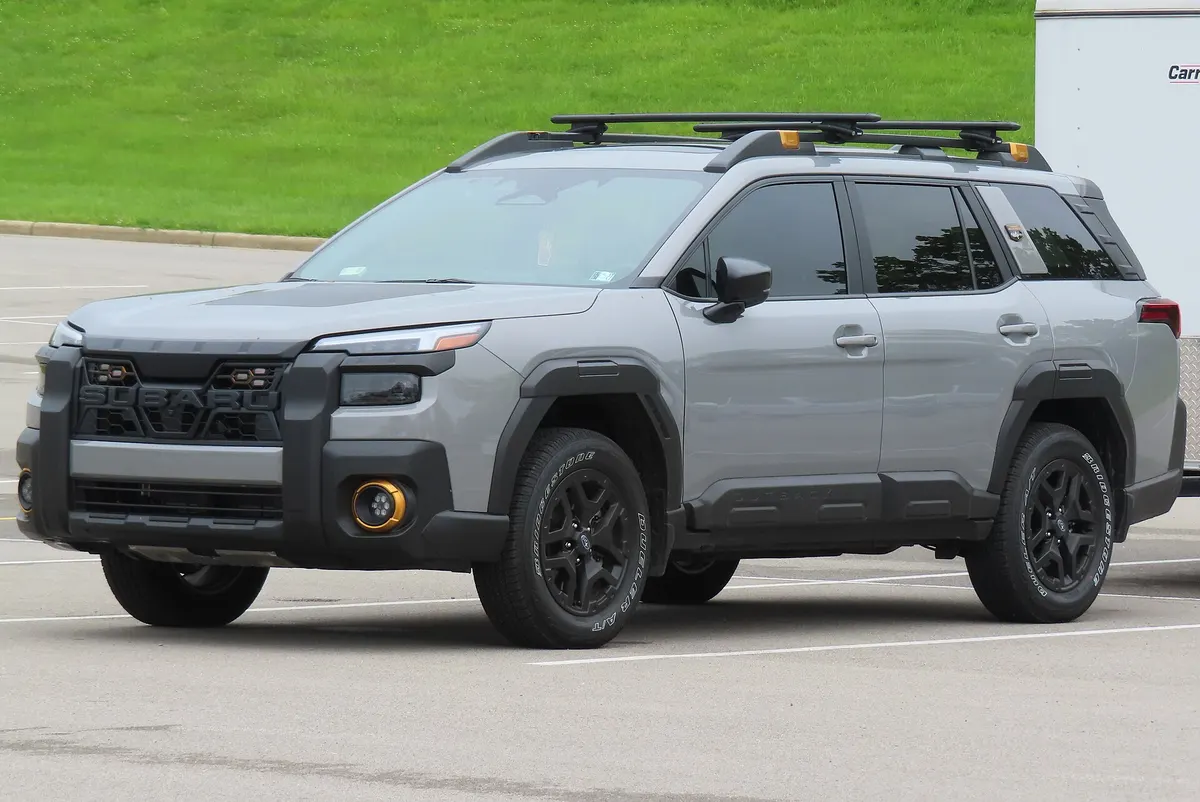
The 7th-gen Outback is the biggest reset in the model's history: the wagon became a boxy SUV, production moved from Indiana to Japan, and the price jumped about $5,000. The smart part of the redesign is what Subaru didn't change. The 2.5L and 2.4 turbo boxers and the Lineartronic CVT carry over from a generation whose drivetrains held up well. As of August 2026 the record is nearly blank: zero recalls, ten scattered NHTSA complaints, and no established failure patterns. This file is thin because the data is thin. That's the honest state of a first-year car.
Too early to call. The only year is 2026, and its record is
Engines
- FB25 · 2.5L gasoline, 180 hp
- FA24 · 2.4L gasoline, 260 hp
Transmissions
- cvt
Drivetrain
AWD
Body
suv
Trims
Premium, Limited, Touring, Limited XT, Touring XT, Wilderness (on sale early 2026)
Subaru Outback part-number cross-reference
Start from the OEM number, then pick the brand you trust. Verified equivalents for the Subaru Outback (2026–present).
Part links go to Amazon, and to eBay where Amazon does not stock the part. Affiliate links, so we may earn a commission if you buy. Your price is unchanged, and a commission never changes a verdict.
Oil filter
Subaru
Current OEM number; supersedes the prior generation's 15208AA15A / 15208AA160. Pairs with crush gasket 803916010. Aftermarket brands (Fram, Wix, etc.) had not published 2026 Outback fitments we could verify as of this writing. No cross-references are listed here until they do.
Find Subaru oil filter on AmazonVerified via: Groove Subaru parts catalog: 15208AA21A listed for 2026 Outback, Dulles Subaru parts catalog: 15208AA21A listed for 2026 Outback 2.4L
Should I buy a 2026–present Subaru Outback?
There is no reliability verdict yet, and anyone giving you one is guessing. What you can reason about is risk structure: the drivetrains (both engines, the CVT, the AWD system) are carryover from a 2020–2025 generation whose mechanicals were its strong suit. That's the low-risk half. The all-new half is everything else: new body, new electrical architecture, new 12.1-inch infotainment, new EyeSight with radar, and a new assembly plant (Yajima, Japan, after two decades of Indiana-built Outbacks). First-year electronics on an all-new Subaru platform have a documented history one generation back, and the earliest 2026 reports (a handful of NHTSA complaints and owner-forum threads) lean electronic, though nothing rises to a pattern yet. If you need the car now, buy it with the full warranty ahead of you and document any glitch. If you can wait, the second or third model year of this generation will have the same drivetrain and a year or two of debugging you didn't pay for. It may also carry less tariff distortion in the price.
Years to avoid
Too early to call. The only year is 2026, and its record is 8 months old
Pre-Purchase Checklist for Subaru Outback
- ☐Cycle the 12.1-inch touchscreen hard: CarPlay/Android Auto, Bluetooth, backup camera, climate. Early owner threads report head-unit freezes on some XT cars, and one NHTSA complaint describes the dash going black while driving. No TSB or recall exists yet, so your test drive is the screening tool.
- ☐Ask the dealer to confirm the infotainment firmware is current before delivery, and get any software update documented on the repair order.
- ☐Run the VIN at nhtsa.gov/recalls. As of August 2026 the 2026 Outback has zero recalls. Confirm that's still true when you're buying, because first-year cars are exactly where recalls appear.
- ☐Inspect all the glass: windshield edge-to-edge and the sunroof. Subaru's windshield-cracking litigation covered 2020–2022 cars only; the 2026 has all-new glass with no track record and no settlement safety net. One NHTSA complaint already reports a sunroof shattering while driving.
- ☐Take the test drive to highway speed: listen for tire hum and feel for steering vibration above 60 mph (one NHTSA complaint blames out-of-spec factory tires), and note any phantom braking or false EyeSight alerts (one complaint reports false automatic braking in rain).
- ☐Have any pre-purchase inspection actually plug into the OBDII port and pull codes. One NHTSA complaint reports a dead port the dealer couldn't fix. Thirty seconds to check.
- ☐Check the battery health printout. The 2026 isn't named in any battery litigation, but parasitic-drain complaints followed the prior generation for years. Verify, don't assume the new electrical architecture fixed it.
Common Subaru Outback problems & repair costs
Early infotainment / electronics glitch reports (watch item, not an established pattern)
Symptoms: The scattered early reports lean electronic: an NHTSA complaint of the dashboard going completely black while driving with all electronics temporarily dead, another of a non-functional OBDII port the dealer couldn't resolve, one of an HVAC system radiating heat after shutoff, and owner-forum threads describing 12.1-inch head-unit freezes on early XT cars. CarComplaints' only logged 2026 problem so far is also the infotainment system.
Fix: There is no recall, TSB, or acknowledged defect yet. These are single-digit early reports on a months-old car, listed here because the prior generation's signature problem was its head unit (Subaru eventually extended that warranty to 8 years). Everything is covered under the 3-year/36,000-mile basic warranty right now: get every glitch on a dated repair order, insist on firmware updates being documented, and keep the paper trail in case this hardens into a pattern.
Sources: NHTSA: 2026 Subaru Outback complaints, CarComplaints: 2026 Outback (infotainment is the only logged problem), Subaru Outback Forums: 2026 Outback (XT) head unit failures thread
No real ownership-cost history exists yet. The oldest cars have been on the road since roughly November 2025. What's knowable: both engines are chain-driven (no timing-belt service), the 2.5L is rated up to 31 mpg highway per Subaru, and towing is 2,700 lbs (2.5L) or 3,500 lbs (turbo XT and Wilderness), unchanged from the prior generation. The purchase price is the documented cost story: the lineup now starts at the Premium trim, $34,995 MSRP ($36,445 with the $1,450 destination fee), about $5,030 more than the 2025 base car, a jump Cars.com attributes largely to the production move to Japan putting the car on the wrong side of US import tariffs. Everything runs under Subaru's 3-year/36,000-mile basic and 5-year/60,000-mile powertrain warranty for now, which is the practical answer to most first-year repair-cost questions.
Cost calculator
What will this Subaru Outback cost you by a given mileage?
Drag to a mileage. We total the documented problems whose typical onset falls at or before it. The same cost ranges listed above, nothing new invented.
$0 estimated repair range
5-Year Maintenance Schedule & Cost to Own
Every scheduled service by mileage, fluid capacities, independent shop ranges, and parts cross-references.
Have a repair quote for this Subaru Outback?
Audit against OEM book times, uncover duplicate pad and rotor labor, and verify parts markups.
How to fix common Subaru Outback problems (DIY)
Oil and filter change (both engines)
Tools: Ramps or jack + jack stands, Oil drain pan, Socket set for the drain plug, Oil filter wrench (cap or strap style), Funnel + torque per the owner's manual
- Warm the engine a few minutes, then park level and secure the car on ramps or stands.
- Drain the oil, then fit a new crush washer (Subaru gasket 803916010, commonly included in filter kits) and snug the drain plug.
- Swap the spin-on filter: Subaru 15208AA21A is the current OEM number for the 2026 Outback per Subaru dealer catalogs, superseding the prior generation's 15208AA15A/15208AA160.
- Refill with the viscosity printed in the owner's manual and on the filler cap. Don't guess between the 2.5 and the turbo. Verify for your engine.
- Run the engine, check for leaks, re-check the level when settled, and keep the receipt. Documented oil changes are what keep a powertrain-warranty claim clean on a first-year car.
Parts
- Subaru oil filter 15208AA21A + crush gasket · Amazon $8–$15
Cabin & engine air filter change
Tools: None for most trims (hands only)
- Verify the part numbers for the 2026 before ordering. This is an all-new body, and published aftermarket fitment lists mostly stop at 2025. Don't assume prior-generation filters carry over; match by VIN or against the filter that comes out.
- Cabin filter: open the glovebox, release the stops, and swap the element behind the filter door with the airflow arrow oriented correctly.
- Engine filter: unclip the airbox lid in the engine bay, swap the panel filter, and seat the lid fully so unfiltered air can't bypass it.
Parts
- Cabin air filter (2026 Subaru Outback) · Amazon $10–$25
- Engine air filter (2026 Subaru Outback) · Amazon $12–$30
Tire rotation (non-negotiable on a Subaru)
Tools: Jack + jack stands (or a shop's rotation for ~$25), Lug wrench or breaker bar, Torque wrench, Tread depth gauge
- Rotate on the schedule in the owner's manual. Subaru's symmetrical AWD is intolerant of mismatched tread depths, and letting tires wear unevenly can force replacing all four at once.
- Measure tread depth at each corner with the gauge and log it; more than a small spread between tires is the thing you're rotating to prevent.
- Torque the lug nuts to the spec in the owner's manual in a star pattern. Don't let an impact gun guess.
- While the wheels are off, eyeball the factory tires for uneven wear or feathering. One early NHTSA complaint blames out-of-spec factory tires for highway vibration, and rotation time is when you'd catch it.
Some parts links are affiliate links. We may earn a commission at no cost to you. We only list parts that fit this generation.
The short version
The 2026 Outback is a ground-up reset: revealed at the New York auto show in April 2025, on sale in late 2025, and shaped like an SUV for the first time in the model’s life. Production left Indiana for Japan, the base price climbed about $5,000, and nearly everything you touch is new: body, interior, 12.1-inch screen, radar-equipped EyeSight.
What isn’t new is what matters most for reliability: the 180-hp 2.5L, the 260-hp 2.4 turbo, and the Lineartronic CVT all carry over from the 2020–2025 car, whose drivetrains were its strongest suit.
And that’s genuinely all anyone knows. As of August 2026: zero recalls, ten NHTSA complaints, no repeating failure pattern. This file is short because padding it would mean inventing problems, or dismissing ones that haven’t surfaced yet.
What we’re watching (and you should too)
The prior generation’s problems lived in the glass and the electronics: cracking windshields, draining batteries, and a head unit Subaru eventually covered for 8 years. None of that automatically transfers to an all-new car, and none of it can be ruled out either. Early 2026 reports lean the same direction: a dashboard-blackout complaint at NHTSA, a dead OBDII port, head-unit freeze threads on owner forums. Single digits, not a pattern, but exactly the spots to test hard before you sign.
The windshield deserves its own sentence: the class-action settlement covered 2020–2022 cars only. If 2026 glass turns out fragile too, there is no safety net, just your comprehensive deductible.
First model year, or wait?
Buy now if you need the car: the full warranty is ahead of you, and the carryover drivetrain removes the scariest first-year unknown. Document every glitch on a dated repair order.
Wait if you can: year two or three gets you the same mechanicals with the early software sorted, any recalls already issued and performed, and possibly saner pricing if the tariff math shifts.
How this file is built: everything above is compiled from Subaru’s own press materials, NHTSA recall and complaint records, CarComplaints data, and early owner reporting. Where the record is empty, we say so instead of filling it. This page will grow as the 2026’s real history does. Spot something off? Tell us.
Viral car myths, checked against this car
- Outdated
Does a "$1 mineral" really double car battery life? The Epsom-salt reality.
The mineral is Epsom salt (magnesium sulfate). It was a real desulfation hack for serviceable flooded-cell batteries 40+ years ago. It does not work on modern sealed AGM or EFB batteries, and trying it on yours will void the warranty without helping the battery.
- Misleading
Is the "$1 Japanese oil trick" that stops engine wear forever real?
The 'Japanese oil trick' is almost certainly MoS2 (molybdenum disulfide), a real industrial friction modifier. It is German, not Japanese (Liqui Moly popularized it), sold openly at every parts store for $15-20, has real but modest measured friction benefits, and was never buried by anyone.
Frequently asked questions
Is the 2026 Subaru Outback a reliable car?
Nobody honestly knows yet. The first cars reached US dealers in roughly November–December 2025, so the track record is months old. What exists so far is encouraging but thin: zero recalls and ten scattered NHTSA complaints as of August 2026, with no repeating failure pattern. The strongest reliability argument is structural: both engines and the CVT carry over from the 2020–2025 generation, whose drivetrains were its healthiest part.
Should I buy the first year of the redesigned Subaru Outback or wait?
The classic first-model-year caution applies at half strength here. The drivetrain is carryover, which removes the scariest first-year variable. What's genuinely new (body, electrical architecture, 12.1-inch infotainment, radar-equipped EyeSight, and a new assembly plant in Japan) is where first-year bugs would live, and the prior generation's head-unit saga shows Subaru electronics can take a few years to sort. Buying now is reasonable if you document everything under warranty; waiting a year buys you someone else's debugging.
What are the common problems with the 2026 Subaru Outback?
There are no established common problems yet. That's a data statement, not a clean bill of health. NHTSA shows ten complaints as of August 2026: singles including a dashboard blackout while driving, a shattered sunroof, false automatic braking in rain, a dead OBDII port, seatbelt and seat-position gripes, and vibration blamed on factory tires. The loose cluster worth watching is electronics, which is also what early owner-forum threads discuss.
What changed on the 2026 Subaru Outback?
Almost everything except the drivetrain. The wagon profile became a boxier SUV shape with a roughly 2-inch-taller roofline and 34.6 cu ft of cargo space (up 2). Inside: a 12.1-inch touchscreen, a 12.3-inch digital cluster, and climate controls moved back to physical buttons. EyeSight adds radar sensors to its three cameras and hands-free highway driving up to 85 mph. Roof rails are rated for 800 lbs static. The 180-hp 2.5L, 260-hp 2.4 turbo, and CVT carry over.
Where is the 2026 Subaru Outback built?
Japan. After two decades of Outbacks built at Subaru of Indiana Automotive, seventh-generation production moved to Subaru's Yajima plant in Gunma, and the Indiana line switched to building Foresters. The practical effect for buyers is price: the import exposes the car to US tariffs, which Cars.com cites as a driver of the roughly $5,000 jump over the 2025. Rumors of production returning to Indiana were circulating on owner forums in 2026, but nothing has been announced.
How much does the 2026 Subaru Outback cost?
The lineup starts at the Premium trim (the old Base trim is gone) at $34,995 MSRP, or $36,445 with the $1,450 destination fee, about $5,030 more than the 2025 base car. Published MSRPs run from there to $41,715 (Limited), $44,365 (Limited XT), $44,995 (Wilderness), $45,395 (Touring), and $47,995 (Touring XT), before destination.
Does the 2026 Subaru Outback come as a hybrid?
No. The launch lineup is two gas engines only, the 180-hp 2.5L and the 260-hp 2.4 turbo. Subaru's 2026 Outback press materials mention no hybrid variant, even though a Forester Hybrid exists. If a hybrid Outback is coming, Subaru hasn't announced it; don't let a salesperson's speculation set your timeline.
Every Subaru Outback generation
The full case file run, beyond the generation before and after this one.
Cross-shopped rivals
Files on what buyers weigh against the Subaru Outback of this era.