Case file · SUBARU-OUTBACK-2005-2009 · 3rd gen (BP)
Subaru Outback 2005–2009Common problems, reliability & repair costs
The 2005–2009 Outback is a genuinely capable AWD wagon with one famous flaw and a few expensive quirks. The 2.5L EJ253 leaks coolant and oil externally at the head gaskets, the classic Subaru issue. Wheel bearings wear early, and the 2.5XT turbo can starve its turbo of oil through a clogged banjo-bolt screen. Buy a documented car and it's a great do-everything wagon; buy blind and the head gaskets alone can eat a third of the purchase price.
2008, 2009
2005 (first-year, worst head-gasket and wheel-bearing compla +1 more
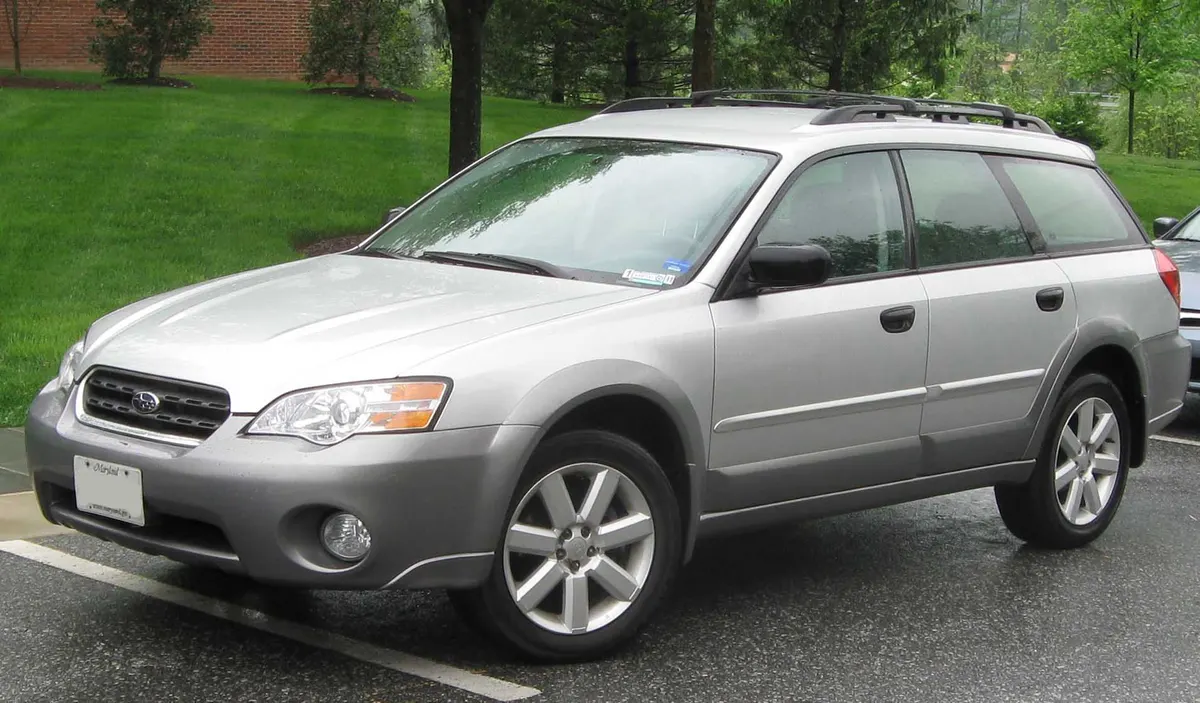
Engines
- EJ253 · 2.5L gasoline, 175 hp
- EJ255 · 2.5L turbo gasoline, 250 hp
- EZ30D · 3.0L gasoline, 245 hp
Transmissions
- 4EAT · automatic, 4-speed
- 5EAT · automatic, 5-speed
- manual , 5-speed
Drivetrain
AWD
Body
wagon, sedan
Trims
2.5i, 2.5i Limited, 2.5XT, 2.5XT Limited, 3.0R, 3.0R L.L.Bean Edition, 3.0R VDC Limited
Subaru Outback part-number cross-reference
Start from the OEM number, then pick the brand you trust. Verified equivalents for the Subaru Outback (2005–2009).
Part links go to Amazon, and to eBay where Amazon does not stock the part. Affiliate links, so we may earn a commission if you buy. Your price is unchanged, and a commission never changes a verdict.
Oil filter
Verified via: RockAuto: 2007 Outback 2.5L H4 oil filter (exact-vehicle brand list), parts.subaru.com: OE 15208AA100 (supersedes 15208AA12A; Baja/Forester/Impreza/Legacy/Outback/WRX/STI)
Oil filter
Verified via: RockAuto: 2006 Outback 3.0L H6 oil filter (exact-vehicle brand list), OEMPartsOnline (Subaru): OE 15208AA031, 3.0L Flat-6 Outback
Engine air filter
Verified via: RockAuto: 2007 Outback 2.5L H4 air filter (OE# 16546AA090; identical list for the 3.0 H6 and 2.5 turbo), parts.subaru.com: OE 16546AA090 element air cleaner (Legacy/Outback 2005+)
Cabin air filter
Subaru
shared Tribeca element number some catalogs (incl. RockAuto) cross-list as the OE
Find Subaru cabin air filterVerified via: RockAuto: 2007 Outback 2.5L H4 cabin air filter (Wix 24875, 'behind glove box'), PartsGeek: Wix 24875 cabin air filter, 2005–2009 Subaru Outback
Spark plugs
Verified via: OEMPartsOnline (Subaru): 22401AA65A = NGK FR5AP-11, 4-cyl non-turbo 2003–2010, RockAuto: 2007 Outback 2.5L H4 spark plugs (heat-range-5 NGK/Denso, gap .044)
Spark plugs
Verified via: parts.subaru.com: 22401AA670 = NGK SILFR6A, 2005–2009 Outback 2.5 Turbo (GT/XT), RockAuto: 2006 Outback 2.5L H4 Turbocharged spark plugs (SILFR6A / LFR6 range-6 family)
Spark plugs
Verified via: parts.subaru.com: 22401AA630 = NGK ILFR6B, 2006 Outback 3.0L, RockAuto: 2006 Outback 3.0L H6 spark plugs (NGK ILFR6B #6481, gap .030)
Front brake pads
Subaru
2005–2006; superseded to 26296AG050 / 26296AJ010 for 2007–2009
See Subaru front brake pads on AmazonVerified via: RockAuto: front pads D929 shown identically for 2007 Outback 2.5, 2006 2.5 Turbo and 2006 3.0 H6, parts.subaru.com: OE front pad kit 26296AG000
Wiper blades
OE blade length
Find OE blade length wiper blades on AmazonAny quality brand (Bosch/Trico/Rain-X/Denso)
beam or conventional in these lengths fits; Subaru also sold a 22 in hybrid driver blade as an accessory
Look up Any quality brand wiper bladesVerified via: Otto Wiper Blades: 2007 Outback exact-fit set 24/18/14, MyWiperSize, Subaru Outback 2005–2009: 24 in driver, 18 in passenger, 14 in rear
Battery (BCI group)
BCI group
Check BCI group battery on AmazonVerified via: AutoPadre, Subaru Outback battery size: Group 35 for 2005–2009 (Group 85 opt.), AutoZone: 2007 Subaru Outback battery (Group 35 fitment)
Accessory drive belts
Gates
OE-equivalent Micro-V; Subaru boxer runs separate alternator/PS and A/C belts
Compare Gates accessory drive belts on AmazonVerified via: RockAuto: 2007 Outback 2.5L H4 belts (separate alt/PS K050344 + A/C K040332/K040353; same on 2006 2.5 Turbo), NewParts / Gates: K050344 Micro-V fitment (Subaru Impreza/Forester/Legacy/Outback)
Serpentine belt
Verified via: RockAuto: 2006 Outback 3.0L H6 serpentine belt (single, Gates K060625 / Bando 6PK1590), FinditParts: Gates K060625 fitment/cross (Bando 6PK1590 equivalent)
Should I buy a 2005–2009 Subaru Outback?
Buy on documentation, not on vibes. A 2005–2009 Outback with receipts showing the head gaskets were already done (with the updated multi-layer gaskets), the timing belt serviced, and no torque bind on a tight-circle test drive is a legitimately great AWD wagon. An undocumented 2.5i is a coin flip on a $2,000–$3,500 head-gasket job; an undocumented 2005–2006 2.5XT adds turbo-failure risk on top. The 3.0R H6 sidesteps both the head-gasket epidemic and the turbo issue and is the sleeper pick if you can find one maintained. 2008–2009 cars are the safest of the run.
Best years
2008, 2009
Years to avoid
2005 (first-year, worst head-gasket and wheel-bearing complaint rates), 2005–2006 2.5XT (early banjo-bolt turbo oil-starvation design) unless the screen service is documented
Pre-Purchase Checklist for Subaru Outback
- ☐Cold engine, on a lift or with a flashlight: inspect the head-gasket seam on both sides of the EJ253 block for coolant crust or oil weep. The leak is external and visible before it's terminal.
- ☐Ask directly for head-gasket receipts. 'Done with updated Subaru MLS gaskets + timing belt + water pump' is the answer you want on any 2.5i over ~100k miles.
- ☐Drive full-lock circles in a parking lot both directions. Any shudder, hop, or binding on an automatic = torque bind, budget $700–$1,800.
- ☐Listen for a highway hum that changes with gentle lane weaves, the classic worn wheel bearing on this generation.
- ☐On a 2.5XT: demand oil-change records and ask whether the turbo oil-supply banjo-bolt screen was serviced or removed. No records on a 2005–2006 XT is a walk-away.
- ☐Check for a stored or recent P0420 code with a scanner. A tired catalytic converter or rear O2 sensor is common and matters in emissions states.
- ☐Verify the Takata passenger-airbag recall was completed by VIN (free at a Subaru dealer or nhtsa.gov).
- ☐On the 3.0R, look under the timing cover area at the front of the engine for oil seepage dripping onto the undertray.
Common Subaru Outback problems & repair costs
External head-gasket leak (2.5L EJ253)
$1,800–$3,500Symptoms: Coolant crust or slow oil weep at the seam between the heads and block, low coolant with no puddle, sweet smell after driving, eventually overheating on hills or towing. It leaks externally rather than into the cylinders, so it creeps up slowly.
Fix: Both head gaskets replaced with the updated multi-layer-steel (MLS) type, heads checked/resurfaced. Because the engine comes apart anyway, shops bundle the timing belt, water pump, tensioner, and seals. Do it, it's most of the labor already paid for. CarComplaints lists this as the #1 reported 2005 Outback problem.
Sources: CarComplaints: 2005 Subaru Outback worst problems, All Wheel Drive Auto: Subaru head gasket problems explained, SubaruForester.org: slow EJ253 head-gasket leak thread
Turbo failure from clogged banjo-bolt oil screen (2.5XT / EJ255)
$1,500–$4,000Symptoms: Turbo whine or grinding, blue smoke, sudden loss of boost, oil-starved turbo shaft play. Debris clogs the small mesh screen inside the banjo bolt feeding oil to the turbo, choking off its oil supply. A failing turbo can then send shrapnel through the engine's oiling system.
Fix: If caught early: clean or remove the banjo-bolt screen (Subaru addressed the screen in a service bulletin), fresh synthetic oil on 3,750-mile intervals. If the turbo let go: turbo replacement plus a full oil-system inspection; worst cases take the engine with them. On any XT purchase, service the union/banjo bolt immediately.
Sources: Subaru Outback Forums: turbo failure, clogged banjo bolt filter, Subaru TSB: banjo bolt at oil feed line (Turbochargers Direct summary), 8020 Automotive: common Subaru EJ255 engine problems
Premature wheel-bearing wear
$300–$700Symptoms: Droning hum that rises with road speed and changes pitch when you weave gently in the lane. Owners report repeat failures, some as early as 30k miles, and multiple corners over the car's life.
Fix: Hub/bearing replacement per corner (press-in style, so most owners farm this out). Subaru extended rear wheel-bearing coverage on early cars (to 8 yrs/100k on 2005s), long expired now, so it's out-of-pocket. Torque the axle nut to spec. Over-torque preloads the new bearing and kills it early.
Sources: CarComplaints: 2005 Outback wheel bearing failure, Edmunds forums: Legacy/Outback wheel bearing failure, Ultimate Subaru: 2005 Outback repeated rear bearing failures
Torque bind on automatics (transfer clutch / Duty C solenoid)
$400–$1,800Symptoms: Shudder, hopping, or a low grinding bind in tight low-speed turns, as if the car is fighting itself. Pulling the FWD fuse (disables AWD) makes it vanish, which confirms the transfer clutch system.
Fix: Start cheap: several ATF drain-and-fills fix marginal cases. Next step is the Duty C solenoid (~$700 at an independent with a fluid change); worn transfer clutch packs or valve-body work push it to $1,100–$1,800. Mismatched tire diameters cause it too, so always replace tires in fours on this car.
Sources: Subaru Outback Forums: 4EAT torque bind, Duty C diagnosis, NASIOC: Duty C solenoid replacement walkthrough
Catalytic converter efficiency / P0420 code
$200–$1,500Symptoms: Check-engine light with P0420 (catalyst efficiency below threshold), sometimes preceded by an O2-sensor code. Car drives normally, but it fails emissions testing in inspection states.
Fix: Diagnose before parts: a lazy rear O2 sensor ($150–$350 installed) sometimes clears it, but on high-mileage cars it's usually the catalytic converter itself. Quality aftermarket cat installed runs $500–$1,500; OEM is far more. Note aftermarket cats aren't legal for CARB states. California cars need a CARB-compliant unit.
Sources: Subaru Outback Forums, P0420: O2 sensor or cat?, Engine-Codes.com: P0420 Subaru causes and notes
Oil seepage from timing cover and valve covers (3.0R H6 and aging EJ engines)
$150–$900Symptoms: Oil film on the undertray, drips at the front of the H6 timing cover, burning-oil smell as valve-cover seepage hits the exhaust on the flat-4s. Rarely a fast leak, more a chronic mess.
Fix: Valve-cover gaskets on the flat-4 are a reasonable indie-shop job (the boxer layout makes them fiddlier than an inline engine). The H6 timing-cover reseal is labor-heavy, so most owners monitor it and top off unless the drip gets serious.
Sources: Subaru Outback Forums: 3.0R timing cover leaking oil, Ultimate Subaru: H6 timing cover area oil leak
Plan around the big three: head gaskets (once, ~$1,800–$3,500 with timing belt bundled, then it's done for the car's life), a wheel bearing every so often ($300–$700 a corner), and religious fluid service on the automatic to keep torque bind away. The EJ253 also wants its timing belt every 105k miles (~$500–$900 with water pump). Fuel and tires cost more than a Camry. It's a full-time AWD wagon and it eats tires in fours. A sorted car after the head-gasket job is honestly cheap to keep; the money pit version is the neglected one you bought without records. Confirm the Takata passenger-airbag recall was done. It's free.
Cost calculator
What will this Subaru Outback cost you by a given mileage?
Drag to a mileage. We total the documented problems whose typical onset falls at or before it. The same cost ranges listed above, nothing new invented.
$0 estimated repair range
5-Year Maintenance Schedule & Cost to Own
Every scheduled service by mileage, fluid capacities, independent shop ranges, and parts cross-references.
Have a repair quote for this Subaru Outback?
Audit against OEM book times, uncover duplicate pad and rotor labor, and verify parts markups.
How to fix common Subaru Outback problems (DIY)
Service the turbo oil-supply banjo-bolt screen (2.5XT)
Tools: Socket set + 14mm/17mm wrenches, Torque wrench, New copper crush washers, Brake cleaner + pick for the screen
- Cold engine. Locate the banjo bolt securing the turbo oil-supply line at the passenger-side cylinder head.
- Remove the banjo bolt, keeping the two crush washers and noting their order.
- Inspect the mesh screen inside the bolt. Debris here is what kills these turbos. Clean it with brake cleaner, or follow the common owner practice of removing the screen entirely and shortening oil-change intervals.
- Reinstall with NEW crush washers and torque to spec. Banjo fittings leak if reused washers go back in.
- Start the engine, confirm oil pressure and zero seepage at the fitting, then recheck after a heat cycle.
Parts
- Turbo oil feed banjo bolt kit (2005–2009 Legacy GT / Outback XT) · Amazon $15–$40
- Copper crush washer assortment · Amazon $8–$15
Replace the rear (downstream) O2 sensor
Tools: 22mm O2 sensor socket or wrench, Penetrating oil, Anti-seize (sensor threads only, if not pre-coated)
- Soak the sensor threads with penetrating oil the night before. Exhaust threads on a rust-belt Outback fight back.
- Unplug the sensor connector (follow the wire up from behind the catalytic converter).
- Break the sensor loose with an O2 socket; a warm (not hot) exhaust helps.
- Thread in the new sensor by hand first, snug to spec, and reconnect the plug.
- Clear the code and drive a full warm-up cycle to confirm P0420/P0136 stays gone.
Parts
- Downstream oxygen sensor (2005–2009 Subaru Outback 2.5) · Amazon $30–$80
Engine & cabin air filter change
Tools: None (hands only; maybe a screwdriver for airbox clips)
- Unclip the airbox lid on the driver's side of the engine bay, swap in the new panel filter, re-clip.
- Open the glovebox and squeeze the sides to drop it past its stops.
- Slide out the cabin filter carrier, insert the new filter with the airflow arrow pointing the right way, and reassemble.
Parts
- Engine air filter (2005–2009 Subaru Outback) · Amazon $10–$20
- Cabin air filter (2005–2009 Subaru Outback) · Amazon $8–$15
Some parts links are affiliate links. We may earn a commission at no cost to you. We only list parts that fit this generation.
The short version
The 2005–2009 Outback (chassis code BP) is the wagon that made “Subaru people” a demographic: full-time AWD, real cargo room, and a chassis that shrugs off dirt roads. It’s also the generation where the famous Subaru head-gasket problem was in full swing. The 2.5L EJ253 in every 2.5i model leaks coolant and oil externally at the head-to-block seam, usually somewhere between 60k and 120k miles. It’s slow, visible, and fixable, but the fix runs $1,800–$3,500 at an independent shop.
Layer on early wheel-bearing wear (bad enough that Subaru extended rear-bearing coverage on early cars), torque bind on neglected automatics, and a turbo-killing oil-screen design on 2005–2006 2.5XT models, and you have a car where the maintenance file matters more than the odometer.
What that means when you’re shopping
On any 2.5i: the first question is “have the head gaskets been done?” A car with receipts for updated MLS gaskets plus a timing belt and water pump has already survived its biggest expense. No records? Inspect the block-to-head seam yourself, since the leak leaves visible coolant crust or oil weep, and price the job into your offer.
On a 2.5XT: oil-change records are non-negotiable, and ask specifically about the turbo oil-supply banjo-bolt screen. A 2005–2006 XT with no history is the single riskiest configuration in this generation.
On any automatic: drive tight full-lock circles in a parking lot. Binding or shudder means the transfer clutch system needs attention.
The quiet winner is the 3.0R H6: timing chain, no head-gasket epidemic, no turbo. It drinks a little more fuel and good ones are harder to find, but it dodges both headline failures.
Finally, run the VIN for the Takata passenger-airbag recall (2003–2014 Outbacks are included). Replacement is free at any Subaru dealer.
How this file is built: failure modes and cost ranges are compiled from NHTSA complaint and recall data, CarComplaints.com owner reports, Subaru service bulletins and warranty extensions, and long-running owner-forum threads, then sanity-checked against shop-floor experience. Cost figures are independent-shop estimates and vary by region. Spot something off? Tell us.
Viral car myths, checked against this car
- Misleading
Is the "$2 liquid that stops any leak" really banned in 11 states?
Automotive stop-leak products are not banned in any US state. The products are real (Bar's Leaks, BlueDevil), they work in specific narrow situations, and they can permanently damage your cooling or oiling system if applied to the wrong leak.
- Misleading
Is the "$1 Japanese oil trick" that stops engine wear forever real?
The 'Japanese oil trick' is almost certainly MoS2 (molybdenum disulfide), a real industrial friction modifier. It is German, not Japanese (Liqui Moly popularized it), sold openly at every parts store for $15-20, has real but modest measured friction benefits, and was never buried by anyone.
Frequently asked questions
Do all 2005–2009 Subaru Outbacks have head gasket problems?
The risk applies to the 2.5L EJ253 (2.5i models) across the whole run. It's an external coolant/oil leak at the head-to-block seam, not a sudden internal failure. Not every car leaks, but enough do that you should assume it's coming on any 2.5i without repair records. The 3.0R H6 and the turbo 2.5XT use different gasket designs and don't share the epidemic. A car with the job already done using updated MLS gaskets is arguably the best buy.
How much does a Subaru head gasket job cost?
At an independent shop in 2024–2026, plan on $1,800–$3,500 for both gaskets with the heads checked, including the timing belt, water pump, and seals that any competent shop bundles in. Quotes far above that usually mean dealer labor rates or additional machine work. It's a once-per-car repair. After the updated gaskets go in, this issue is behind you.
Is the Outback 2.5XT turbo reliable?
It's a strong engine with an Achilles' heel: a small mesh screen in the banjo bolt feeding oil to the turbo clogs with debris and starves the turbo, worst on 2005–2006 cars. An XT with documented frequent synthetic oil changes and a serviced/removed screen is a fun, fast wagon. An XT with no records is the riskiest car in this generation. A failed turbo starts around $1,500 and can take the engine with it.
What is torque bind and how do I check for it on a test drive?
Torque bind is the AWD transfer clutch failing to release, so the driveline fights itself in tight turns. Find an empty parking lot and drive slow full-lock circles both directions: shudder, hopping, or grinding resistance is the tell. Fixes range from a few ATF drain-and-fills ($150–$400) to a Duty C solenoid or clutch-pack job ($700–$1,800). Mismatched tires cause the same symptom. This car needs all four tires matched.
Which year of this Outback generation is the best buy?
2008–2009. They carry the facelift, the revised turbo oiling design on XT models, and the lowest complaint rates of the run. 2005 has the worst head-gasket and wheel-bearing complaint record as the first year. Engine-wise, the 3.0R H6 is the reliability pick of the generation: timing chain instead of a belt, and no head-gasket epidemic.
Every Subaru Outback generation
The full case file run, beyond the generation before and after this one.
Cross-shopped rivals
Files on what buyers weigh against the Subaru Outback of this era.