Case file · SUBARU-FORESTER-2009-2013 · 3rd gen (SH)
Subaru Forester 2009–2013Common problems, reliability & repair costs
The 3rd-gen Forester is a capable, honest AWD wagon-on-stilts with a split personality under the hood. The 2009–2010 EJ25 engine carries Subaru's famous head-gasket weakness; the 2011–2013 FB25 traded that for an oil-consumption problem serious enough to trigger a class-action settlement. Pick the right year, watch the oil, and it's a 200k+ mile car.
2013, 2012
2011 (worst of the FB25 oil-consumption years) +1 more
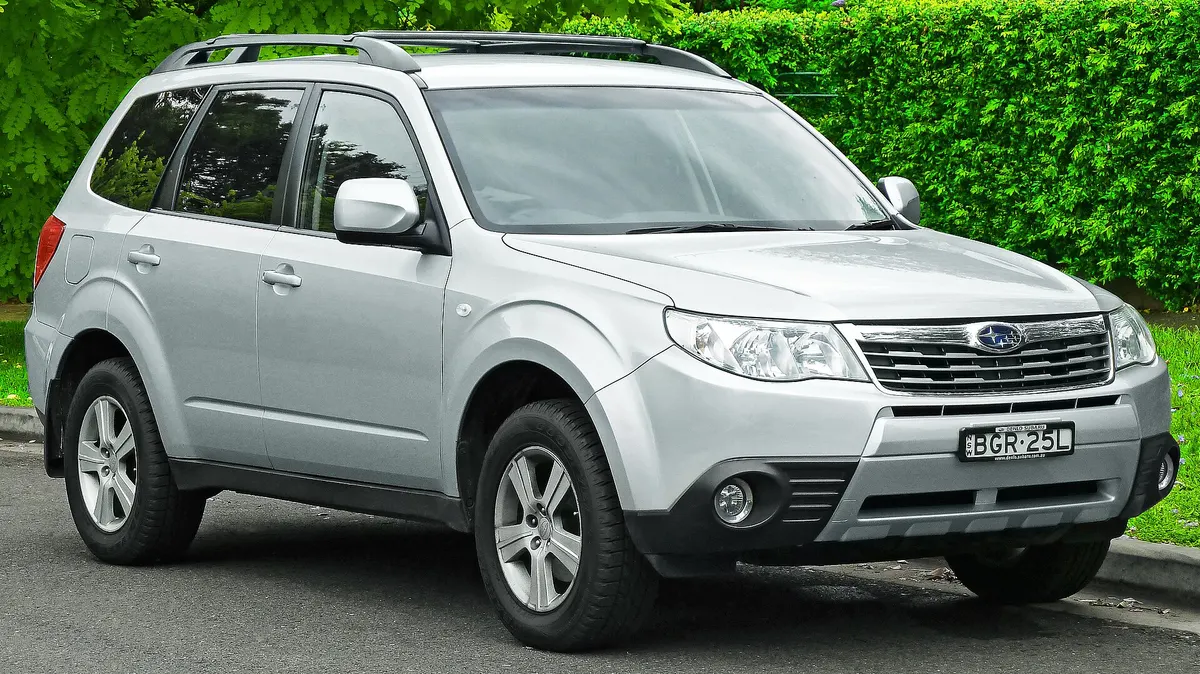
Engines
- EJ253 · 2.5L gasoline, 170 hp
- FB25 · 2.5L gasoline, 170 hp
- EJ255 · 2.5L turbo gasoline, 224 hp
Transmissions
- 4EAT · automatic, 4-speed
- manual , 5-speed
Drivetrain
AWD
Body
suv
Trims
2.5X, 2.5X Premium, 2.5X Limited, 2.5X Touring, 2.5XT Premium, 2.5XT Touring
Subaru Forester part-number cross-reference
Start from the OEM number, then pick the brand you trust. Verified equivalents for the Subaru Forester (2009–2013).
Part links go to Amazon, and to eBay where Amazon does not stock the part. Affiliate links, so we may earn a commission if you buy. Your price is unchanged, and a commission never changes a verdict.
Oil filter
Subaru
The classic small screw-on Subaru EJ filter; also cataloged as 15208AA100 / 15208AA120 (element vs complete-with-gasket)
Find Subaru oil filter on AmazonWix
EJ-specific (base bypass-valve location, ~23 psi); NAPA Gold 7712. Do NOT use on the FB25
Look up Wix oil filterVerified via: Subaru parts - 15208AA12A (Forester oil filter complete), MAPerformance - Subaru OEM oil filter EJ20/EJ25 15208AA12A, Wix 57712 (EJ base-valve; not for FB) - O'Reilly / newparts
Oil filter
Subaru
Larger top-mount spin-on; supersedes 15208AA160. Different filter from the EJ engines
See Subaru oil filter on AmazonWix
FB-specific (~27 psi bypass); NAPA Gold 7055. The 57830 is an adjacent FB Legacy/Outback filter - use 57055 on the Forester FB25
Compare Wix oil filterVerified via: Subaru parts - 2012 Forester 15208AA15A, Wix 57055 fitment - 2011-2018 Subaru Forester (Walmart listing), CarParts - 2012 Forester FB25 Purolator PBL14615 fitment
Engine air filter
Subaru
Supersedes 16546AA090; Subaru catalogs the same element for the 2013 2.5XT Turbo as for the NA cars
Look up Subaru engine air filter on AmazonVerified via: Subaru parts - 2013 Forester 2.5L TURBO XT air filter 16546AA10A, Subaru parts - 2010 Forester 2.5L X air filter 16546AA090, FRAM - CA10159 Extra Guard air filter
Cabin air filter
Verified via: Subaru parts - Forester cabin air filter 72880FG000, airfilter-crossreference - Subaru 72880FG000 equivalents
Spark plugs
Subaru
= NGK FR5AP-11 (platinum); replaces 22401AA650. Set of 4
Compare Subaru spark plugs on AmazonVerified via: Subaru parts - 22401AA65A = NGK FR5AP-11, Subaru Parts Store - 22401AA65A (2004-2011 non-turbo 2.5)
Spark plugs
Subaru
= NGK SILZKAR7B11 (laser iridium); also cataloged 22401AA780. Different plug from the EJ engines
Look up Subaru spark plugs on AmazonVerified via: Subaru parts - Forester SILZKAR7B11 (22401AA781), Amazon - NGK SILZKAR7B11 fitment Forester X 2011-2013 2.5L, MAPerformance - NGK SILZKAR7B11 Subaru fitments
Spark plugs
Subaru
= NGK SILFR6A; colder plug, gap approx 0.030 in (do not run the NA gap). Turbo-specific
See Subaru spark plugs on AmazonNGK
Iridium IX upgrade for EJ turbo; must be re-gapped to approx 0.030 in
Find NGK spark plugs, EJ255Verified via: Subaru parts - 2012 Forester 2.5L TURBO XT = NGK SILFR6A (22401AA670), SubieTuned - NGK plugs for Forester XT / WRX (EJ255) incl. SILFR6A / LFR6AIX-11
Front brake pads
Subaru
Front pad kit for 2003-2010 Forester; superseded by 26296SC011 during MY2010
Look up Subaru front brake pads on AmazonAkebono
ProACT ceramic; Akebono is Subaru's OE pad supplier. Covers the whole 2009-2018 range
Check Akebono front brake padsVerified via: Subaru parts - 2010 Forester front pad kit 26296FG010 (2003-2010), PartsGeek - Akebono ACT1539 front pad set, 2010-2018 Forester
Front brake pads
Subaru
Front pad kit for 2010-2018 Forester; replaces 26296SC000/SC010/AJ02A. Running change from FG010 during MY2010
Find Subaru front brake pads on AmazonWagner
ThermoQuiet ceramic; single pad shape covers both OEM part numbers (2009-2018)
Check Wagner front brake padsVerified via: Subaru (OEM Parts Online) - 26296SC011 front pads 2010-2018, Amazon - Genuine Subaru 26296SC011 front pad set 2010-2016, Walmart - Wagner PD1114 fits 2009-2018 Forester (spans both OEM numbers)
Wiper blades
Bosch ICON / Rain-X Latitude / Trico (by size)
Buy beam blades by these sizes; SH Forester uses standard hook-mount arms
Find Bosch ICON / Rain-X wiper bladesVerified via: OttoBlades - 2010 Subaru Forester wiper set 24 in / 18 in (+14 in rear), WindshieldWipers.com - 2010 Forester 24 in / 18 in
Serpentine / drive belt
Subaru
Alternator + power-steering belt (5PK874). EJ engines also use a SECOND, smaller A/C belt (separate part). These are accessory belts - the timing belt is a separate service item on EJ engines
Look up Subaru serpentine / drive belt on AmazonGates
Micro-V alt/power-steering belt; crosses to Subaru 809218460 (2006-2011 Subaru 2.5, incl. WRX/STI turbo)
Check Gates serpentine / drive beltVerified via: Subaru parts - 2010 Forester V-belt 809218460 (5PK874), PartsGeek - Gates K050344 alternator/power-steering belt, 2006-2011 Forester 2.5
Serpentine / drive belt
Subaru
One serpentine belt drives all accessories on the FB25 (unlike the two-belt EJ setup)
See Subaru serpentine / drive belt on AmazonVerified via: Subaru parts - 2012 Forester serpentine belt 23780AA160, O'Reilly - serpentine belt, 2012 Subaru Forester (Gates K060864)
Battery
Subaru
Factory JIS 65D23L sealed battery = BCI Group 35 replacement size
Find Subaru battery on AmazonBCI Group 35
Group 35 is the standard U.S. replacement; some catalogs also list Group 25 as an alternate fit, but factory spec is the 65D23L / Group 35
Look up BCI Group 35 batteryVerified via: Subaru parts - 2010 Forester battery 82110AE000 (65D23L), AutoZone - 2010 Subaru Forester battery (Group 35)
Should I buy a 2009–2013 Subaru Forester?
Buy on year and oil history, not on mileage alone. A 2013 with documented oil-level checks, or a 2011–2012 that already got its short block replaced under the oil-consumption settlement, is a genuinely good used AWD buy. A 2009–2010 is fine too if you price in head gaskets at high mileage or confirm they've been done. Skip the 2.5XT unless you know turbo Subarus: it's quicker, but it demands premium fuel, religious oil changes, and a seller who never let the oil-supply screens clog. Verify the Takata airbag and brake-line recalls are closed on any car you look at. Both are free fixes.
Best years
2013, 2012
Years to avoid
2011 (worst of the FB25 oil-consumption years), 2009–2010 only if head gaskets are unverified at 100k+ miles
Pre-Purchase Checklist for Subaru Forester
- ☐Run the VIN through NHTSA's recall lookup. Confirm the Takata passenger-airbag inflator and the 2014 brake-line corrosion recall (salt states) were both completed.
- ☐On 2011–2013 (FB25): check the dipstick cold and ask directly how much oil it uses between changes. More than about 1/3 quart per 1,200 miles was Subaru's own threshold for 'excessive.' Ask whether a short block was ever replaced under the settlement.
- ☐On 2009–2010 (EJ253): look along the bottom of the block where the heads meet it for oil weep or coolant crust, the classic external head-gasket seep. Check coolant level and condition.
- ☐On the 2.5XT: demand oil-change records. Ask if the turbo oil-supply banjo-bolt screens were ever cleaned or removed. Walk away from a turbo car with a patchy history.
- ☐Listen for a droning hum that rises with road speed on a test drive. Wheel bearings are a routine wear item on these.
- ☐Watch for a check-engine light with P0420/P0171-family codes. Catalytic converters and front air-fuel sensors are known failure points.
- ☐On cars from the rust belt, get it on a lift and inspect brake and fuel lines even if the recall was performed.
- ☐Confirm the timing belt was done on schedule (EJ engines, ~105k intervals). The FB25 uses a chain, so no belt service, but chain noise at high mileage is worth a listen.
Common Subaru Forester problems & repair costs
Excessive oil consumption (FB25, 2011–2013)
$3,000–$6,000Symptoms: Oil level drops noticeably between changes with no visible leak; low-oil light between services; in neglected cars, engine damage from running low. Subaru's own test threshold was consumption over 1/3 quart per 1,200 miles.
Fix: The real fix is a short block (new pistons and rings). Defective piston rings are the root cause named in the 2014 class action. Subaru settled in 2016 with an 8-year/100,000-mile warranty extension for affected cars; that window has closed on every 2011–2013 Forester, so today it's an out-of-pocket short block or a disciplined check-and-top-off routine. A car that already got its settlement short block is the best version of this generation.
Sources: CarComplaints: Subaru oil consumption class action, CarComplaints, 2011 Forester (worst problem: excessive oil consumption), Subaru Forester Owners Forum: 2011–14 oil consumption class action (merged thread)
Head-gasket seepage (EJ253, 2009–2010)
$1,600–$2,800Symptoms: Oil weep or coolant crust along the head-to-block seam (visible from under the car), slow coolant loss, sweet smell after driving, and eventually overheating if ignored. Usually starts as an external leak, not the catastrophic internal failure of earlier Subarus.
Fix: Replace both head gaskets with updated multi-layer-steel gaskets. It's roughly a 10-hour job on a boxer engine, so labor dominates the bill. Smart money does the timing belt, water pump, and cam/crank seals at the same time since it's all apart. A documented head-gasket job is a selling point, not a red flag.
Sources: MechanicBase: Subaru head gasket problems, years and models affected, All Wheel Drive Auto: Subaru head gasket problems explained, Samarins: 2009–2013 Subaru Forester review and common problems
Takata passenger-airbag inflator (recall)
$0–$0Symptoms: No warning. Affected non-desiccated Takata passenger-side inflators can degrade with humidity and heat exposure and rupture in a crash, sending metal fragments into the cabin.
Fix: Free recall repair at any Subaru dealer. The passenger frontal inflator is replaced. Multiple recall waves ran through the late 2010s and early 2020s, so check the specific VIN at nhtsa.gov/recalls before buying and get it done if it's open. Driver-side airbags on these cars were not Takata units.
Sources: NHTSA: Takata recall spotlight, Subaru: Takata airbag recall information
Brake-line corrosion in salt states (recall 14V-311)
$0–$600Symptoms: Soft or sinking brake pedal, visible brake-fluid seepage near the rear lines, low fluid level. Applies to cars registered in road-salt states, where the four-wheel-drive brake lines can rust through.
Fix: Subaru's 2014 recall inspects the lines, replaces any that seep, and applies anti-corrosion wax, free at a dealer if the VIN is open. On a rust-belt car that's already had the recall, still get the lines inspected on a lift; out-of-recall line replacement at an independent shop runs a few hundred dollars.
Sources: Subaru Forester Owners Forum: NHTSA recall 14V-311 brake lines (2009–13), NHTSA: 2010 Subaru Forester recalls and complaints
Turbo oil starvation from clogged banjo-bolt screens (2.5XT)
$1,500–$3,500Symptoms: Turbo whine or rattle, blue smoke, loss of boost, oil-pressure or AVCS-related codes. Root cause is a fine mesh screen inside the banjo bolts feeding oil to the turbo and cam-timing solenoids. It clogs with debris and chokes off oil.
Fix: If caught early: clean or remove the banjo-bolt screens (a known Subaru service-bulletin item, TSB 02-103-07R era) and stay strict on oil changes. If the turbo already ran dry: turbo replacement, and inspect for bearing debris downstream. The EJ255's piston ringlands are also less tolerant of heat and low octane than the non-turbo engines. That is another reason this trim punishes neglect.
Sources: Subaru Forester Owners Forum: SH 2.5XT known issues (2009–2013), Subaru Forester Owners Forum: oil supply screen in the banjo bolt
Front air-fuel (O2) sensor failure
$250–$500Symptoms: Check-engine light with front A/F sensor heater or response codes (P0032 and friends), rough idle or surging in some cases, slightly worse fuel economy. The sensor element can crack; Subaru ran a service program (WXW-80) for cracked front sensors on related models.
Fix: Replace the front air-fuel sensor with an OEM-grade unit (Denso/NTK). Cheap aftermarket sensors on these engines have a reputation for failing again within months. This is a part worth buying right the first time. Persistent P0420 codes after a sensor may mean the catalytic converter is on its way out, which is a four-figure job.
Sources: RepairPal: Subaru front O2 sensor service program, Subaru Forester Owners Forum: front A/F ratio sensor continuously failing
Away from the headline engine issues, SH Forester running costs are middle-of-the-pack: wheel bearings (a droning hum that grows with speed, ~$350–$600 a corner at an independent shop), rattling exhaust heat shields, sway-bar end links, and the occasional catalytic converter ($1,000+) are the recurring tickets. EJ cars (2009–2010 and all XTs) need a timing belt roughly every 105k miles. Budget $500–$900 with the water pump. The FB25 uses a chain instead. AWD adds a rule: replace tires in matched sets of four, or you risk drivetrain wear. The single cheapest habit on any of these cars is checking the dipstick every fill-up.
Cost calculator
What will this Subaru Forester cost you by a given mileage?
Drag to a mileage. We total the documented problems whose typical onset falls at or before it. The same cost ranges listed above, nothing new invented.
$0 estimated repair range
Have a repair quote for this Subaru Forester?
Audit against OEM book times, uncover duplicate pad and rotor labor, and verify parts markups.
How to fix common Subaru Forester problems (DIY)
Engine & cabin air filter change
Tools: None (hands only; small screwdriver helps on the glovebox)
- Unclip the airbox lid in the engine bay (driver's side), lift it, and swap in the new panel filter with the seal seated flat.
- Re-clip the lid and make sure no clip is left hanging. A leaking airbox lets unfiltered air past the MAF sensor.
- For the cabin filter, open the glovebox, squeeze the sides to drop it past its stops, and remove the filter cover behind it.
- Slide the old cabin filter out, insert the new one with the airflow arrow pointing down, and reset the glovebox.
Parts
- Engine air filter (2009–2013 Forester) · Amazon $10–$20
- Cabin air filter (2009–2013 Forester) · Amazon $10–$18
Replace front sway-bar end links
Tools: Jack + jack stands, 14/17mm sockets and wrenches, Hex key or Torx to hold the stud (varies by link), Penetrating oil
- Raise the front of the car, support it on stands, and remove both front wheels.
- Soak the end-link nuts with penetrating oil. They live in the splash zone and rust.
- Hold the ball-stud with a hex key while breaking the nuts loose; remove the old link top and bottom.
- Install the new link, torque both nuts with the suspension loaded (jack under the control arm) so the bushings sit at ride height.
- Repeat on the other side, replacing in pairs, then test-drive and listen for the clunk over bumps to be gone.
Parts
- Front sway bar end links (pair, 2009–2013 Forester) · Amazon $25–$60
Replace the front air-fuel (O2) sensor
Tools: O2 sensor socket (7/8 in / 22mm with cable slot), Breaker bar, Penetrating oil, Anti-seize (usually pre-applied on new sensor threads)
- Work with the exhaust warm (not hot). The sensor threads release easier.
- Locate the front A/F sensor in the exhaust ahead of the catalytic converter and unplug its connector.
- Soak the base with penetrating oil, then break it loose with the O2 socket and breaker bar.
- Thread in the new sensor by hand first, snug it to spec, and route the harness away from the hot pipe.
- Reconnect, clear the code, and confirm the check-engine light stays off over a few drive cycles.
Parts
- Front air-fuel sensor, OEM-grade Denso/NTK (2009–2013 Forester) · Amazon $90–$180
Some parts links are affiliate links. We may earn a commission at no cost to you. We only list parts that fit this generation.
The short version
The 2009–2013 Forester (chassis code SH) is one honest car with two different engine problems, split cleanly by year. 2009–2010 cars use the older EJ253 engine, which tends to seep oil and coolant from the head gaskets at high mileage, a roughly $1,600–$2,800 job at an independent shop. 2011–2013 cars got the newer FB25 engine, which fixed the gaskets but introduced defective piston rings that burn oil fast enough that Subaru was sued over it. The 2016 class-action settlement extended coverage to 8 years/100,000 miles; that window has closed on every one of these cars.
Neither issue is a death sentence. Both are well-documented, predictable, and priced into the used market. That is exactly what makes this generation a good buy for someone who does their homework.
What that means when you’re shopping
Start with the year. A 2013 is the sweet spot: fewest complaints of the generation, timing chain instead of a belt, and the oil-ring problem was tapering. A 2011 deserves the hardest look. It’s the peak oil-burner year, with CarComplaints averaging the fix at about $3,100 around 48,000 miles.
On any FB25 car, ask one blunt question: how much oil does it use between changes? Subaru’s own threshold for “excessive” was a third of a quart every 1,200 miles. A seller who checks the dipstick regularly and can answer is your kind of seller. Best case: the short block was already replaced under the settlement. Get the paperwork.
On a 2009–2010, get under the car and eyeball the head-to-block seam for oil weep or coolant crust. A documented head-gasket job with the timing belt and water pump done at the same time is a feature, not a warning.
Two recalls apply generation-wide and are free: the Takata passenger-airbag inflator and the salt-state brake-line corrosion recall. Run the VIN at nhtsa.gov before you buy.
The turbo 2.5XT is the enthusiast trap: genuinely quick, genuinely fine when babied, and genuinely expensive when the previous owner skipped oil changes and the turbo’s oil-supply screens clogged. Records or walk.
How this file is built: failure modes and cost ranges are compiled from NHTSA complaint and recall data, the Subaru oil-consumption class-action record, and owner reporting, then sanity-checked against shop-floor experience. Cost figures are independent-shop estimates and vary by region. Spot something off? Tell us.
Viral car myths, checked against this car
- Misleading
Is the "$2 liquid that stops any leak" really banned in 11 states?
Automotive stop-leak products are not banned in any US state. The products are real (Bar's Leaks, BlueDevil), they work in specific narrow situations, and they can permanently damage your cooling or oiling system if applied to the wrong leak.
- Dangerous
Is the "$2 liquid that destroys engine sludge forever" real? Our shop-floor verdict.
An aggressive solvent flush on a high-mileage engine is a textbook way to spin a bearing. The viral 'kitchen-cabinet flush' is folklore that real shops spend money cleaning up after.
- Mostly False
Does a "$3 liquid" really kill car rust permanently? The phosphoric-acid reality.
The $3 liquid is almost certainly phosphoric acid (sold as Ospho or Naval Jelly). It converts surface rust to iron phosphate. It does not kill rust 'permanently,' does not restore perforated steel, and was never buried by anyone. It has been on hardware store shelves continuously since the 1940s.
Frequently asked questions
Which 2009–2013 Forester years should I avoid?
2011 is the one to treat with the most caution. It's the peak year for FB25 oil-consumption complaints, averaging around $3,100 to fix at roughly 48,000 miles per CarComplaints data. 2009–2010 cars carry the EJ25 head-gasket risk instead, which shows up later (100k+ miles) and is cheaper to fix. 2013 has the fewest complaints of the whole generation and is the best default pick.
Does the 2009–2013 Forester have a CVT?
No. This generation uses a conventional 4-speed automatic (4EAT) or a 5-speed manual. Subaru's CVT arrived in the Forester with the 2014 redesign. If CVT longevity worries kept you away from newer Subarus, the SH generation sidesteps the question entirely.
Is the oil-consumption problem still covered by Subaru?
Not anymore. The 2016 class-action settlement extended coverage to 8 years/100,000 miles from the original sale date for affected 2011–2014 Foresters, and dealers replaced short blocks under it. Every 2011–2013 car is now past that window, so the fix is out of pocket. A car that already received a settlement short block is the best-case scenario. Ask for the paperwork.
Are the head gaskets guaranteed to fail on a 2009–2010?
No. It's a high-probability wear pattern at high mileage, not a certainty. The EJ253's failure mode is usually a slow external oil/coolant seep starting around 100k–150k miles, not sudden catastrophic failure. Many cars run past 150k on original gaskets. Inspect the head-to-block seam before buying and treat a documented gasket job as added value.
Is the turbo 2.5XT worth buying used?
Only with complete service records. The EJ255 is quick and durable when maintained, but it needs premium fuel, frequent oil changes, and attention to the oil-supply banjo-bolt screens that can clog and starve the turbo. A neglected XT can hand you a turbo replacement or worse. For most buyers the non-turbo car is the smarter money.
Every Subaru Forester generation
The full case file run, beyond the generation before and after this one.
Cross-shopped rivals
Files on what buyers weigh against the Subaru Forester of this era.